From Food Origins to Food Futures
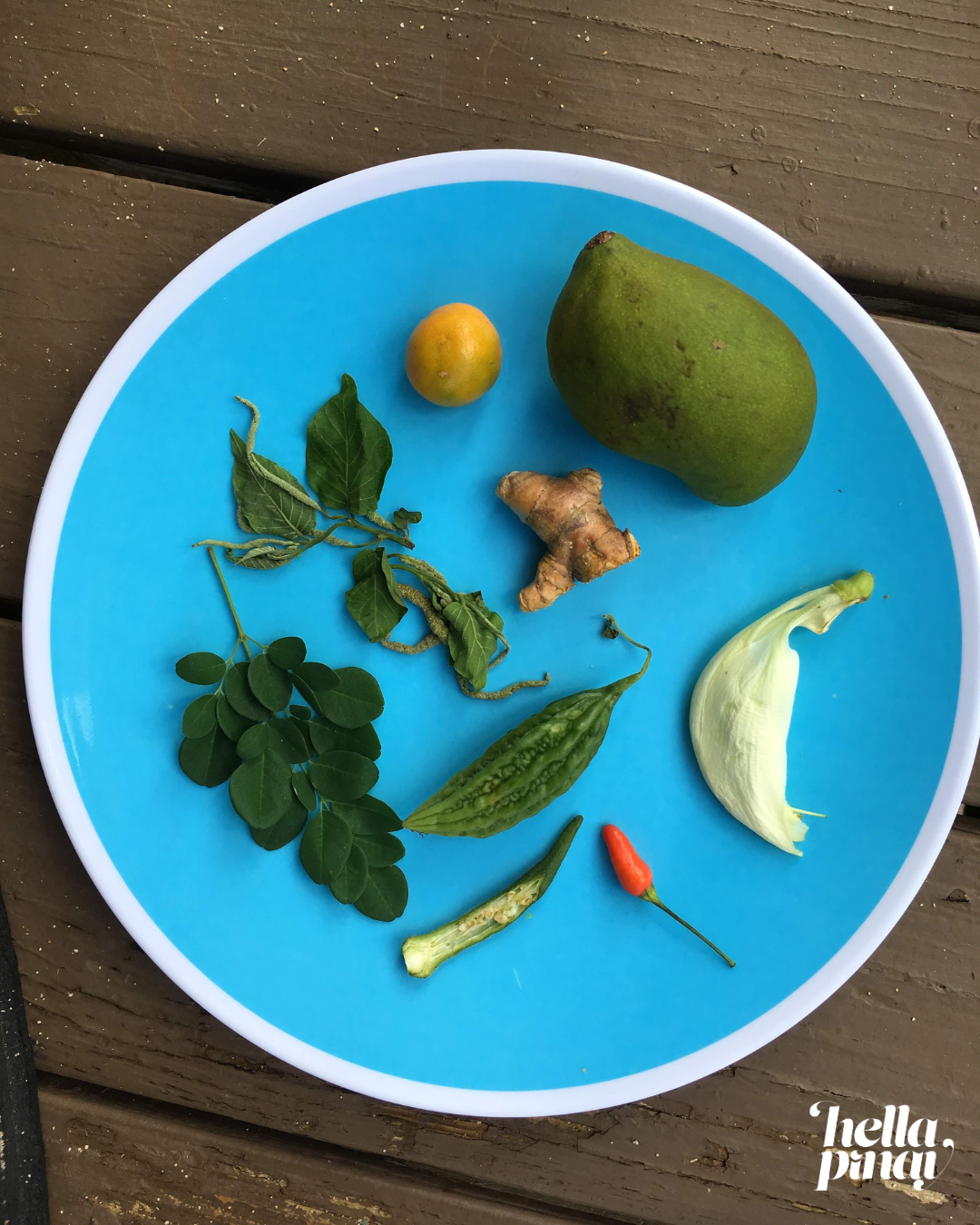
Photo courtesy of the author.
Reclaim the healing powers of food
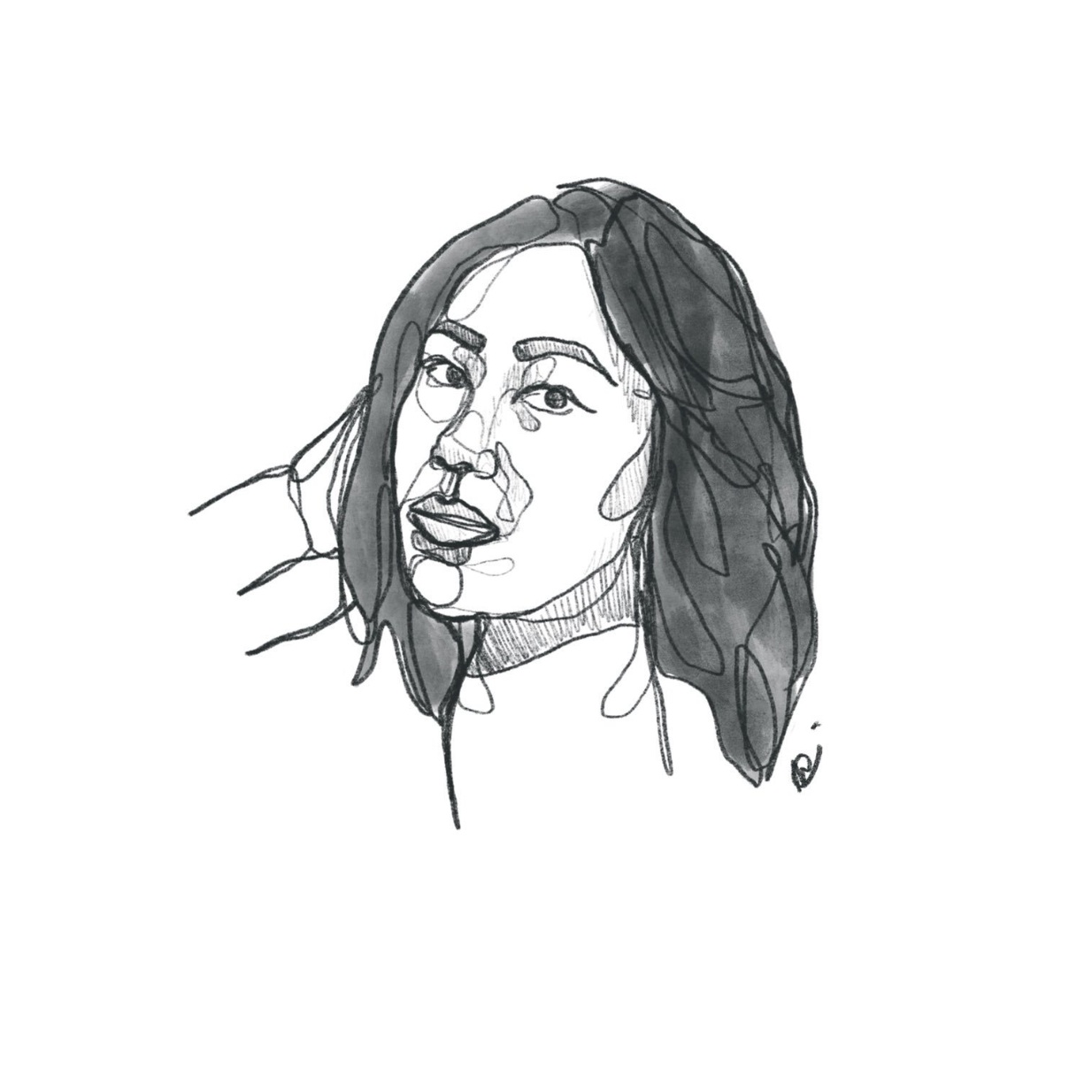
Text Aileen Suzara
Collage Vi Viray
From Hella Pinay 03: The Culture Issue - Spring/Summer 2022.
A dear friend, Mai, recently asked: “What happens when there's no spring?” This was more than poignant wondering. Mai is a farmer and activist, one with a reverence for seeds and a visceral connection to soil.* “Spring” considered California’s drought, the alarming lack of winter rains and snow, and the impacts on future harvests. Across the ocean, Filipino families and farmers face an interwoven climate prophecy. Extreme weather events threaten to uproot agrarian livelihoods across the archipelago, all while communities work to survive and adapt. In Ukraine, the invasion is a human induced disaster, one that displaces communities while destroying farms that feed people locally and across the world. The hardship of the pandemic and climate change reveal just how intricately connected we all are. Breath by breath, raindrop by raindrop, the fates of our people, environment, and food are woven together. Our collective harvest is in the balance.
“Daunting” is an understatement. Yet this reckoning also urges us towards something else –– reimagination. The pandemic stripped away illusions that “back to normal” works for people or the planet. We need systems that can once more sustain life itself. While the scale of the problems (and solutions) are undeniably massive, this season reminds us that we each have a role to play in shaping what comes next.
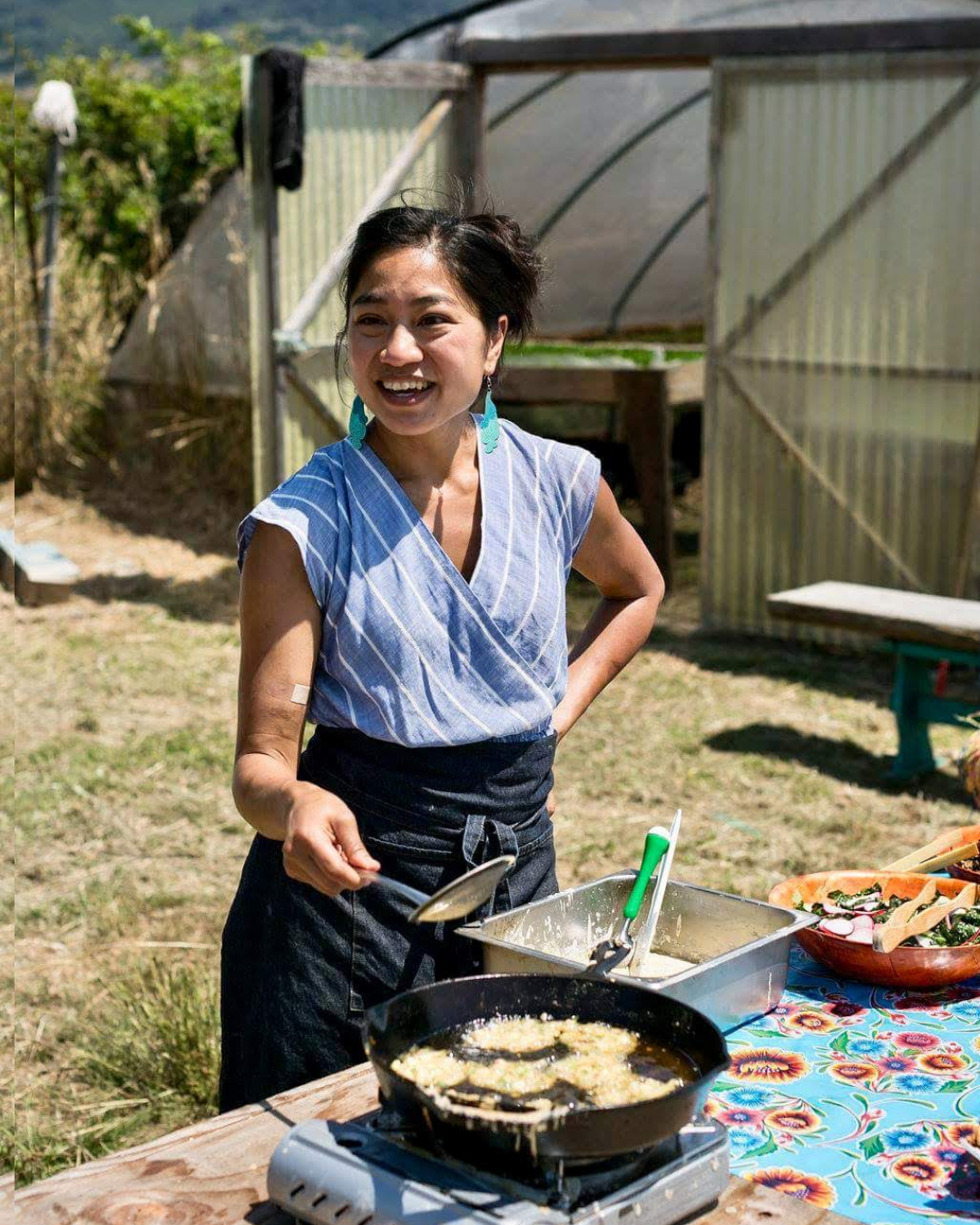
Aileen Suzara. Photo courtesy of the author.
How can food roots nurture these possibilities for change? Food is survival. Food is political. Our food roots carry centuries of colonial harm, yet it is also where we can reclaim healing. Food is how we show care –– like the practice of asking “have you eaten?” upon greeting both kin and strangers alike. Food shows us how practices can cycle and re-emerge in new ways. Mutual aid and collective care may have mainstreamed into the West during the pandemic, but they are also reflected in traditional values of kapwaand bayanihan. Food embodies our relationships with the earth. Most of us are still connected –– or are only a couple of generations removed –– from roots that regard food as a profound source of healing and kinship. The point is: our food roots remind us how to care for each other, and care for the earth. They carry innate knowledge made for these times.
Food roots can recover that sense of possibility. I began learning this years ago, as I started a journey reconnecting with Filipinx foodways. I sought to challenge the narratives I had heard growing up, ones that blamed an “unhealthy” Filipinx diet as the source of chronic diseases. I hoped to taste the power of our collective agrarian roots too often missing from US history books and mainstream representation of the “food movement.” I longed to be part of conversations where questions of “sustainability” and “climate” were shared in the same breath as “Filipino food.” Years later, I can see how this quest for origins was more than grappling with loss and disconnection to the past. It was a relearning of the ways culture survives and can re-emerge. While struggle is an ingredient in our history, our foods are also rich in beauty - of joy, resilience, and adaptation.
For those looking to enrich their food journeys, below is some food for thought. Many of these were inspired by working alongside young people, gardeners, cooks, seedkeepers, farmers, and elders from our Filipinx communities, and learning from and with our multiracial BIPOC relatives. I hope you’ll share your own.
“The experience of food is ephemeral. What one puts into the mouth is the end result of a process that starts with the sea, the soil, animal life.”
Food Is Medicine
Filipinx food origins, like many cultural food roots around the world, recognize the power of food as medicine. Healthy diets protect wellbeing on a daily basis, reconnect us to Mother Nature, and support us as we prevent or manage chronic disease. Displacement from land, forced assimilation and marketing of the Standard American Diet, and corporate industrialization of our foods reshaped how our communities eat. However, there are daily ways to remember those deeper roots, from food literature that celebrates Filipinx foodways to learning and sharing treasured recipes.
Highlights: While kale has become ubiquitous with “healthy greens'' in the US, we can enjoy a rainbow of vibrant produce that includes green goodness shared across BIPOC cuisines (like nutrient dense and delicious collards), as well as crops significant in Filipinx cuisine like kamote tops (from sweet potatoes), mustasa or mustard greens, sitaw or longbeans, the bracing bite of ampalaya or bittermelon, and that earthy powerhouse, malunggay. While the latter has become something of a plant celebrity in US wellness spaces and products, it's a garden and pantry staple that’s familiar to Filipinx foods, and with Afro-diasporic to South Asian cuisines.**
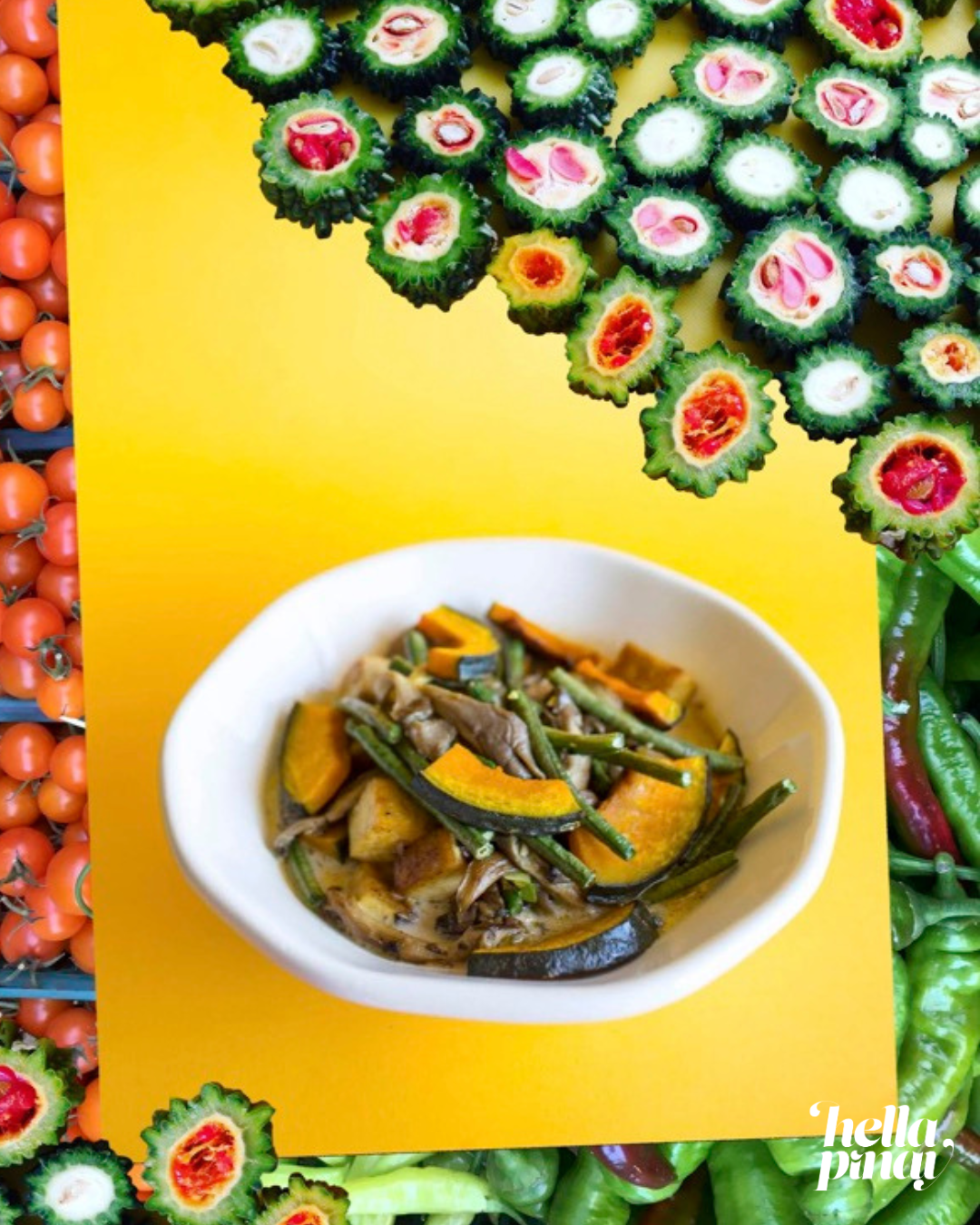
Photos courtesy of the author. Collage Vi Viray.
Oh My Gulay
As a chef and public health nutritionist, one of the most laughable stereotypes I ever heard was this: “Filipinos don’t eat vegetables.” Our rich agrarian roots, dishes like lumpiang sariwa and ginataang gulay, and the verdant gardens of titas and titos in even the smallest urban dwelling tell a very different story. Our food roots reflect a stunning diversity of vegetables, fruits, mushrooms, nuts, seaweeds, and grains, alongside cherished seafood and meat from the land. In the diaspora, we can continue living ancestral food values in old and new ways. Plant strong foods also have a lighter footprint on our mama earth. As scientists and advocates continue to sound the alarm for the climate, they’ve identified plant-based diets as a significant opportunity for adapting and mitigating climate change.*** This wave of “climate cuisine” doesn’t have to be bland either. Weaving in cultural crops and ingredients - especially ones sourced from local, BIPOC-owned, and responsible farms - can be part of this climate aware cuisine, and help to strengthen a web of relationships within our communities.
Highlights: Some of my favorite educators and chefs that celebrate plant-forward cuisines include food blogger and vegan advocate RG Enrique of Astig Vegan and food entrepreneur Reina Montenegro of Chef Reina. Next generation farmers and land stewards with seeds and stories to learn from include Kamayan Farms and Sariwa Farm in WA, Kasama Farm in OR, and nurse-farmer founded Mayflor Farms in GA.
“Imagine a future where the ways we grow, cook, and gather around food affirms our relationships to the places we live, to the people who came before us, and to future generations.”
Nourish Your Nature Green thumbs are not always born. They can be cultivated with practice. Much like cooking, nurturing plant life can be therapeutic and renew a sense of connection to mother earth. You won’t need fancy equipment to welcome elements of land connection into your living space. Beyond flourishing green life in our home gardens, kitchens, and windowsills, nurturing nature calls us to strengthen our connections to political actions, too - from climate change advocacy, to local food policies we can take immediate action on at our campuses, workplaces, and cities.
Highlights: Seed Stewards is a welcoming intergenerational space that fosters connections between seedsavers, farmers, and communities, and celebrates Asian diaspora and Palestinian crop traditions. For those looking to order culturally relevant starters, check out your local nurseries or check out Cultural Roots Nursery, a South and East Asian American owned and run plant nursery that now ships heritage Asian crop seedlings nationwide.
Cultivate Kapwa As I write this, it feels important to recognize that due to systemic barriers, many in our communities struggle to access dignified and reliable food, let alone food considered sustainable, ethically grown, or culturally appropriate. The fight is on until good food is a guaranteed human right for all. While imperfect, the expansion of safety net and public benefit programs such as SNAP or WIC are tools to fill in the gaps, programs like Market Match or Double Up Food Bucks can help stretch food budgets, and food pantries and basic needs programs at nonprofits, schools, places of faith, and clinics work to link resources to community members seeking support.
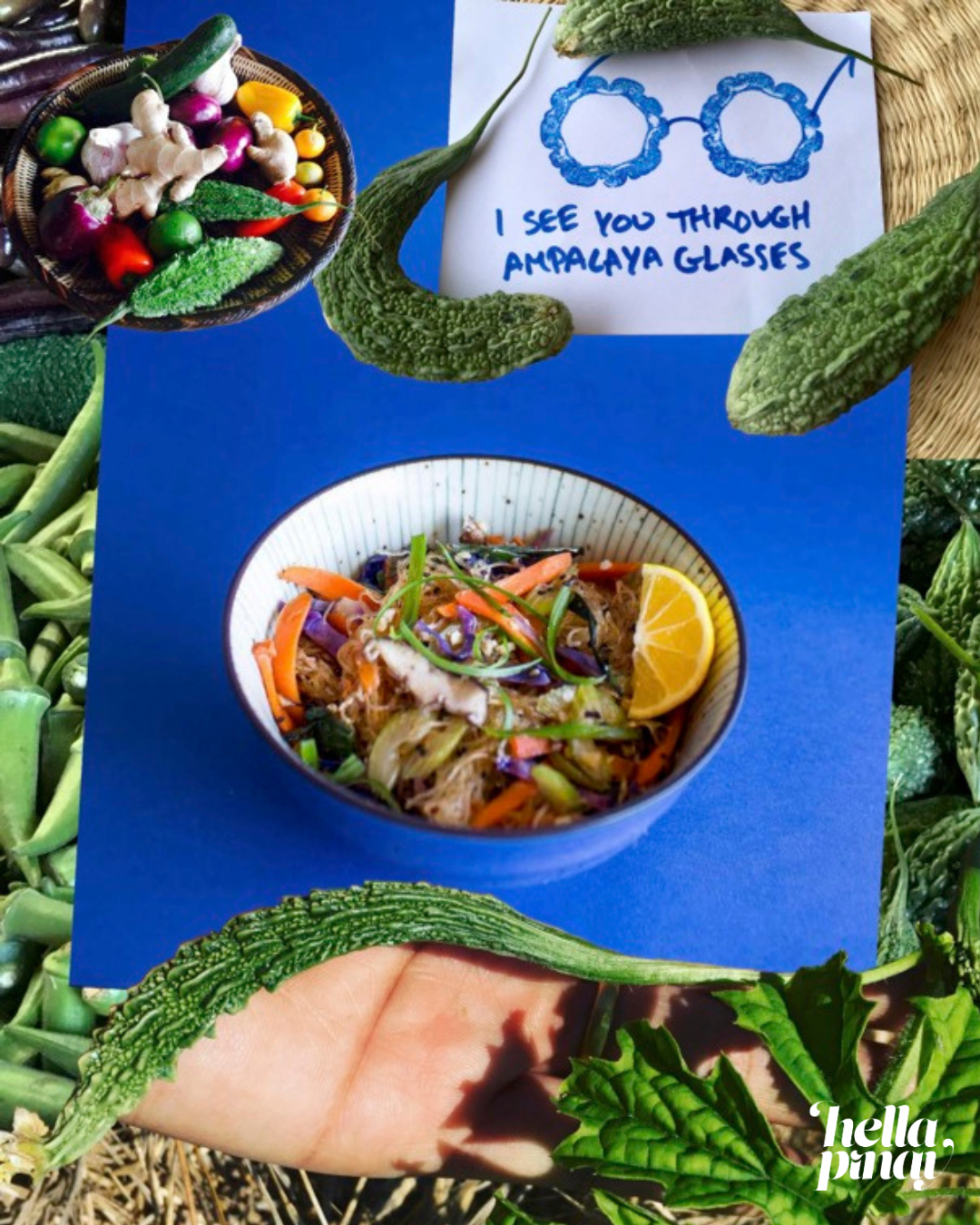
Photos courtesy of the author. Collage Vi Viray.
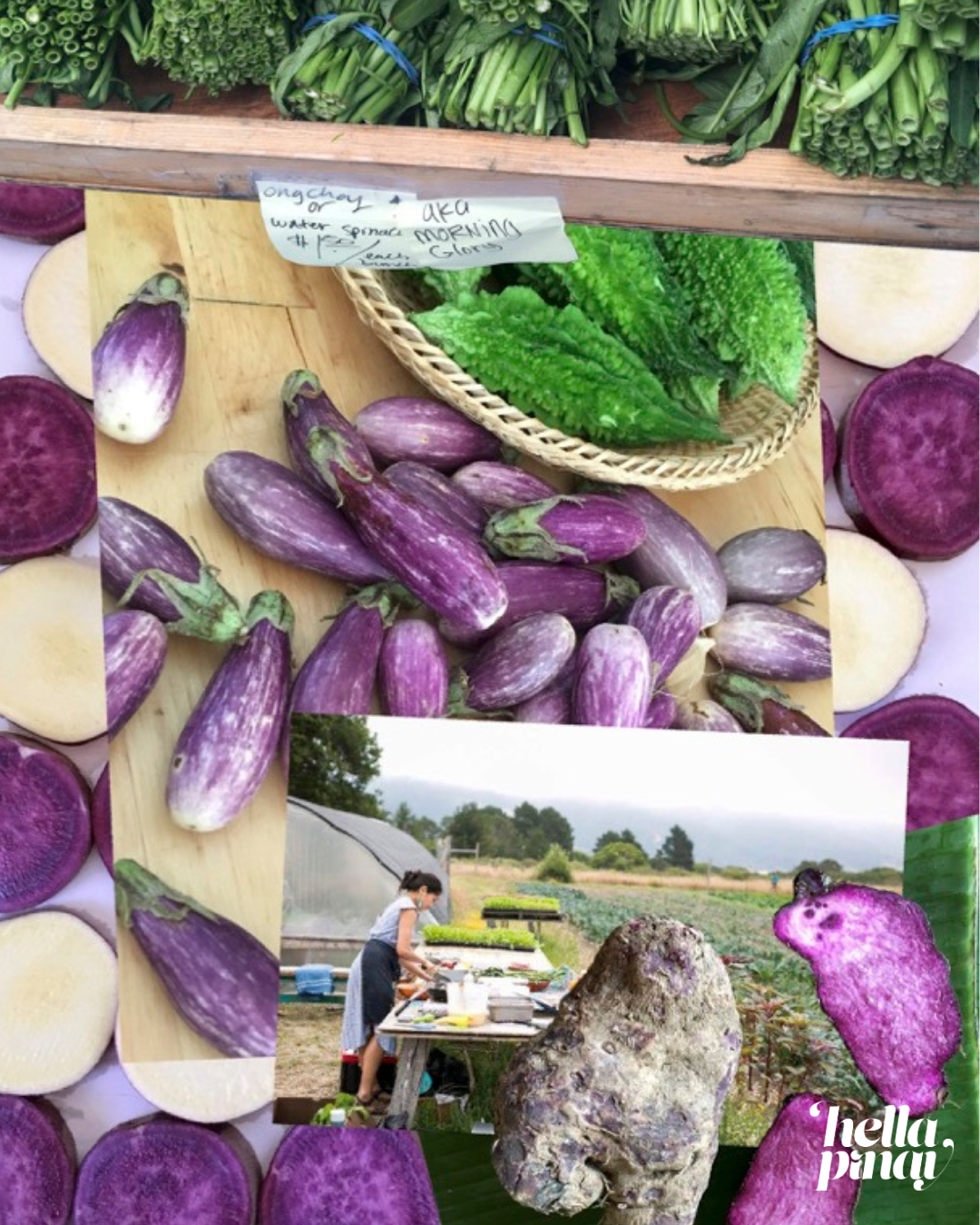
Photos courtesy of the author. Collage Vi Viray.
It also can’t be said enough that all food comes from land. Because of this, it is part of our collective healing as Filipinx to grow solidarity with the work toward reparations, land rematriation, and environmental racism in this country. We live in this complexity while living in a nation built on the massacre and theft of Native lands, the suffering of enslaved Black bodies, and the exploitation of migrant labor. Much like the literal webs that connect root systems underground, our survival is woven together. Some resources to learn more about kindred BIPOC connections in land and food include the Native Land website and Native-led land rematriation efforts, current and historic efforts for Black land and reparations, and movement building of BIPOC workers across the food system.
Our Filipinx food roots are about much more than recovering the past. They are a powerful way we can reclaim our future. This generation holds the possibility to renew our life-giving legacies, and the innate power to create another way forward. Imagine this: nature and our ancestors are speaking through us today. Can you taste it?
* Farmer Mai, https://farmermai.com/
** Daniel, Smriti. “With Murunga, There Is No Need for Miracles,” DiasporaCo Blog
*** IPCC, 2022: Climate Change 2022: Impacts, Adaptation, and Vulnerability. Contribution of Working Group II to the Sixth Assessment Report of the Intergovernmental Panel on Climate Change [H.-O. Pörtner, D.C. Roberts, M. Tignor, E.S. Poloczanska, K. Mintenbeck, A. Alegría, M. Craig, S. Langsdorf, S. Löschke, V. Möller, A. Okem, B. Rama (eds.)]. Cambridge University Press. In Press.
From Hella Pinay 03: The Culture Issue - Spring/Summer 2022.