Bridging Communities at the Blasian March Pride Rally

Blasian March Pride Rally in Brooklyn, NY. Photo: Vina Orden
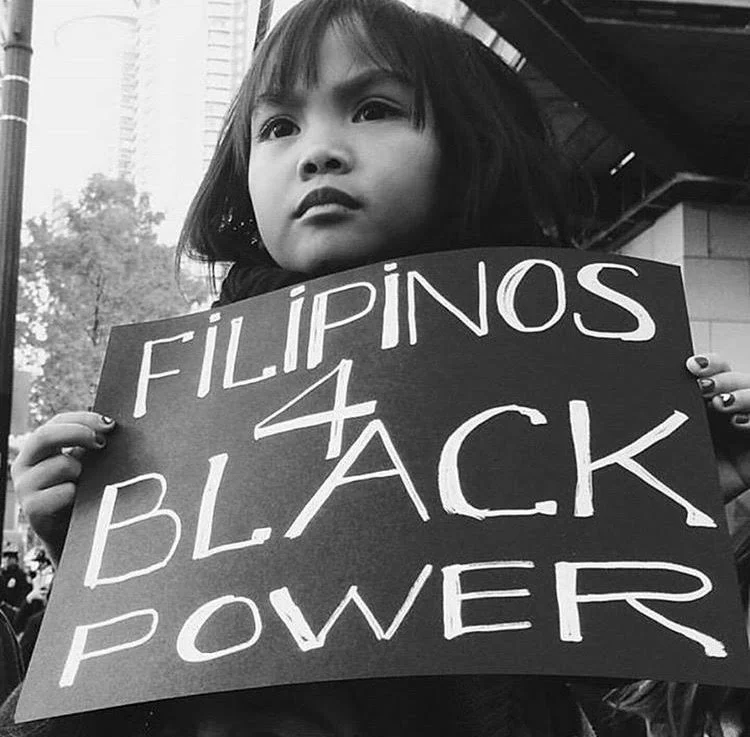
On Saturday afternoon, around 300 people gathered in 89-degree heat on the green beyond Juneteenth Grove at Cadman Plaza in downtown Brooklyn to celebrate Pride for Black, Asian, and Blasian LGBTQ+ communities. I caught up with the event’s organizer Rohan Zhou-Lee before the festivities began. Zhou-Lee, who is of Black and Asian heritage, had conceived of the first ever Blasian March in New York last October to build bridges among Black people who were wondering where the Asians were at the Black Lives Matter protests; Asian activists who felt invisible as allies; and Black women and trans people who felt marginalized from actions that focused on justice for straight Black men.
I asked Zhou-Lee what it felt like to witness the Blasian March grow almost threefold in less than a year. They reflected, “I’m ecstatic, a little bit anxious to be honest, because I did not expect it to grow this much, this quickly. I guess this shows how many people need this kind of space.”

Rohan Zhou-Lee and Kalaya’an Mendoza. Photo: Vina Orden
For activist Carlyn Cowen, a Filipinx Jewish queer nonbinary person, it’s been important to keep showing up: “We can’t stop when we’re tired. We can’t stop when it’s too hot out. We just have to keep going because we have no other choice. We have to keep showing up for each other, and we have to keep fighting for collective liberation.” They also noticed that there’s been a groundswell of people joining the movement since last summer: “That’s really beautiful because there is no ‘too late to join.’ People are always welcome. We always welcome folks with open arms wherever they are.”
As New Yorkers are beginning to see their way out of the pandemic, it’s an opportunity to think about what we mean when we say we’re glad to get back to some kind of “normalcy.” Activist Mari E. said: “If there’s anything that we’ve learned during the pandemic, during the past year and half, it’s that nobody was ever okay with the way things were. They just didn’t know how to address it. Coming out every week is our way of making a statement that no one is going to stand for that anymore, and that there’s a generation of people here who are willing to take action.”

Attendees at Cadman Plaza. Photo: Vina Orden
She continued: “It is a sign of privilege if you’re willing to go back to a sense of normalcy. ‘Normal’ for you was hell for so many people. Now more than ever, people are willing to assess themselves and do the work, and that is one of the most important things. No one is expecting you to go out and burn things, but really it comes down to you being willing to acknowledge that this is something you grew up learning, and it wasn’t something that you should’ve learned in the first place. You have to do the work and unlearn that.”
Theater artist and educator Claro de los Reyes served as a bike marshal for the first time at the march. The message of the Blasian March resonated with him as someone who is passionate about the intersections of identity in work and in life. “Intersections and multiplicities are also a huge part of the Filipino identity ... The best thing that I can do as someone in the theater and also an educator is modeling behavior, not just through the programs I curate but also the actions I do in my daily life. Instead of waiting for the world to change in front of you – with the time that you have and if you have the abilities and the privilege to do so – you can set examples that go beyond words, because sometimes actions and visual gestures can actually speak louder.”
The rally began with speeches by Kalani Van Meter of SVA’s Indigenous Student Union, Jessica Tsui of Youth for Justice, and Gabrielle Francis and Nikita Boyce from Jahajee Sisters. They spoke about resistance and flourishing despite the violence of white settler colonialism and capitalism, and about solidarity in fighting for abolition and collective liberation. As Van Meter put it: “So long as there are people under these systems of oppression, we will be there to resist them until we are all safe and free because we can’t go on like this … Our people will flourish again. We did it once, and we will do it again.”
Before the march commenced, the final speaker Laboujienata Diallo invited everyone to shut off their phones and cameras, close their eyes, and observe a moment of silence for the over 200 trans, nonbinary, gender non-conforming, two-spirit people whom we have lost here in the US since 2013, when the Human Rights Campaign first began tracking these deaths. Then, she read out loud and asked the crowd to repeat their names. Diallo has been dedicated to compiling not just the names, ages, and where and when people passed away but also stories about their life, “because when we die, people tend to focus on our deaths and not necessarily about our lives.” After the solemn memorial, the group filed out of the park.

Malaika Queano and Jerome Viloria of Kinding Sindaw with Zhou-Lee. Photo: Vina Orden
Flanked on the front and rear by lines of bike marshals and on the left and right by street marshals, a smaller crowd of around 100 people went on to march for about an hour from downtown Brooklyn to Fort Greene Park. Onlookers from sidewalks, cars, and outdoor dining areas were greeted with a “moving performance” of dance and kulintang gongs by Kinding Sindaw, a New York City-based nonprofit dance theater company that works to preserve and educate the wider public about the performing arts traditions of the Indigenous peoples of Mindanao in the Southern Philippines. Marchers chanted to the rhythm of the gongs:
Justice for Asians; justice for Black people! Freedom for Asians; freedom for Black people!
Black Power! Asian Power!
Black lives matter! Black women matter! Black trans people matter!
From Palestine to the Philippines, stop the US war machine!
One, we are the people! Two, say it louder! Three, we want justice for our people!
The march concluded with cultural performances and a community cookout in Fort Greene Park. Performer Iman Le Caire of Trans Asylias belly-danced to a song she wrote in Arabic about the trans rights activist Marsha P. Johnson. Among those that provided food support to the organizers and marchers was the organization Welcome to Chinatown and Brooklyn-based establishments Daddy Green’s Pizza, The Soul Spot, and Flip Eats.

Iman Le Caire. Photo: Vina Orden
I had the opportunity to speak with Ken Smith, stepfather of Flip Eats chef Joel Javier, about why he and his wife Sockie attended the event. “I’m here because I was raised to respect all cultures, to see myself as a part of all cultures, primarily as an African man, an Asiatic Black man,” Ken explained. “There is a cultural connection for hundreds of thousands of years with Asia and Africa. It’s pretty much agreed in science that they were one continent, and there have always been those connections with trade routes, with ships, the whole nine.”
“Relative to the US, the Native peoples’ journey, the African American journey – basically anyone who’s not European, to put it mildly – has a struggle here,” Ken continues. “Going back to 9/11, those who took the towers down happened to be from the Middle East, but it became almost a license to attack anyone who was Islamic, particularly brown-skinned Islamic people. Then there was the guy who occupied the White House fueling this racism, basically saying it’s ok to commit acts of violence against Asian people with the whole ‘Asian flu,’ ‘Wuhan flu’ thing. I think more people are getting a sense that a lot of what was told about America isn’t necessarily true. To put it bluntly from an African American person, now you kind of get a sense, a little inkling into our journey, because now you’ve become the pariah.”

Sockie Laya-Smith and Ken Smith. Photo: Vina Orden
More importantly, showing up at the Blasian March was deeply personal for Ken: “My wife is Filipino, so I have a blended family. We’re Asian and African American. When there was a woman who was attacked on the West Side recently and the security people essentially did nothing – well, the woman was a 65-year-old Filipina. My wife is 65 years old and Filipina. So, that actually really hit home to me.
Hopefully, these terrible events can actually lead to more interaction between Blacks and Asians because we don’t talk to one another. That events like this can actually break all of that and start to make inroads in it. When it comes to music, Asians are into R & B, they know all that old music – that’s one link. There’s similarity in the cuisines. So, if you take a moment, you can find there are areas of connection that are starting points.”
Nancy B. and Ken L. brought their son Dashiell (Dash) L. to the march. During the surge in violence against Asians in March, Dash asked his parents, “Does that mean they’ll hurt me when I grow up?” Ken said, “We brought him to the rally in part to answer this question. To show him – in addition to telling him – what he belongs to, can rely on, and has a responsibility to protect.”
Nancy added: “My priority as a parent has always been to make sure that my son is being raised to see the spectrum of experiences as normal – that he sees what is in people’s hearts. I’m so grateful to Rohan for creating an event in which our differences are celebrated and embraced. Rohan’s spirit and message are incredibly happy, fierce, and filled with love – a rare perspective these days. I wanted Dash to feel that.”

Dashiell (Dash) L. Photo: Vina Orden
Zhou-Lee left the crowd with this takeaway: “We say that today is not a moment but a movement, and I really hope that everyone takes what you learned, what you felt, how you grew, into your everyday life; asking yourselves why this division, why the separation, who’s really keeping us separate. [This] year, the University of Michigan released a [2020] survey about the hate crimes toward Asian Americans and they found with those with confirmed race, 89.6% of those perpetrators were white. So why the narratives we are being fed, mythology we are being fed that Black people are the perpetrators is something that we need to question as we move forward. And I want to remind the community that through our intersectional struggle comes our intersectional power, and through intersectional power comes intersectional joy.”
From the conversations I had with people from different backgrounds and generations; from the intensity with which they applauded and chanted; from the smiles of gratitude exchanged as volunteers handed marchers water bottles and heaped food on their plates, it seems that everyone felt that power, that joy, even in these challenging times. We glimpsed what the future could look like if we only had the courage to step into our vision and work together to make it our new reality.

The author on Saturday at Fort Greene Park. Photo: Gloria C. Orden

Vina Orden
IG/Twitter: @hyffeinated
Vina Orden (she/her/siya) is a writer, artist, and immigrants’ rights and social justice advocate based on Lenape land/New York City. Currently, she is a nonfiction contributor to The Margins digital magazine of the Asian American Writers' Workshop and Associate Editor for poetry and creative nonfiction at Slant’d magazine. She also is the co-host, along with Tamara Crawford, of The Lift Up, a monthly transatlantic conversation about books, writing, identity, and representation. She was a writer and cast member of the award-winning 2019 production of “Raised Pinay” and a member of the We Make America artist/activist collective.
Read Next


Follow Us