Aiala

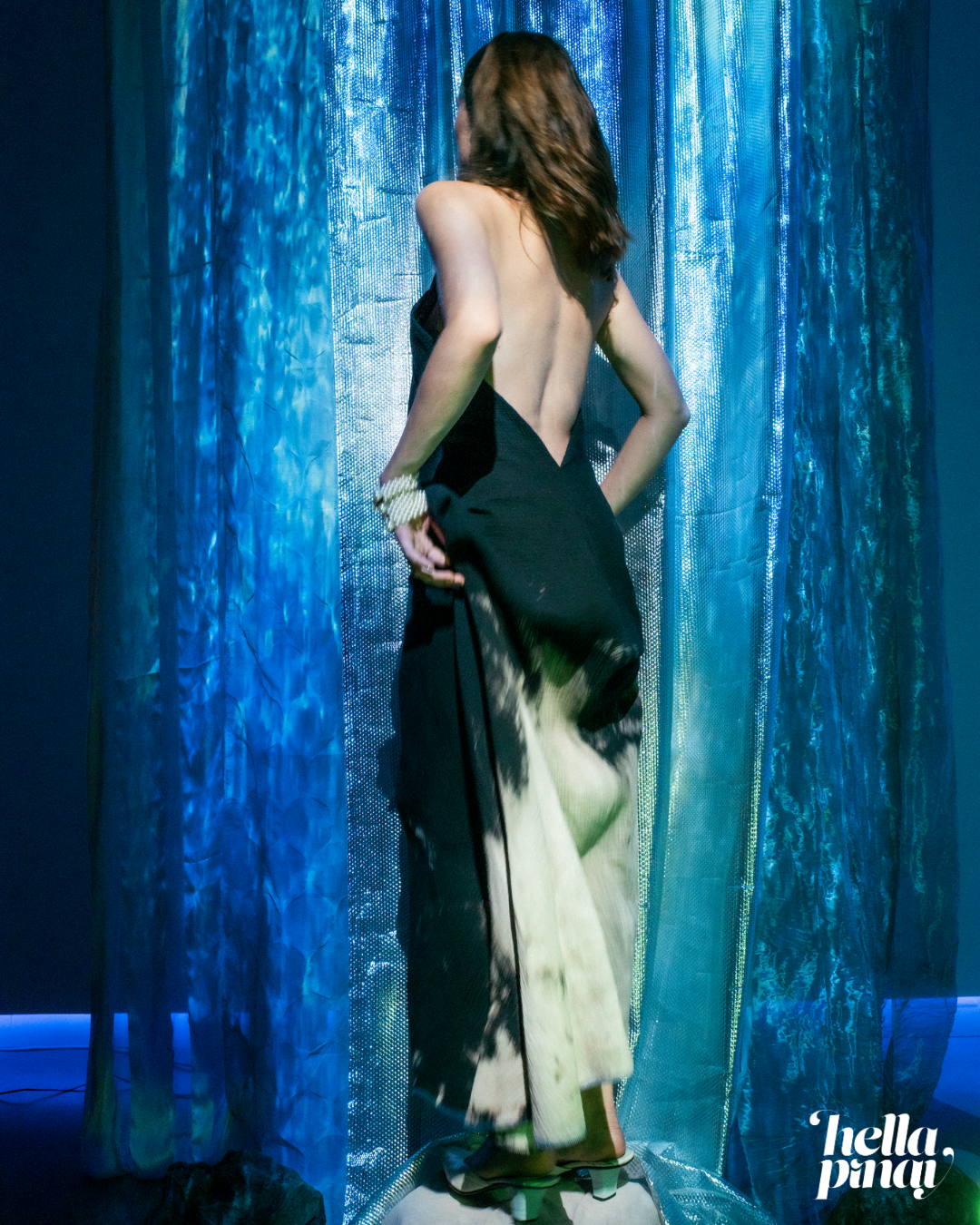
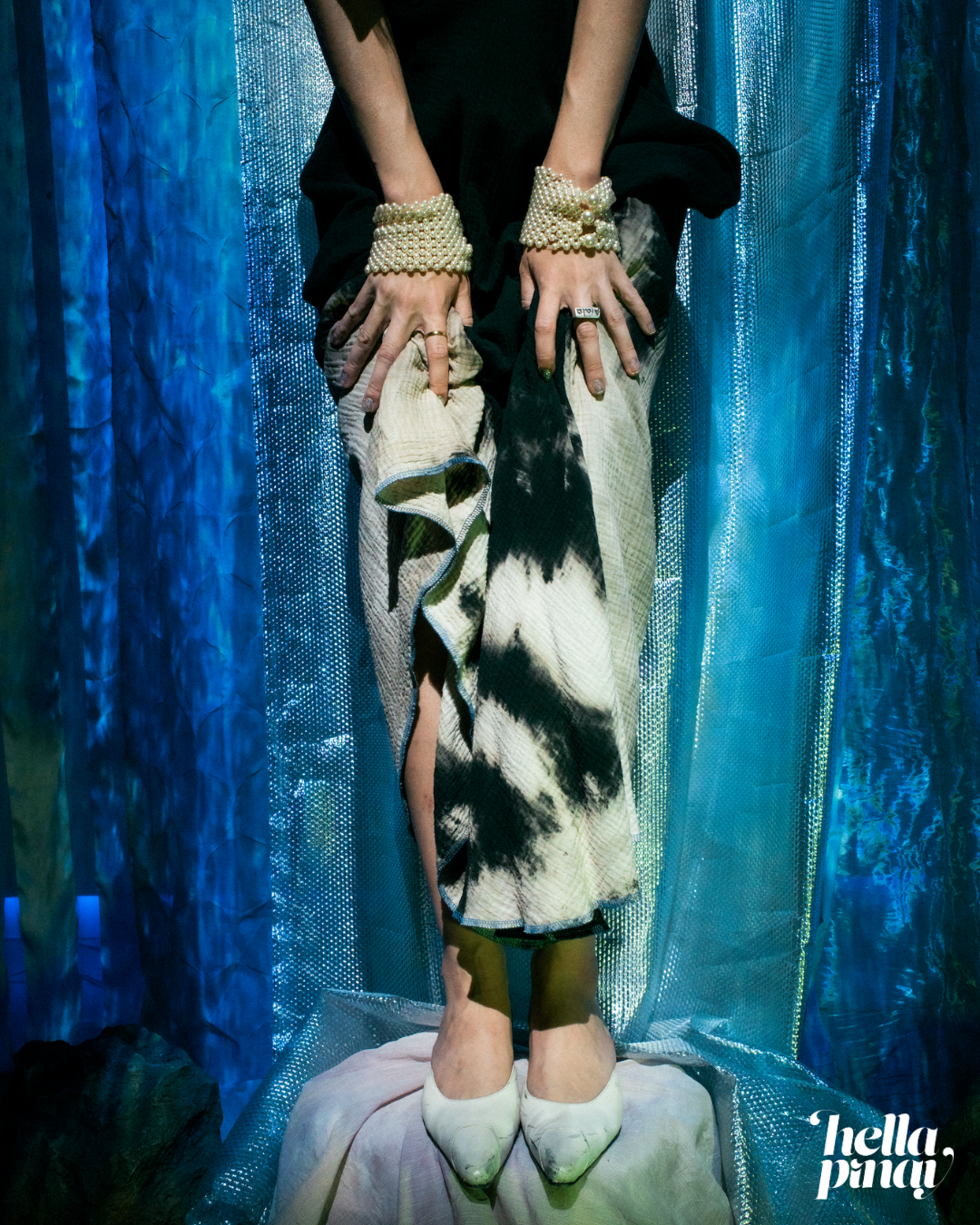
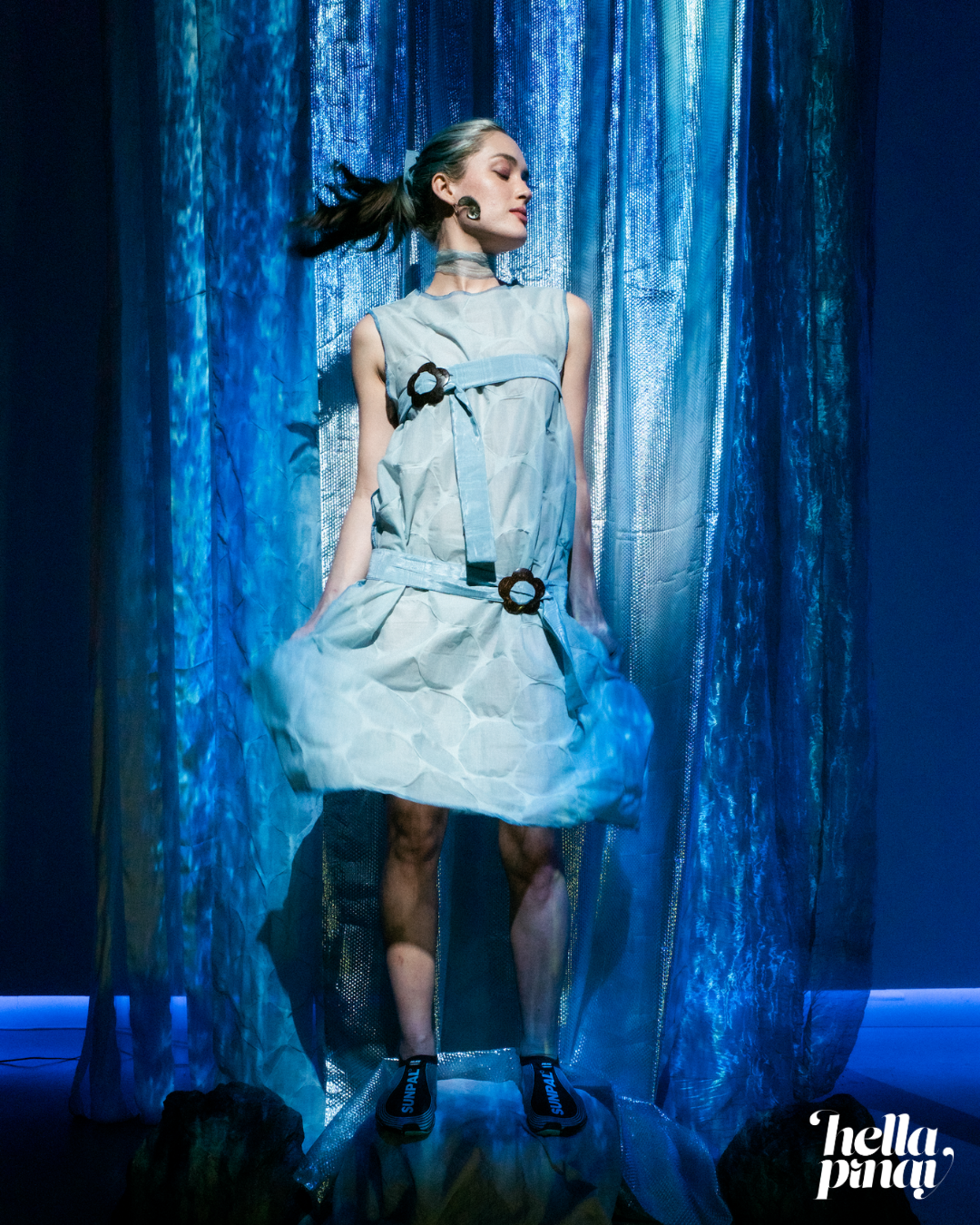
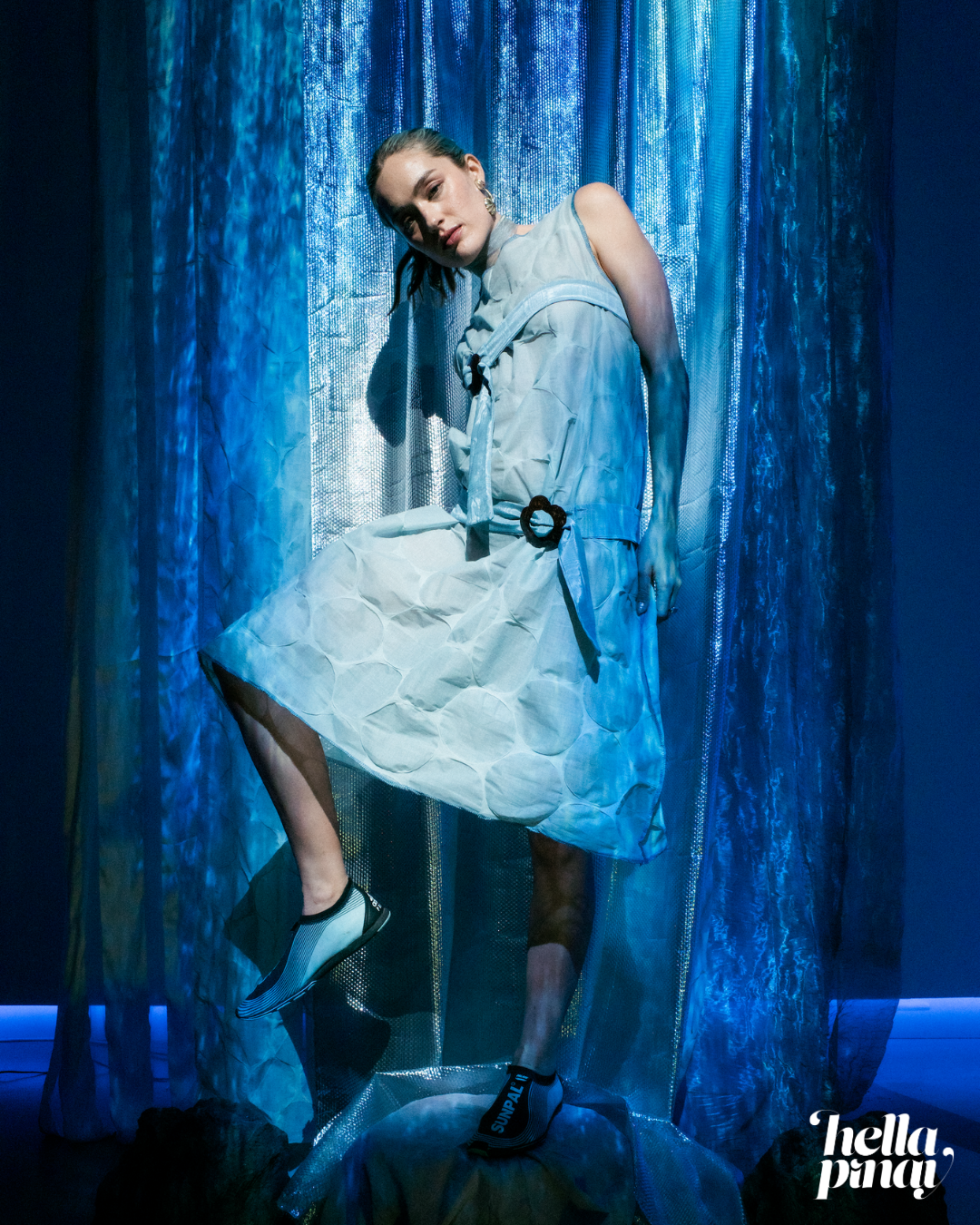
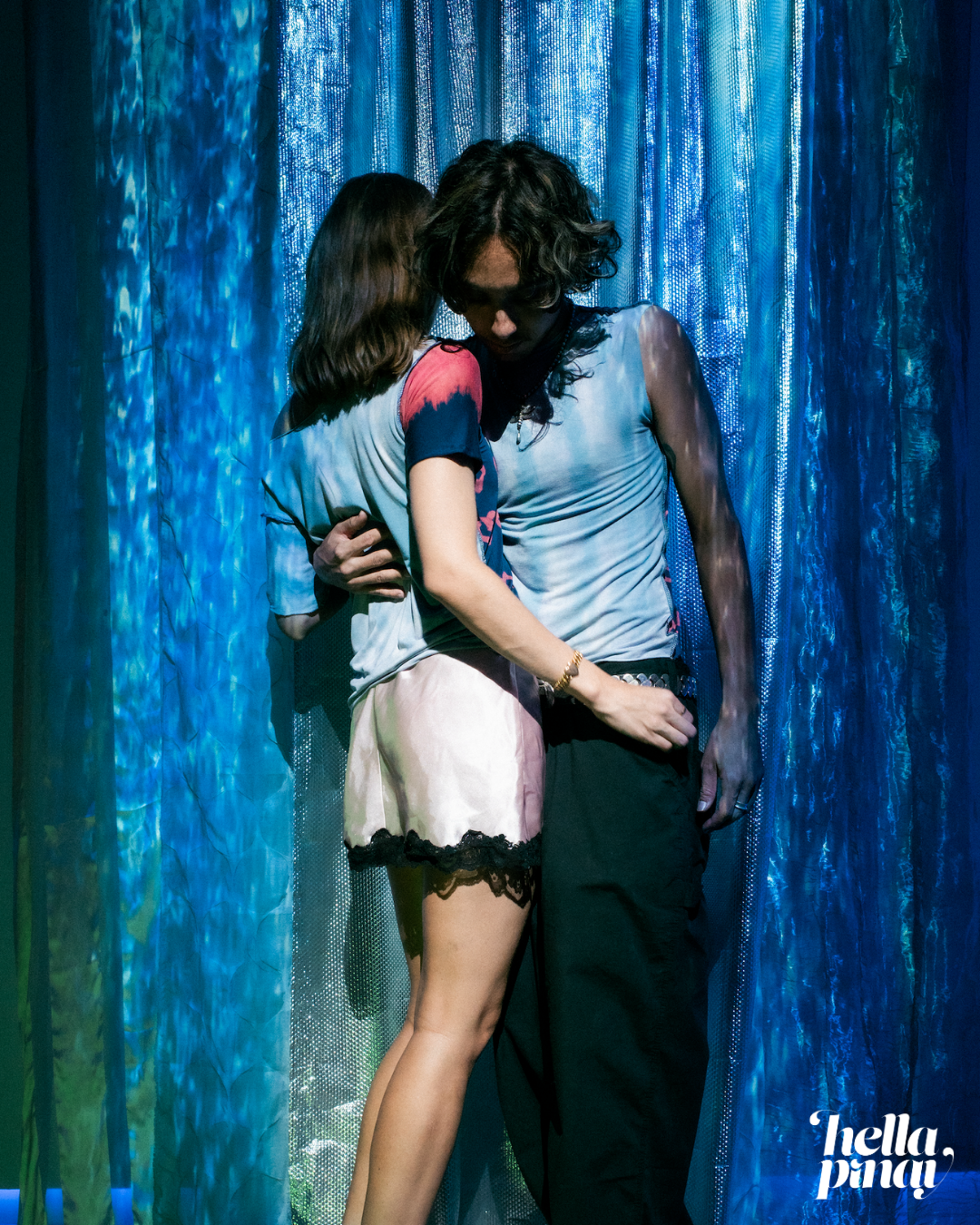
Aiala in a look from her Date Night collection. Photography Cole Turner.
Now based in Honolulu, the designer talks about dressing the global island girl, her new wetsuit line, and life after TOQA.
Text Stephanie Gancayco
Interview Eunica Escalante
Photography Cole Turner
From Hella Pinay 04: The Fashion Issue. Get your copy here.
Introducing Aiala, a trailblazing designer whose creative journey unfolds against the vibrant backdrop of Hawaii’s cultural tapestry. The daughter of a Hawaiian jeweler father and Filipina costume designer mother, Aiala began her career with a BFA in apparel design from RISD and a stint at Telfar. Formerly a driving force behind tropical-it-girl-meets-eco-fashion pioneer TOQA, her venture into solo design with last summer’s Date Night collection reflects a profound connection to her surroundings and heritage. Inspired by Hawaii's slower pace and rich material culture, she blends remnants from local shops with personal artifacts from the Philippines, crafting pieces that embody both functionality and island cool.
Her upcoming wetsuit line, born from a profound love for the ocean and a commitment to sustainability, promises to redefine the industry with eco-friendly materials like seaweed lycra and 100% rubber. Aiala’s designs not only celebrate island life but also challenge traditional norms, aiming to empower and clothe women in a sport historically dominated by men. With her distinct blend of style and purpose, Aiala is at the forefront of sustainable designers for a new era.

Handbag, Aiala. Photography Cole Turner.

All clothing and handbag, Aiala. Photography Cole Turner.
Tell me a bit about the Date Night collection and how it came about.
Aiala: It came about kind of organically because [my partner] Alec asked me to be a part of this show with him. He’s the projectionist for Kaiao Space. So it was nice to have a due date and also the freedom to just have fun and do a little collection. I mostly used scraps that I had in my house, different remnants and fabric from local shops here. And then we went on a trip to Japan a month before the show, I got a few more things.
How do you think that moving back to Hawai’i has changed your approach as a designer in terms of visuals? Because I feel like this last collection was very Hawai’i-inspired.
Aiala: I think design is all about materials. A lot of it was just rummaging through what my mom has saved. She has a collection of all her favorites that she's had over the years. And I have the same from the Philippines and college. And then also looking at what's here locally at fabric stores and a lot of Filipino wholesalers for trinkets and stuff. That was cool to see all the aunties, and that's where I got the coconut rings and the embroidery shells. It's a nice slower lifestyle, I would say. And that's inspired me, even the way to work. Everything I want to do is more ‘work hard, play hard’ balance. I feel like people do that really well here. The change of pace has been really nice, and definitely made me not go crazy over the show. I had a really great time, sewing everything, designing everything, and there was no pushback from the universe. It was harder for me to have that in a bigger city. That balance. So even just the better sleep influenced my design [laughs].
Just like, being a functional human? And not a cog in a machine?
Aiala: Yeah, totally.
So the designs for this show came out really organically.
Aiala: Totally. And it was interesting to see how a lot of people were like, oh, this reminds me of TOQA, this reminds me of TOQA. I was like, well, yes, 'cause I am TOQA. This is another expression. It was interesting using different materials, seeing where my style is for a unisex capsule collection for a date night. Like there's no “sport” in this collection, besides aesthetic cues maybe. But this was ultimately made for what we would wear as island people who want to look good on date night with themselves or family, or their loved ones. So I am dressing for the island girl no matter what.
Before it was like a Philippine island girl. I guess it's like, global island girl.
Aiala: It's global.
About your new line, I guess my biggest question is: is this something new for you? Is [Date Night] going to be the birth of your solo career as a designer?
Aiala: No, I'm working on something new. I'm starting a wetsuit company. I'm still trying to figure out where and how I'm gonna make it, my supply chain and everything. But I've already got my logo and the design part, I'm just trying to pull it together. And also just try to find the right team to help me. Especially here.
Because this is gonna be a solo project of mine, I wanna start a little slower and also try to figure out how this new life plays since I moved back [to Hawai’i] during Covid. The [2022 Hawai’i] Triennial was convenient [because] I was gonna come back anyway, but when Covid happened it was so bad in the Philippines that I really wanted to get back to my parents. I feel like my parents are getting older and I wanna stay around them, and I'm just kind of helping out my mom and stuff right now. But anyway, my new life is here. I learned a lot from TOQA and I just want to review everything and see how it works. I've been asking around here how production is made. Like independent brands, how do they get their fabric? A lot of it is still off-island, which makes sense because it's so small. But people make it work.
And then I worked for XCEL, to learn about wetsuits. It was huge in the 90’s, it's a wetsuit brand that’s made here. When I moved back I wanted to immediately learn. I like, looove swimsuits. I know swimsuits. I can do a bikini, I can do a one piece…[laughs]
Like in your sleep.
Aiala: Yeah. But I've never actually made a wetsuit because it's a little more complicated and the machines are totally different. It's a whole technology. It's mostly a glue process, actually. I made a few pieces at XCEL. I made hoods. I'm constantly getting asked [about them] whenever I swim. But I haven't made a full piece yet. The glue is really hard to get, but it's really cool. It's more of like a cut and paste process. There's no seam allowance, which is very interesting. It’s just like construction paper.
Whoa, that's so cool.
Aiala: It is cool. There's a few places that do it well, and Japan is one of them. They do a lot of wetsuits and their neoprene is the top in the world [in terms of] warmth, and thinness. I'm a freediver, a spearfisher. So I’m constantly wearing so many wetsuits and everything just wears down because a lot of wetsuit material isn't of quality. But I obviously wanna do it sustainably. And Patagonia helped this project make 100% rubber tree wetsuits. Wetsuits have always been half natural, half synthetic, like a mix of discarded oyster shells and plastic. But it was a new process that Patagonia helped fund because they're using it, the 100% rubber. And now it's open. So that's what I wanna maybe try, in terms of the wetsuits.
I definitely still wanna make swimsuits, but under the guise of wearing your swimsuit under your wetsuit. 'Cause there's not really that realm that I'm always thinking about. A lot of the TOQA ones were for that, they didn't have ties. That's kind of the umbrella, the world I'm gonna create. I know so many women are getting into the freediving lifestyle. And I wanna clothe them. Protect them. Make them cute. Because there's nothing out there.
So you're like, there's a place in this industry for what I wanna do.
Aiala: Yeah. Constantly. There's no womens[wear] because it started as a man's sport, like every fricking sport. It was a European thing, I think. So it's never about a woman's body. It's always fit for a tall, skinny male. So it's a huge market.
When did you get into freediving? Because it seems like that's a really big inspiration for a lot of the things you design.
Aiala: More seriously during the pandemic, when I became certified. And then a year ago I became a “waterman.” Certified water woman.
What does that mean?
Aiala: Just like, I can save people. Like a safety diver. I have a snorkel club here I created from the pandemic as well, just our friends and whoever wants to swim. We teach them, level up with their fins and stuff.
That's so fun. What’s it called?
Aiala: [Laughs} Snorkel Club. It's just called Snorkel Club. And then we have Club Snorkel too. After hours. Where we all DJ. I wanna make clothes for everyone. And gear and everything. It started when I was a kid. My mom would always take us swimming and I just loved it.
So water or the ocean has always been a part of your life.
Aiala: Yes. I've always loved swimming, like that's my number one…the calling in my life is the ocean. For the wetsuit brand, I’m trying to figure out how to tie it in. Because I'm not down for recycled plastic textiles.
Right. Is it that the microplastics just end up in the ocean anyway?
Aiala: Yes. It's just coming off in your laundry, coming off on your skin. But there's so many alternatives. For my bikinis and not the wetsuits, there’s seaweed lycra now. I feel like that's the closest thing to spandex that you can find. So those are the materials that I'm gonna source. I just need to figure out the places. I think Iceland is the one who's doing the seaweed, but I'm also curious what would be the process here because we have so much seaweed. And there's constantly not enough people to clear out the invasive seaweed too. There are a lot of cool scientists on this island, but that seems like a hard stretch [laughs] but who knows? I want to just weed out all the options before hiking anything. I haven't gotten there yet though.
But then also I think what's so cool about even the work that you did with TOQA was like this intersection of functionality, but also like…
Aiala: …style…
It's like club cool.
Aiala: Like feeling good. And then dressing for the occasion, which is the functional part of all the clothes that I make. I've always wanted to get into more swimsuits, wetsuits. All the swims I did for TOQA were a fun intro. I did a swim collection in college too. A swim office collection. So I'm really excited about the wetsuit company.
So it's still sustainability-based, right? Why is that important for you to keep?
Aiala: It's the same as in TOQA. It was like, we are from islands. It’s so in your face, all the plastic on the beach. And in Manila too. All the typhoons. You're violently shown the state of the world almost more clearly on islands. So I feel like it has to be a part of the way. It's how we survive as island nations.
It's interesting because when we did TOQA, it was before the pandemic and not many people were talking about climate change or the plastic on the beach – so much less than it is now. There weren't that many sustainable brands, which is why I feel like a lot of the interviews I've done before were pegged as like, ‘TOQA is a leader in sustainability.’ We were in a textbook too…just because no one had coined the term ‘deadstock’ in their fashion. It was so new back then. And now that it's getting even worse, it's kind of nice because there's so many new solutions, like the new wetsuit and the seaweed span. But you do have to weed through and think about it. It might be really easy for a lot of fast fashion companies to stick ‘Made out of 10 plastic bottles’ on there. But I don't think it's the right way to go.
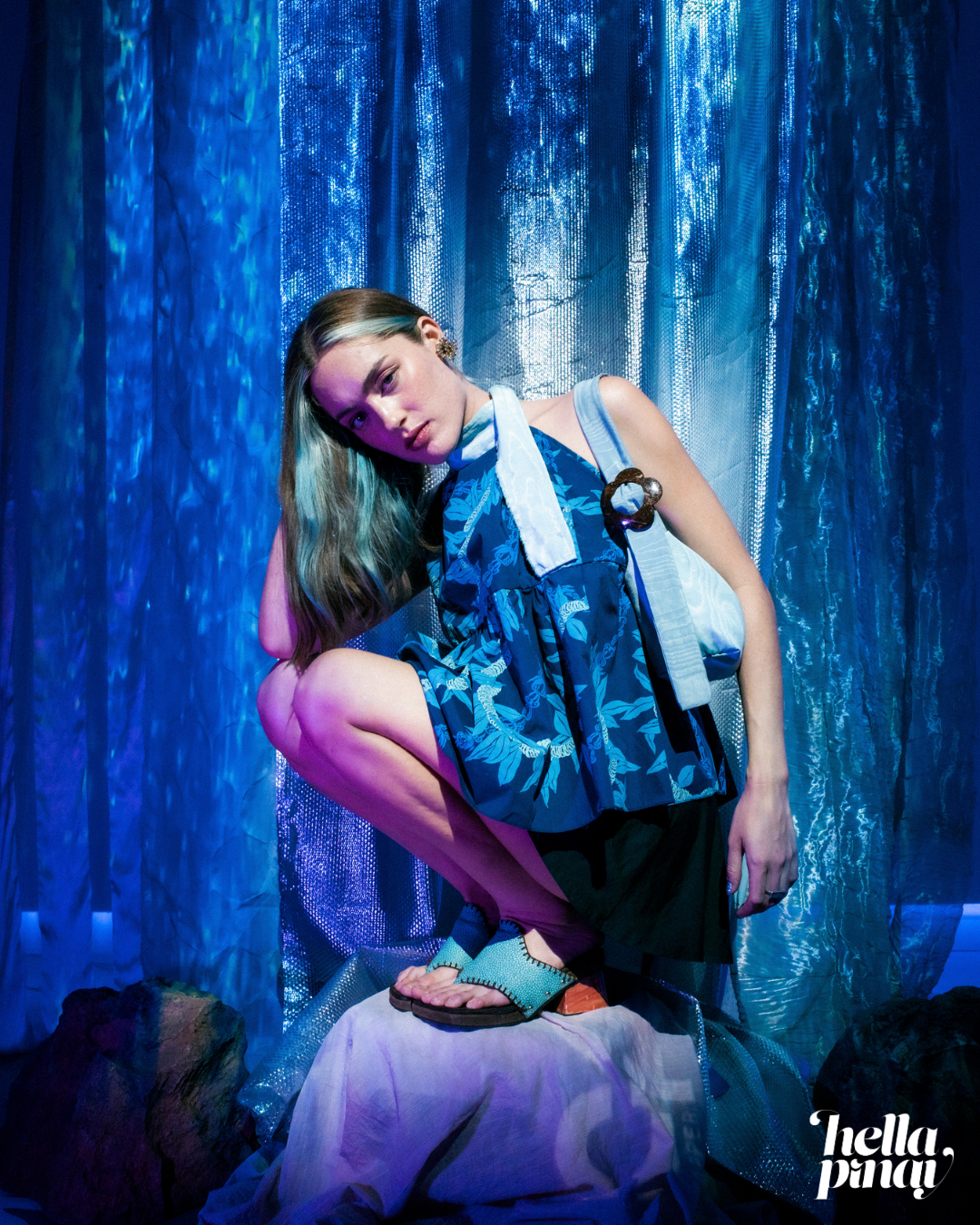
All clothing and handbag, Aiala. Photography Cole Turner.

All clothing and handbag, Aiala. Photography Cole Turner.
For your new swimwear company, what’s the look or the vibe that you're going for?
Aiala: Hmm. It's interesting because ‘Sport Resort’ was something that came out of my college collection. I was trying to figure out what my design is and that terminology – while it is now coined from TOQA because that's what we did – it's…I'm trying to figure out something else, but it's definitely the same. Like that's kind of like…my design.
And it's you.
Aiala: Right. So I gotta figure out a different catchphrase. But ‘Sport Resort.’ It's definitely still functional and stylish.
How do you define resort?
Aiala: I'm obsessed with Resort. Resort is my favorite type of collection. Those are all the runways that I would watch. But it was interesting because it's ‘Cruise slash Resort,’ but it's created for the tourist. It's a tourist point of view, also the people making the collections. That's why we wanted to start TOQA as like, there's not enough representation from actual island people about island collections. In the fashion capitals of the world. Which is why they're called ‘Cruise’ collections. And when I go to a hotel here, like a resort and the gift shop, it's barely local designers. It's just remakes of what tropical dress is from a nontropical person, basically. So I definitely want to try to create for that resort. Resort for me is having fun with island wear. The mindset is like, okay, ‘island wear’…what is comfortability here? It's shorts, T-shirts, slippers. But how do you make that fashion? How do you feel good? And I feel like a lot of people here always complain that, oh, I can't wear what I actually wanna wear because I would stick out too much. I'm constantly thinking about that because I feel like there's a delicate balance, but there are opportunities to have fun and people always appreciate when someone gets dressed up or has fun with their outfit.
So that's what I want to continue with the wetsuits. I'm trying to find a perfect balance with functionality. And fashion. And fun.

Other than your love of the ocean, what do you think is inspiring you right now as a designer?
Aiala: Just like love…period…I would have to say family, and family love, romantic love, all of that. Home love is inspiring me right now. It's so nice to be with my family and to be back in my family place. I'm really enjoying how it's slow. I'm inspired by everyone here, honestly. Also all the Filipinos. And I'm trying to conceive a Filipino contemporary show here. Maybe next year, I wanna curate it.
There's so many people here and I'm so inspired constantly. Honestly, I just want everyone to be lifted up. And everyone's so supportive. I love it. It's like, if New York's a fun big city, then there's Manila and it's smaller in a way. And then this is so much smaller, but it has the same energy. It's just harder to find maybe? But yeah, all around it's inspiration. There's so many inspiring women on this island.
I think that's such a great niche that you are filling. Wetsuits are usually neutral colors and super functional. It'd be really interesting to see how you mix your aesthetics.
Aiala: I'm so excited. It's a relatively new sport.
Free diving?
Aiala: Yeah. Like relative to the world. Even contest-wise, it just came up in the scene, so the rules are still being made and safety is still being created, and it's still so male. So therefore wetsuits are relatively male In terms of like…human dress, you know? So there's so many things to do, I can't wait. What's in my mind is like literally nothing like what you can see. I'm so excited.
From Hella Pinay 04: The Fashion Issue. Get your copy here.
Models and Artists Aiala and Alec Assistant Photographer Vincent Bercasio
Shot on location at Kaiao Space Gallery, Honolulu, Hawai’i