
Ouida
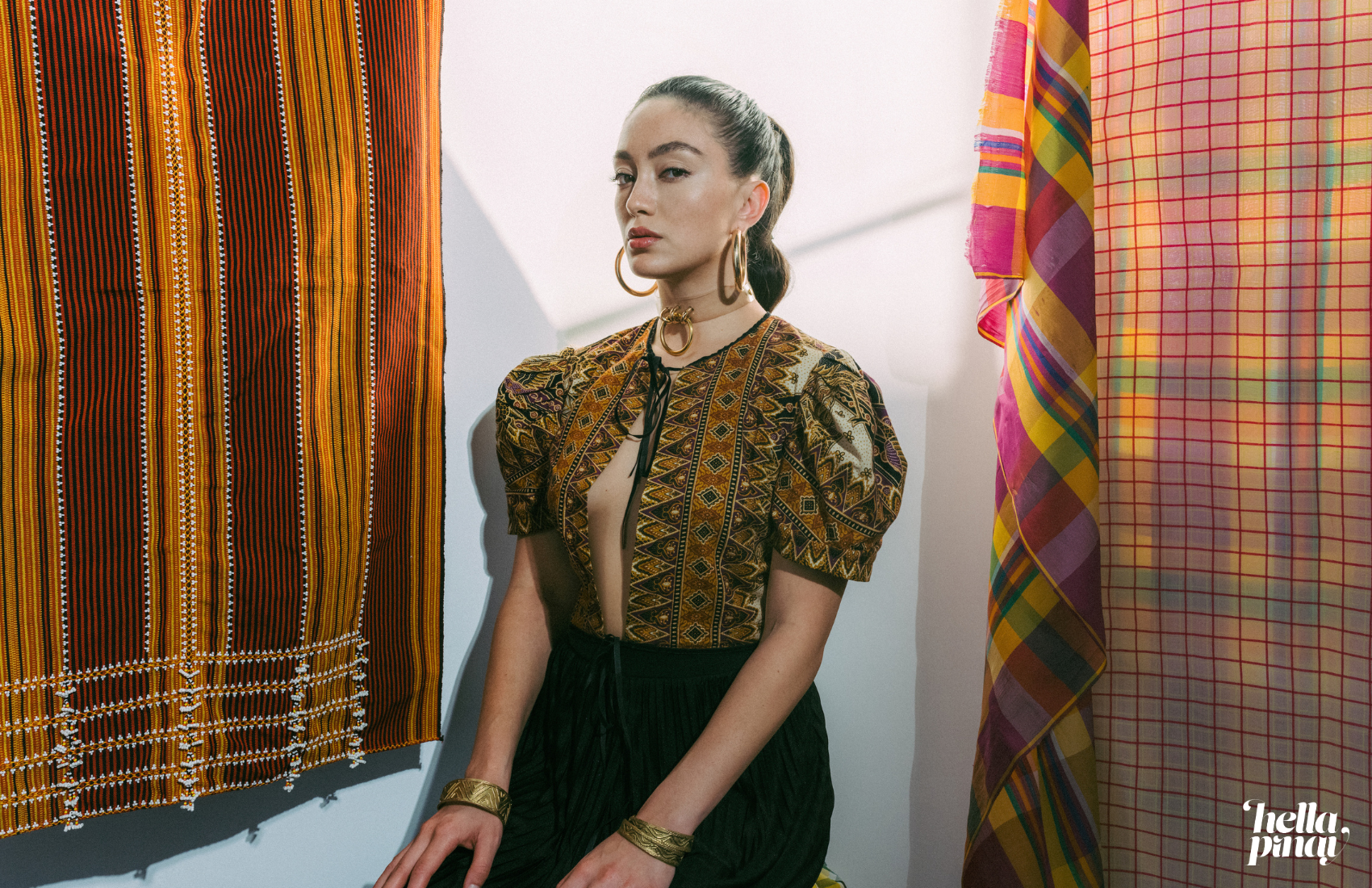
Top, Vinta Gallery. Bracelets, Style Isle PH. Pants, earrings and necklace, stylist’s own. Photography Marc Chua.
Singer-songwriter Ouida unapologetically redefines sound in upcoming EP
Text Amyra Soriano
Photography Mark Chua
Styling Stephanie Gancayco
In her early 20s, singer-songwriter Samantha Ouida Hyland—better known as Ouida—was signed to a Bay Area manager who compromised the integrity and creativity of her work. “My music manager at the time told me to keep my Asian heritage a secret because statistically, ‘Asians don't sell.’ Long story short, that work relationship didn't last long,” Hyland says.
Now as an independent artist, she’s free to make music more true to herself. “It became more important to me as I got older and ventured into more spaces where there were not a lot of Asians present to really advocate for myself, celebrate this huge part of my identity and life, and maintain that connection to my community and heritage.”
Hyland, who is Filipina and Irish, grew up in a musically oriented household with a canter church singer father and siblings who all played instruments. “It's my first love,” she says about music. “The younger version of me that's still inside just wants to be seen; like write the music, make it true, and share it with the world.”
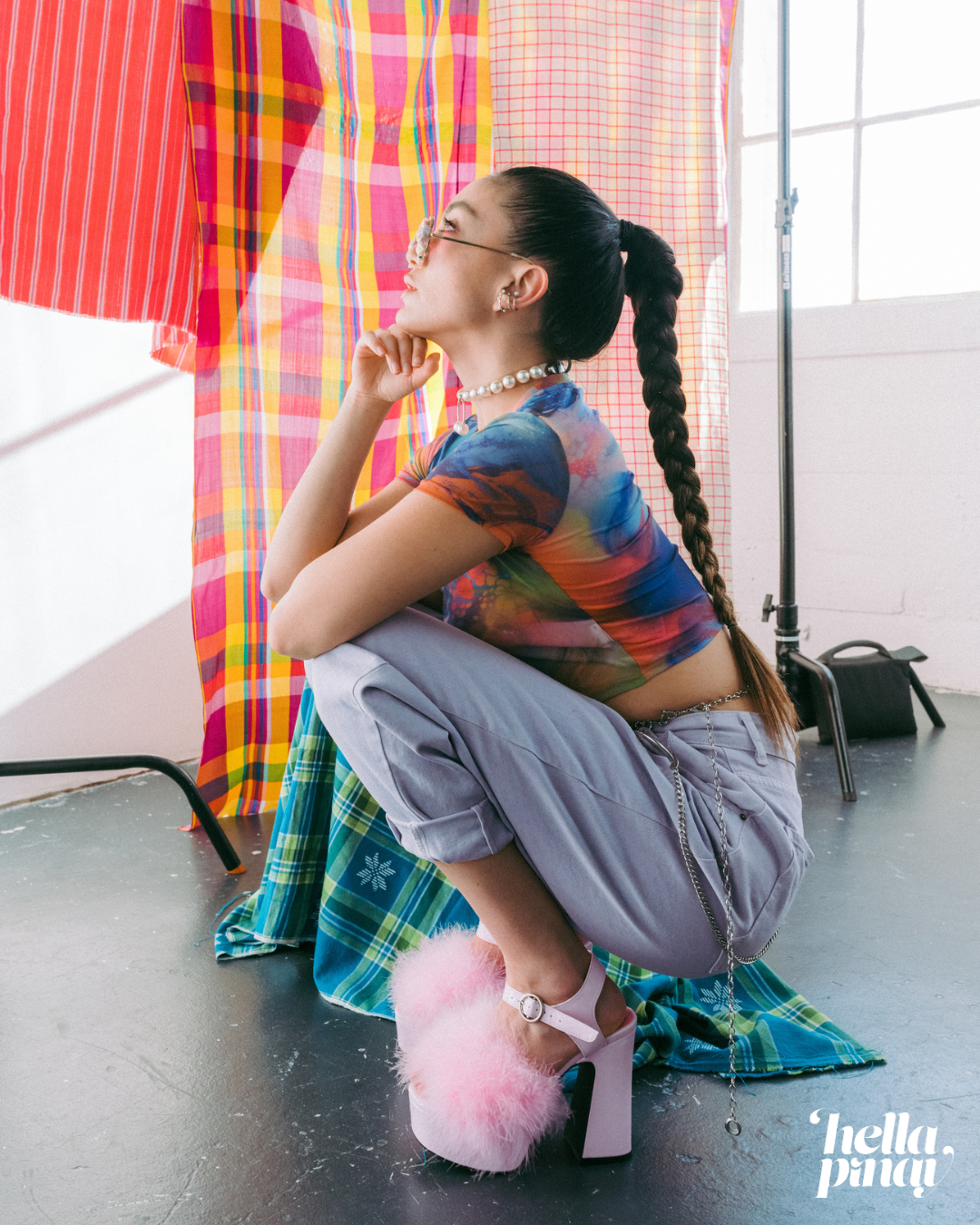
Sunglasses, Nroda. Choker, Creepyyeha. Shoes, Sugar Thrillz. Top, denim and accessories, stylist’s own.. Photography Marc Chua.
Raised in the Bay Area, she was lucky to have been surrounded by blossoming Filipinx communities at places like church, elementary school, and extracurricular activity groups. However, outside of these spaces, her experiences weren’t as welcoming. “I grew up in a Filipinx and immigrant household, but my appearance did not stereotypically reflect that experience to other people, which was sometimes confusing and isolating.”
She continues with, “I did not fit perfectly within either the Asian or white racial categories phenotypically. As a kid, I did not look Asian or white enough to avoid feelings of exclusion or the minimizing of my experiences and sense of belonging.”
Traditionally, some Filipinxs—typically our parents’ or first gen—lean towards a more conservative perspective when it comes to racial, cultural, or social inequalities. There’s an unsaid notion of hiya or shame, and instead of fighting for something, they may bite their tongue. However, in recent years, there’s been a shift towards sharing a more progressive and anti-colonial mindset—one where we can dissect crucial topics and find our way back to our roots—and the younger generation of Filipinx Americans are finding ways to hold themselves accountable.
“I grew up in a Filipinx and immigrant household, but my appearance did not stereotypically reflect that experience to other people...I did not look Asian or white enough to avoid feelings of exclusion or the minimizing of my experiences and sense of belonging.”
“The Black Lives Matter movement has prompted necessary dialogues within Filipino/a/x households on anti-blackness, colorism and decolonization in our communities,” Hyland says. “Within that larger discourse are discussions around the very nature of Filipino/a/x identity, mainly in the U.S., and how we as a community may uphold white hegemony as both the oppressed and oppressor, policing how one embodies their Filipino/a/x-American identity to fit or survive within the confines of colonial value systems.”
Since her music contract ended, Hyland has graduated from UC Berkeley with a degree in sociology; and most importantly, she’s realigned her sound to feel more authentically Ouida in essence. “I didn't have to care if people liked it. I just had to be something that was true and honest. I think that allowed me to just really slow down and like, learn what I needed to learn and play with it and like, not really following the rules,” she says.
With this newfound creative freedom, Hyland’s spent the past year of the pandemic working on her debut EP as an independent artist that will be dropping this summer. The EP, which she produced herself, was a product of the chaos of the world, exploration of identity, and healing.
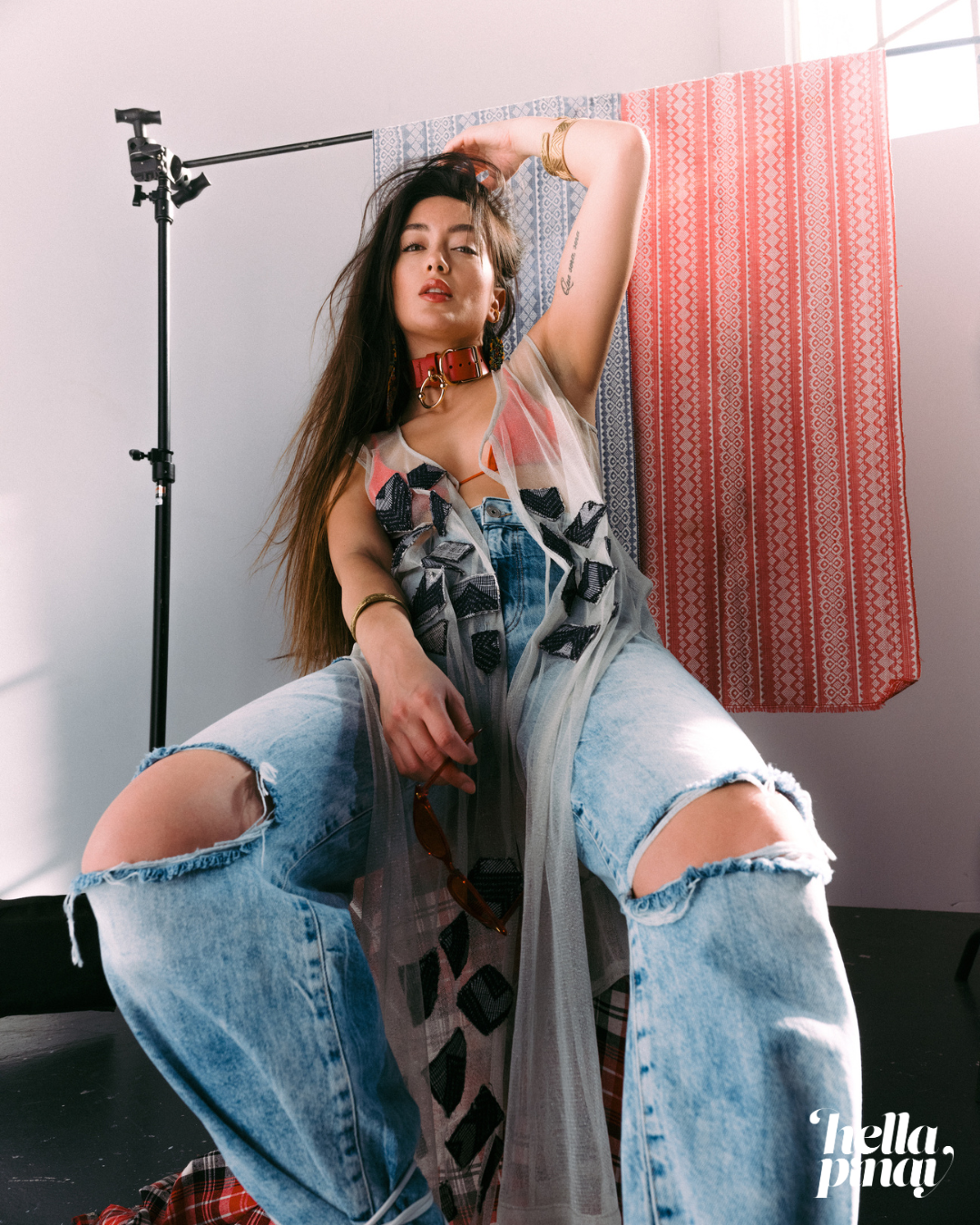
Choker, Creepyyeha. Top, Style Isle PH. Accessories and bikini, stylist’s own. Photography Marc Chua.
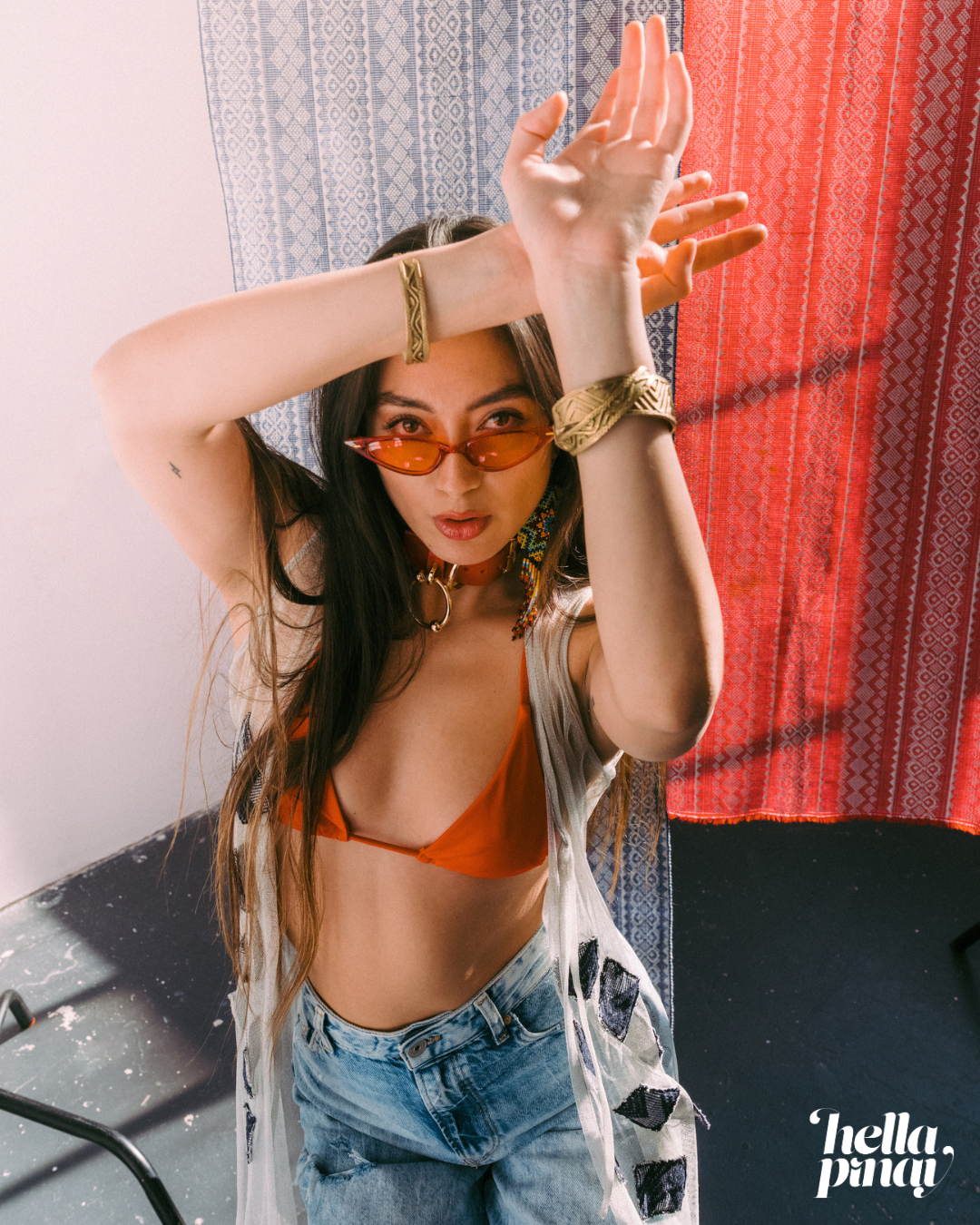
Choker, Creepyyeha. Top, Style Isle PH. Accessories and bikini, stylist’s own. Photography Marc Chua.
On “Coffee (Ride With You),” the EP’s first single that dropped earlier this year, she explores intimacy and the idea of building a beautiful life together with a partner. “It's like a love song. But I do just feel like there's a lot of everyday lifestyle things that aren't really celebrated in a mainstream sense. But like, anytime you're chatting with somebody who just gets it – like they just know,” she says about the single.
The notion of love is also seen on “End of the World,” a soulful track that explores her realization that everything is temporary. On “Puerto Princesa,” an upbeat song sure to make you grab another drank to cheer “Ayyye” to or just roll the windows to feel the breeze, Hyland daydreams about an ideal post-pandemic life on the islands.
This time around, she even dabbled in producing her music video for “Coffee (Ride With You), which starred herself alongside an all-Filipinx cast and featured Filipino elements, like a traditional butterfly sleeve dress, mangoes, and pamaypays or handwoven fans.
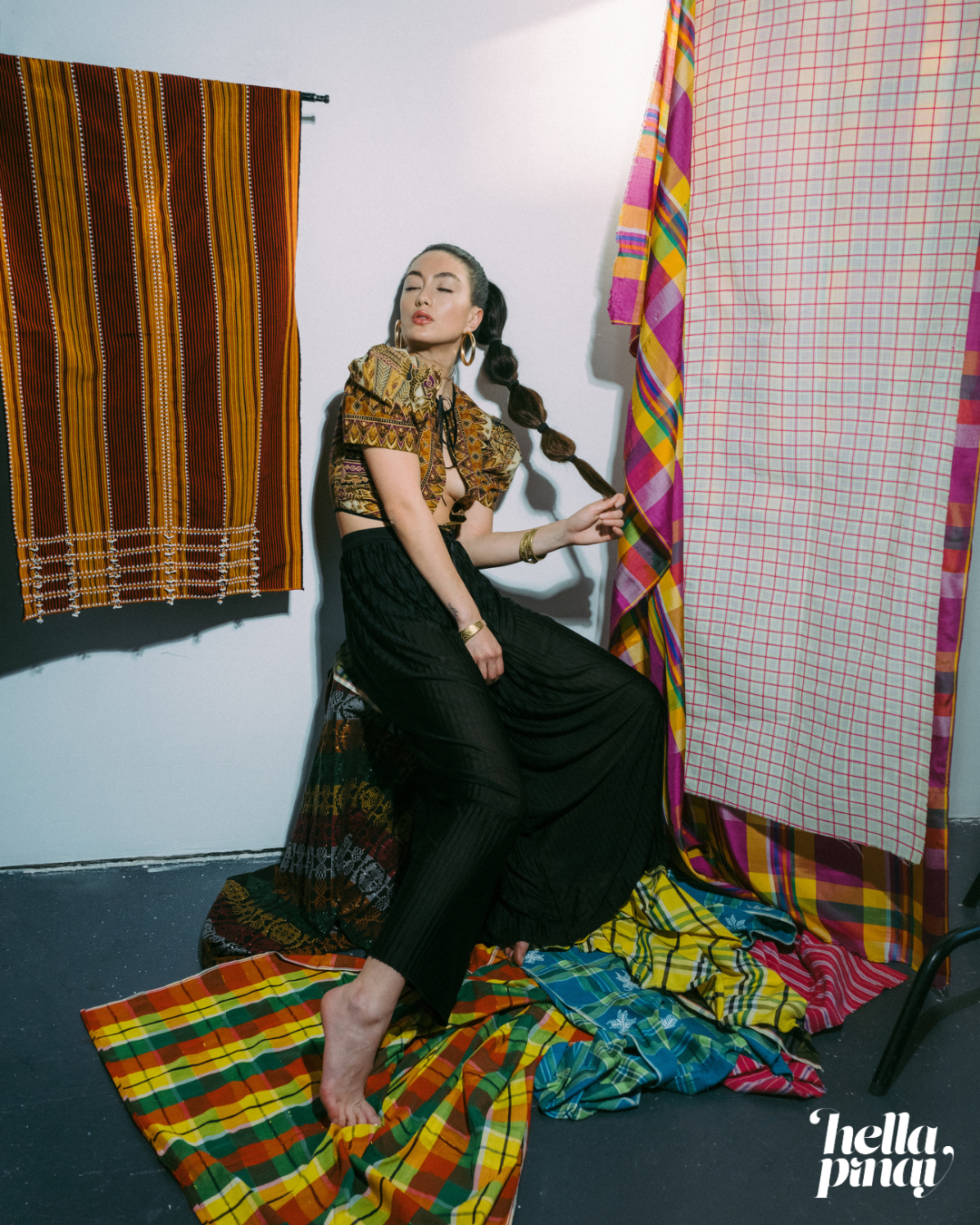
Top, Vinta Gallery. Bracelets, Style Isle PH. Pants, earrings and necklace, stylist’s own. Photography Marc Chua.
When asked of the importance of working with Filipinx and Asian creators, she said, “To me, fostering ‘kapwa—a recognition of shared identity with others that acknowledges inclusiveness as a moral obligation to treat one another as equal human beings’—necessitates artistic expression in exploring identity within the global Filipino/a/x community of the Philippines and in the diaspora.”
She adds, “There's already a great deal of diversity—both ethnically and culturally—in the Philippines, and there is a racial ambiguity that many Filipinx people experience due to the intermixing of ethnic groups that have been present in the Philippines' long history. The diaspora is no exception to that.”
Despite her start in the music industry, Hyland blesses us with a redefined sound that includes reflective pieces on the simplicity and beauty of appreciating the small things, optimism for the future, and love—well, just for the sake of love. She says from creating the EP she’s learned, “There’s something about softness – like vulnerabilities within softness—and going slow and kind of not conforming to any idea you have of the life you think you're supposed to live based on what other people are doing.”


Growing up Pinay, self-love and acceptance are ever growing and transforming