
Katawháyan
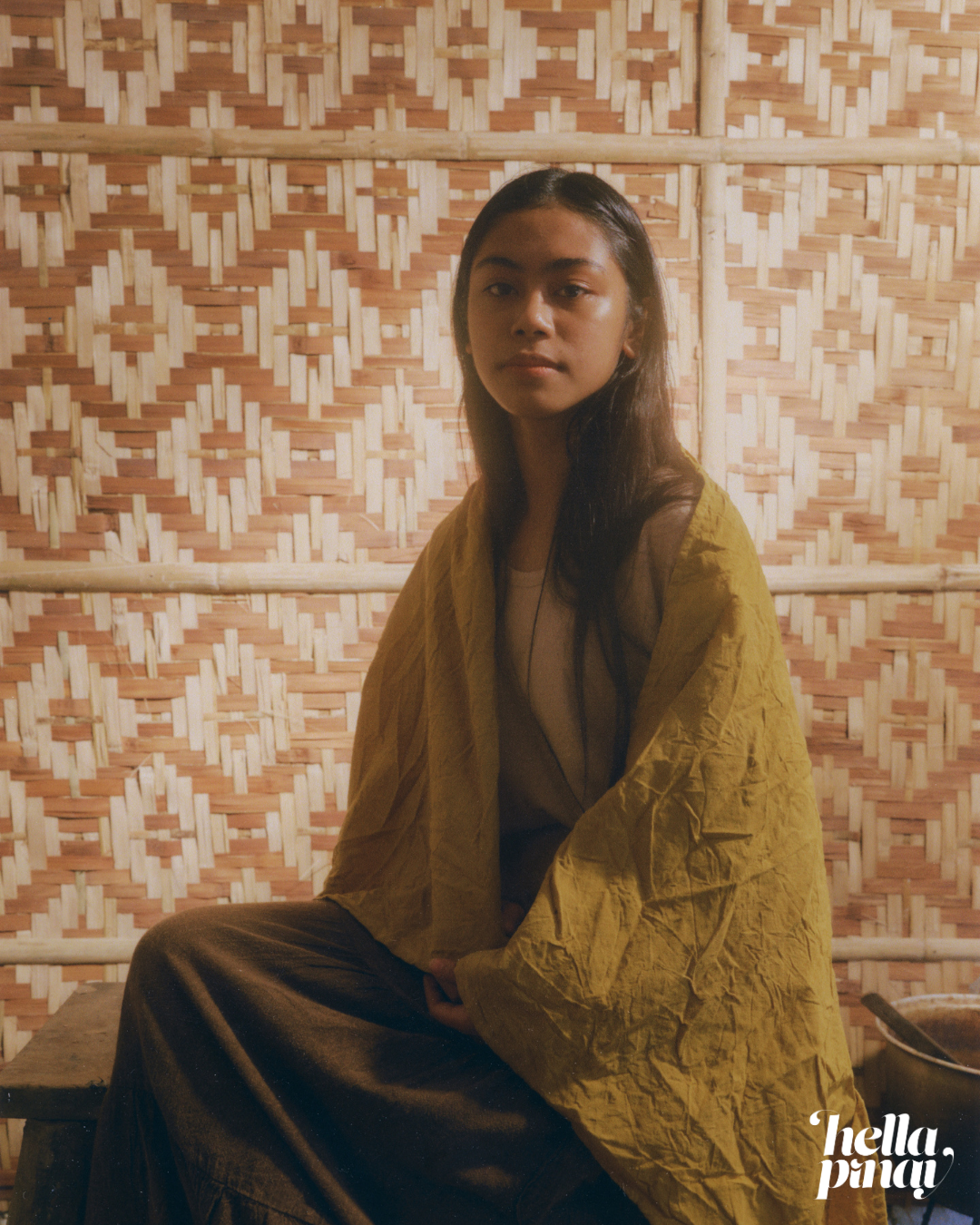
Giah De los Reyes. Photography Basil Vargas.
Artist Giah De los Reyes taps into tranquility through the revival of Philippine natural dye.
Text Jamie Pesquiza Cardenas
Photography Basil Vargas
From Hella Pinay 04: The Fashion Issue. Get your copy here.
There is something so innately stylish and fashionable about being Filipina. More recently, I’ve been noticing and appreciating a very intentional and spiritual way to connect to the fashion we choose to wear. There is a deep re-membering that is happening not only in the Filipino diaspora, but also in our homeland. We see it in the influence of Philippine textiles like inabel front and center on runways and in fashion magazines, to the head nod of seeing each other wear our traditional crafts on the streets of the Bay Area.
Natural plant dye and fiber arts are near and dear to me; they represent the literal cloth that we are cut from. The dye plants of the Philippines represent the special relationship an artisan and culture bearer has with their environment and how they celebrate the land as ancestor. There is a special intimacy to the slow and tender ways in which a natural dyer works with the plants in both dye and fiber forms. These traditions are dying crafts not only because of how the land and connection to the land has shifted, but simply put: they take t i m e.
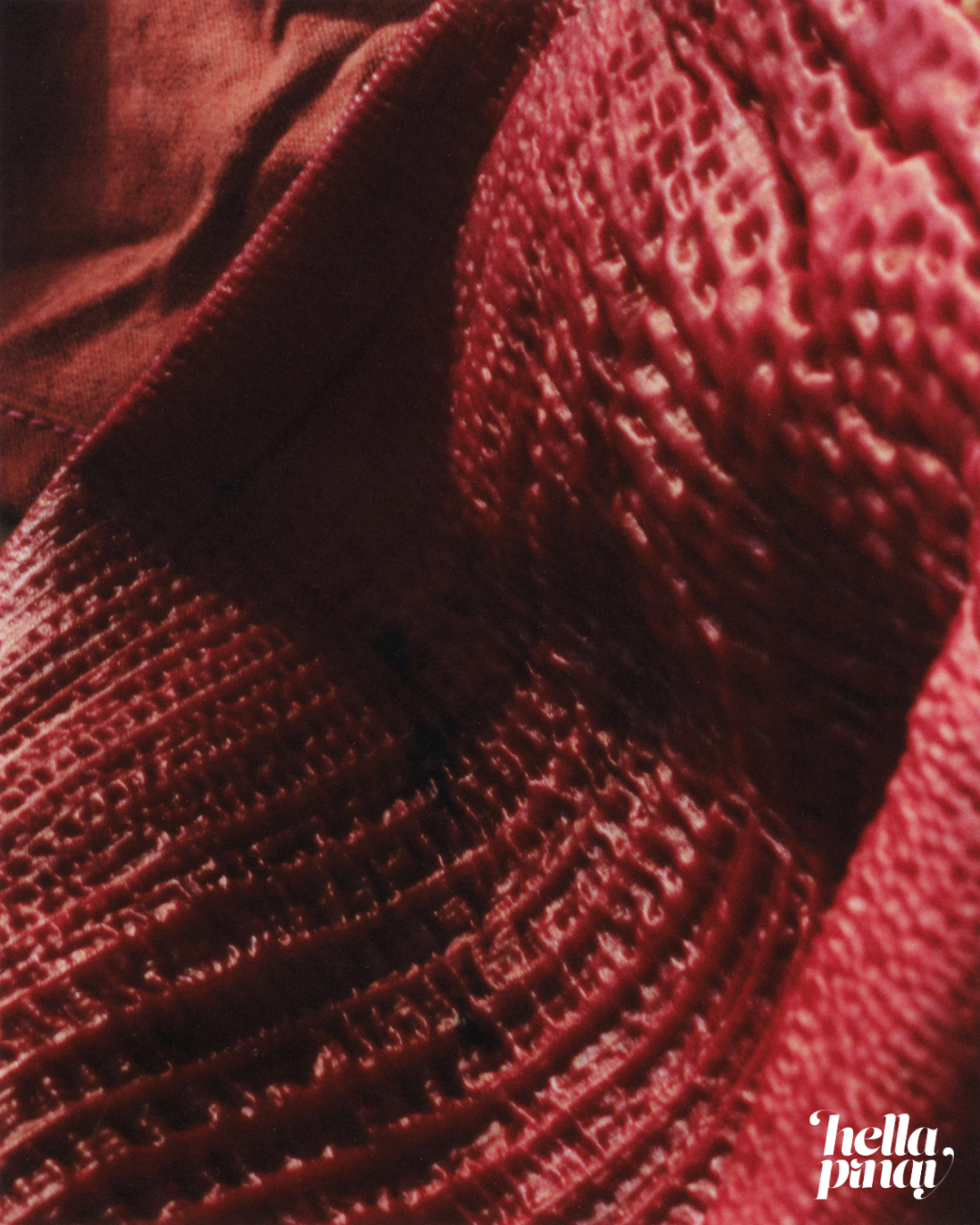
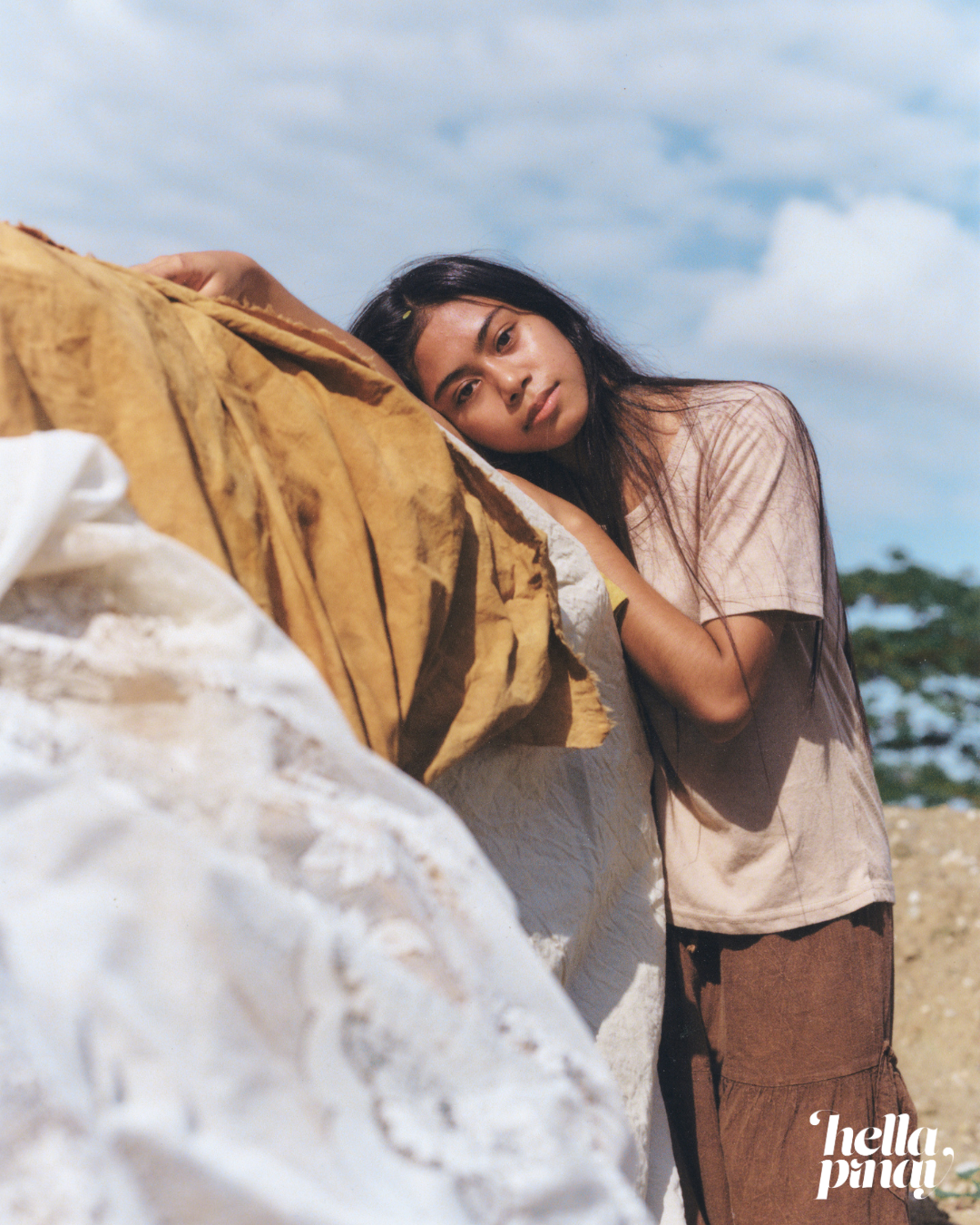
This revival of natural plant dye is embodied by Giah De los Reyos, a 22-year-old artist based out of Iloilo City in the Western Visayas. Using organic plant dyes and found objects, her brand Katawháyan – from the Hiligaynon word for peace/tranquility – produces plant-dyed fabrics derived from leaves, seeds, and bark as well as upcycled pieces from jute and katsa flour sack. Rooted in community, their one-of-a-kind totes, bandanas, sarongs, and reversible tops are also sewn by local seamstresses to provide a small opportunity for extra livelihood.
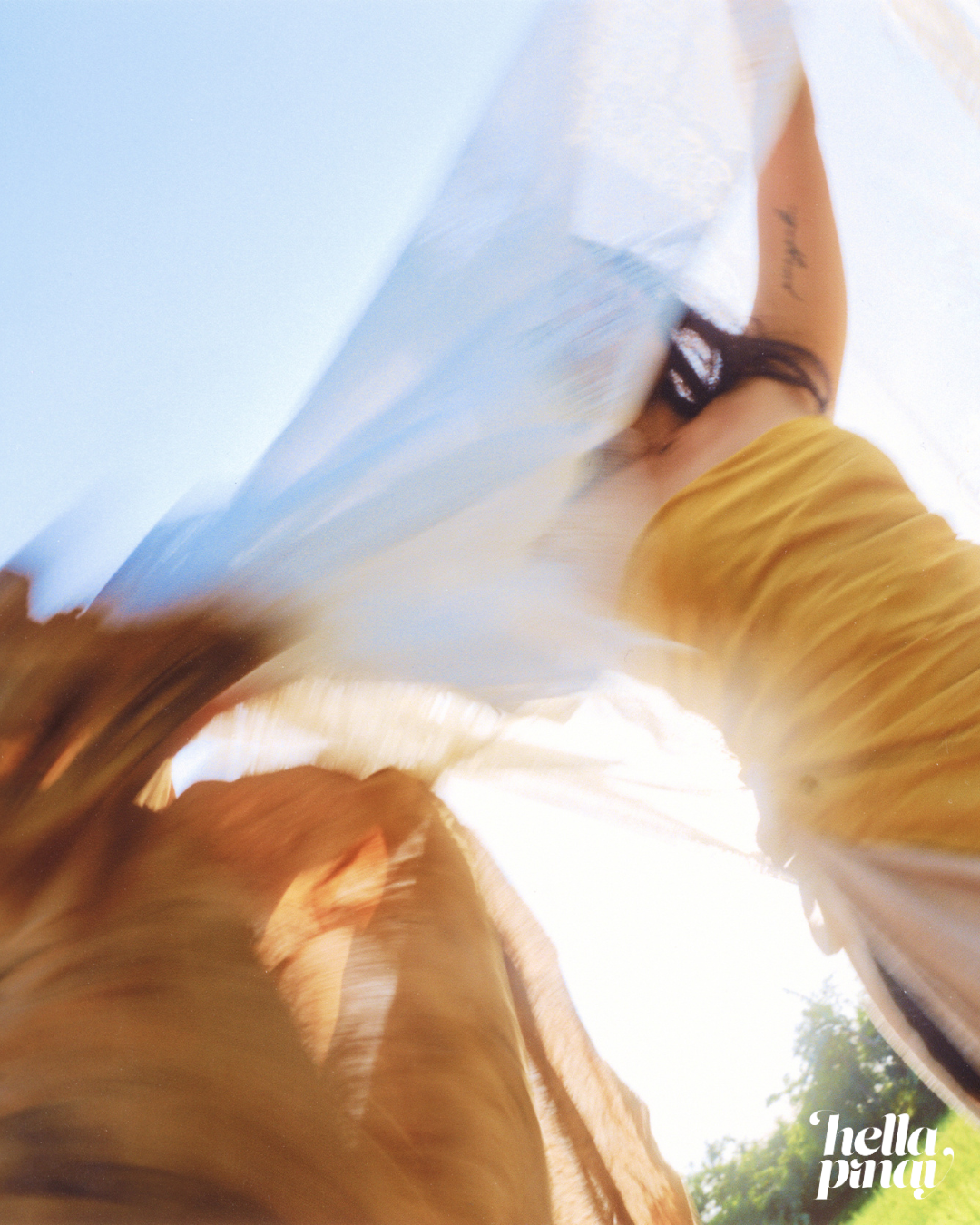
Photography Basil Vargas.
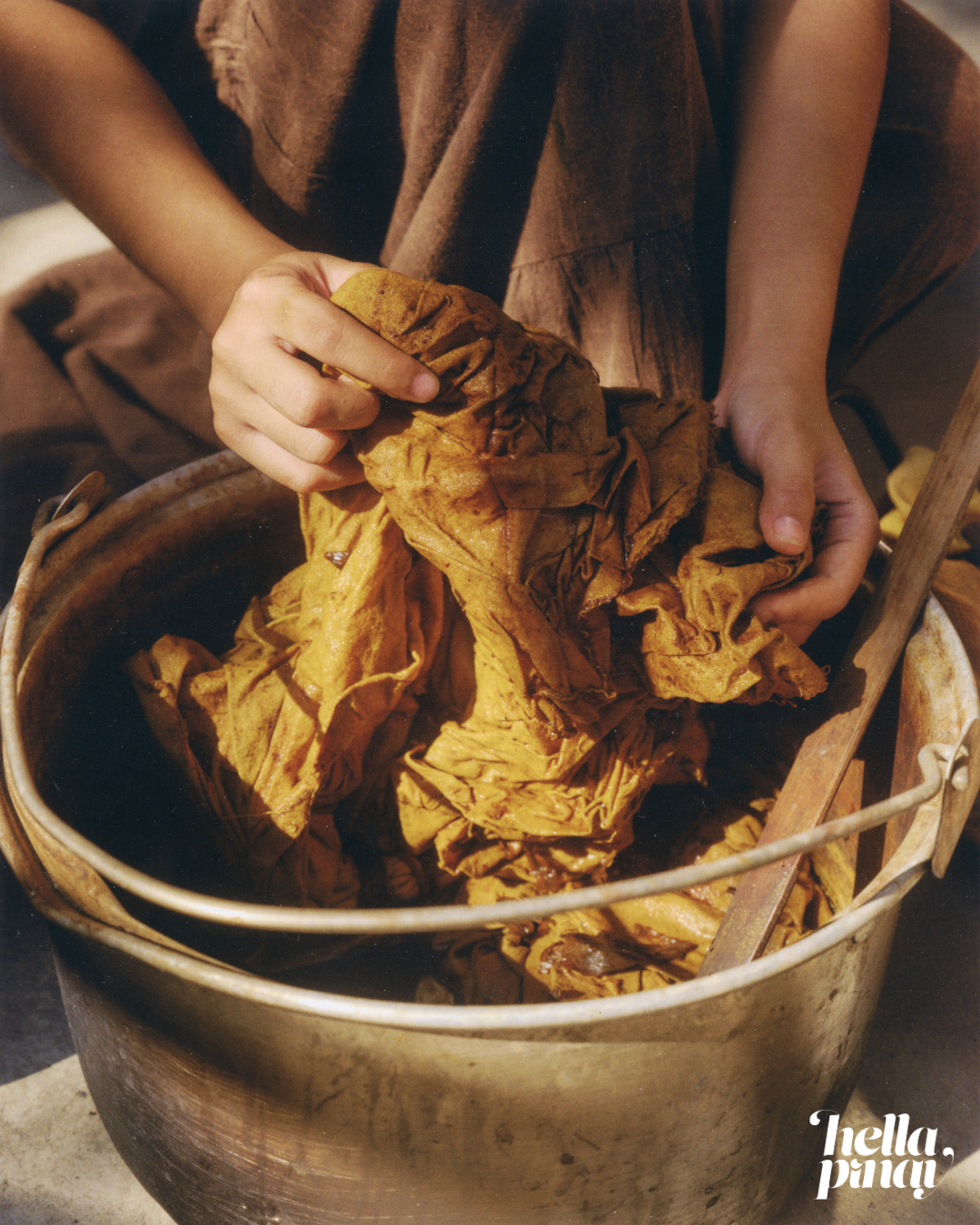
Photography Basil Vargas.
Giah started her natural dye journey in April of 2021 with ceramics, another earth-based art practice. Experimenting with small pots and inexpensive plants she could easily source from the market, she became enthralled with the process of natural plant dye. Through her own curiosity and love of community she shared her process with those around her and was able to start building her collection of dye pots and materials. “It was a very humble beginning,” she recalls, “and I'm grateful that it developed in a way that people got interested when I was sharing the process and then with the dyeing itself, like the process of how you derive colors from plants. And so I was able to actually grow my resources and my tools until I eventually got to dye into bigger pots and multiple pots…It's about really just experimenting on the process and kind of getting hooked into that. And then also with the support system all around you that supported you all the way.”
Despite her young age, Giah is whole-heartedly an old soul. She is a noticer of the small details. The simple sounds of the countryside like the windsong through the trees. The soothing silence of living a quieter life. There’s something so special about natural plant dye artists like Giah; she has an almost supernatural way of experiencing life through her senses. She can explain in detail what a color feels like. And if she can’t explain it with words, she’lll show it to you with her art and seek it out in nature. It is a beautiful continuation of conversation with the land, the spirits and our ancestors that is remembering and reviving.
“Whether you're making a painting or whether you're doing ceramics or you're dyeing, it's important that you have this sense of connection to the material in a sensible way…or like, how does your practice affect your sensibilities? What does it make you feel? What is it giving you? In an exchange?”
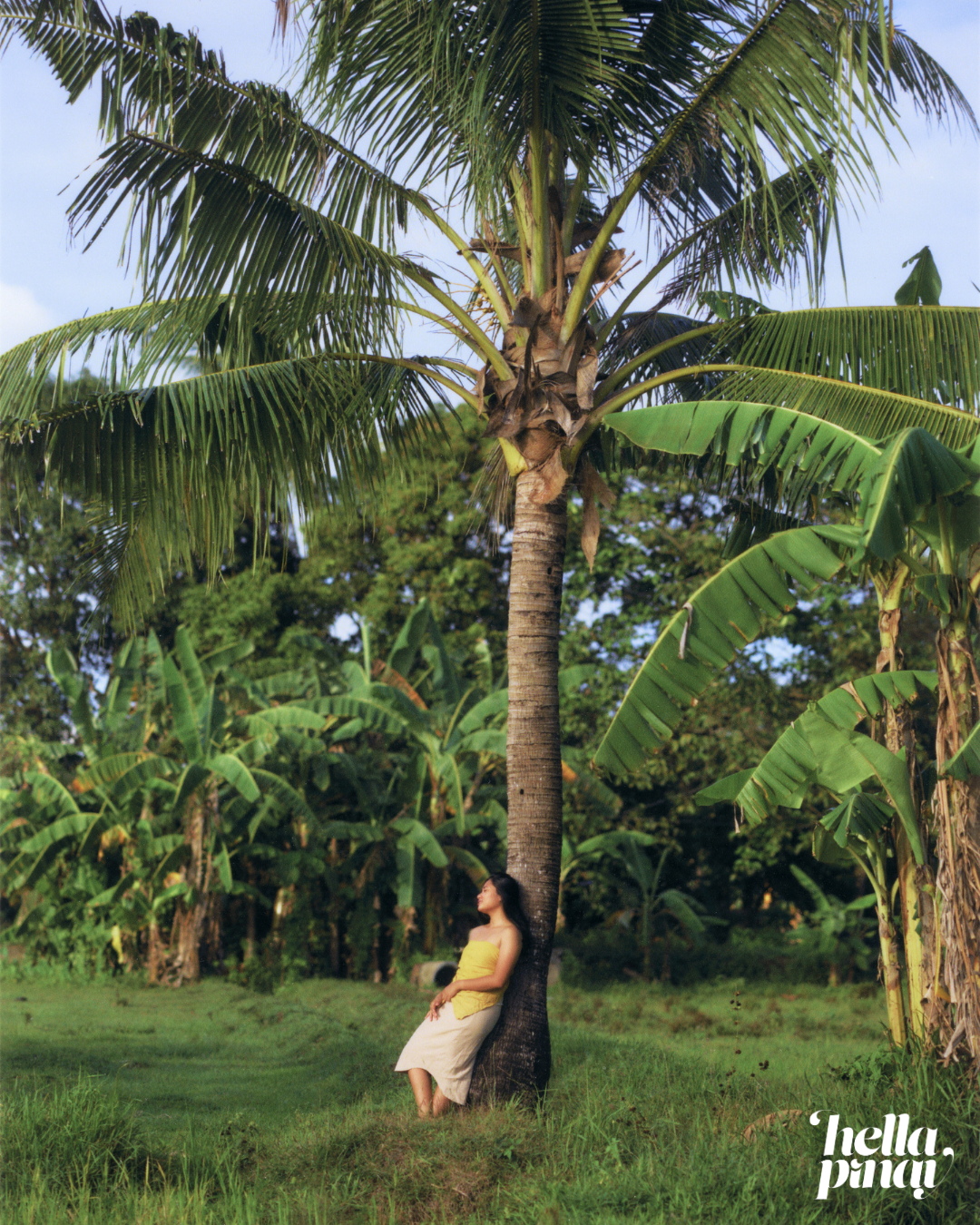
Photography Basil Vargas.
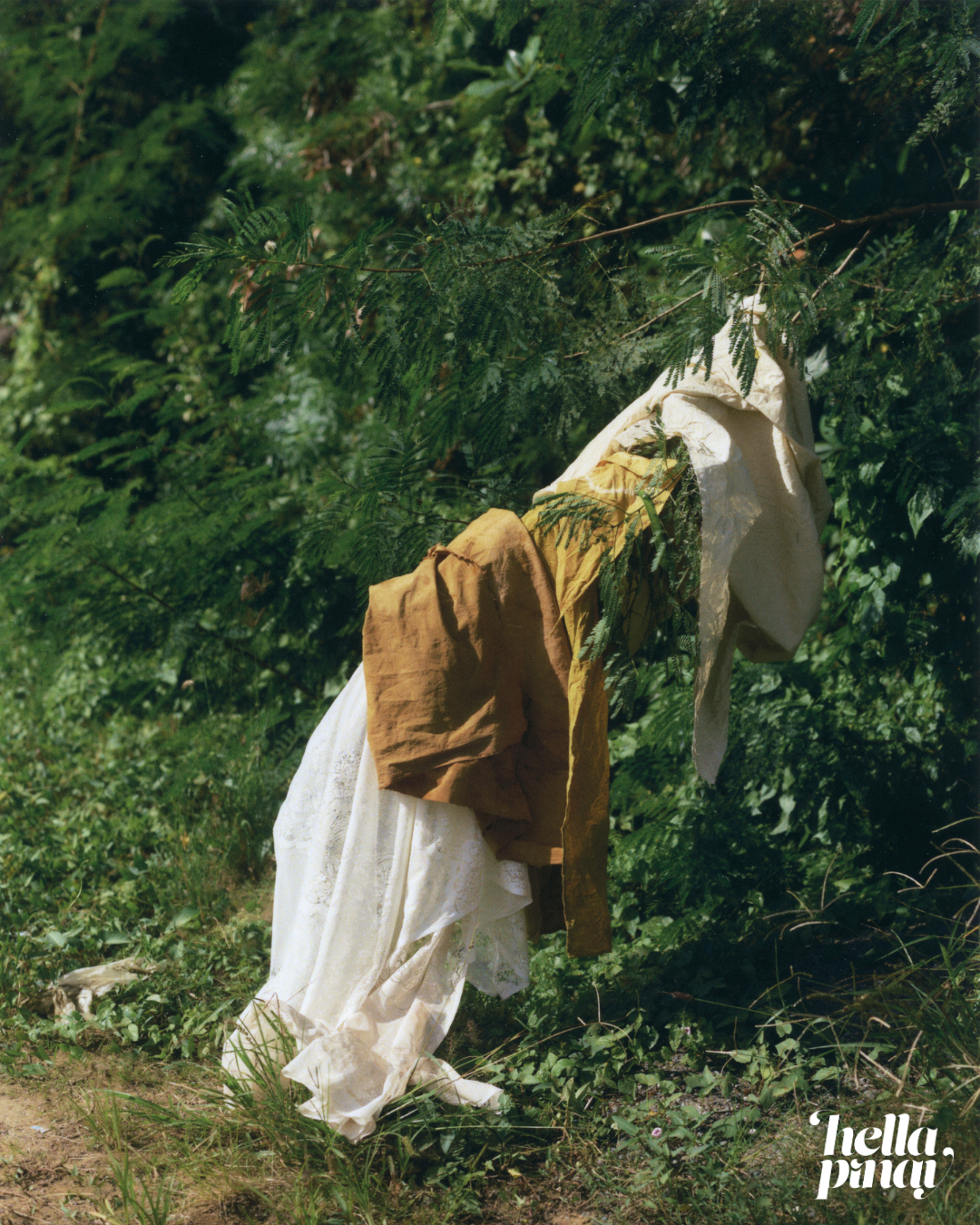
Photography Basil Vargas.
When speaking with Giah, she speaks about color like poetry. Sappanwood is one of her favorite dye materials to work with; it’s readily available and can pull colors of deep pink and purple, the same colors of the national orchid of the Philippines, the Waling-Waling.
As she speaks further about this native tree of the Philippines, her face lights up. She explains that the tree provides so much: several colors to use as natural dye stuff and also as a medicinal application.
“One of my favorite plant dyes as of now is Sappanwood…here in the Visayas, particularly in Panay Island, we call it Sibukaw. It's amazing because it also has antimicrobial properties and at the same time it's a medicinal plant which I also easily source locally from the public market. I tend to source it from the locals that sell it in bulk, because it can also be used as an alternative for charcoal. Here in the Philippines when we cook in traditional ways, we don't use gas or anything, particularly in the rural areas like where I am staying now. And I think it's amazing because it not only has a wide range of colors that it can actually produce, at the same time it's being used as a fuel, as a medicine by the people when they are sick and when they want to eradicate a lot of diseases. It actually is a medicinal plant. And I think that's what fascinates me about the material, when it's inclusive. It can be used by anybody and it's not just particular only for us who dye with it, but the people early on already use it as something important for their communities. So I think it's very important to have that kind of plant dye material around us that's available for us.”
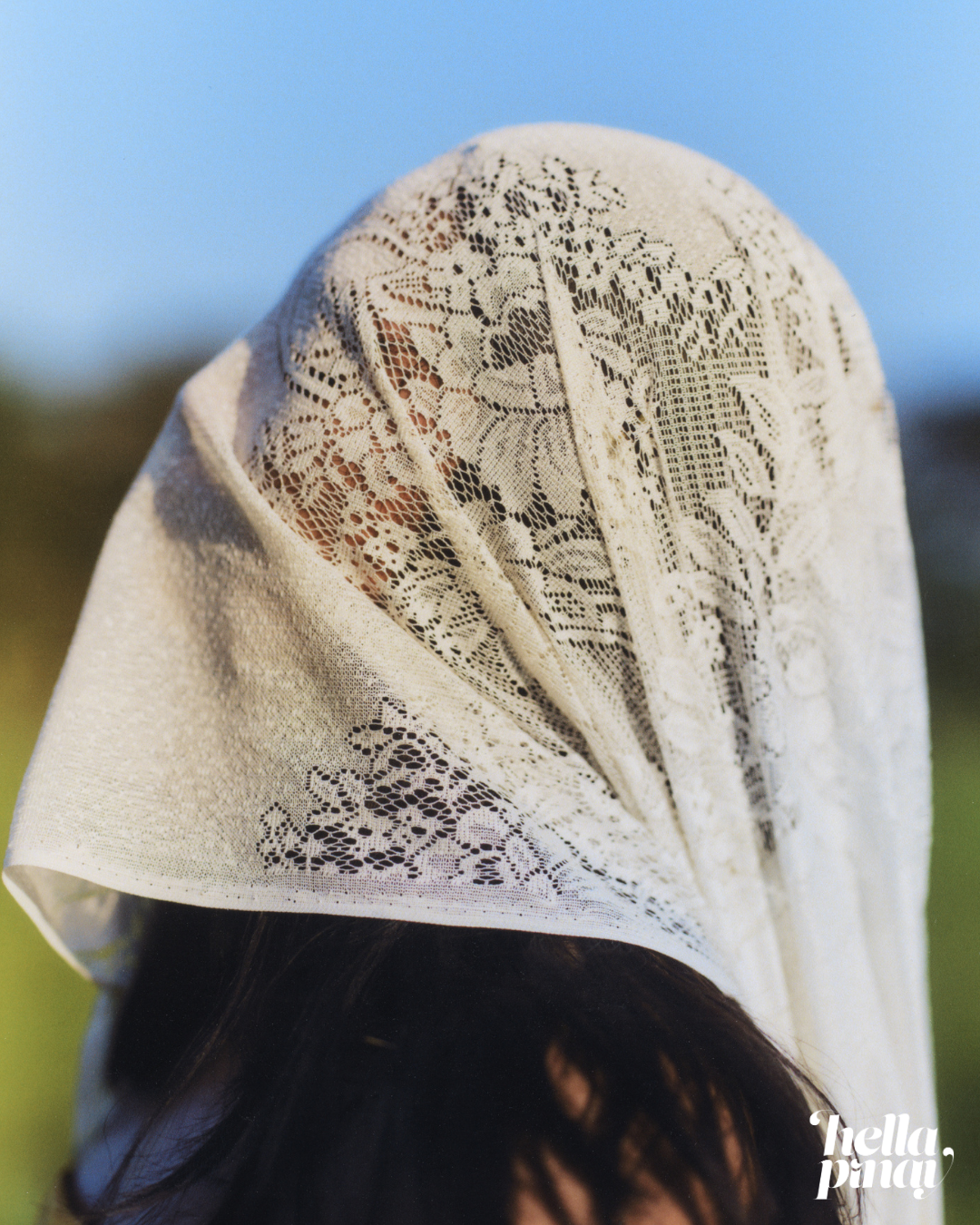
Photography Basil Vargas.
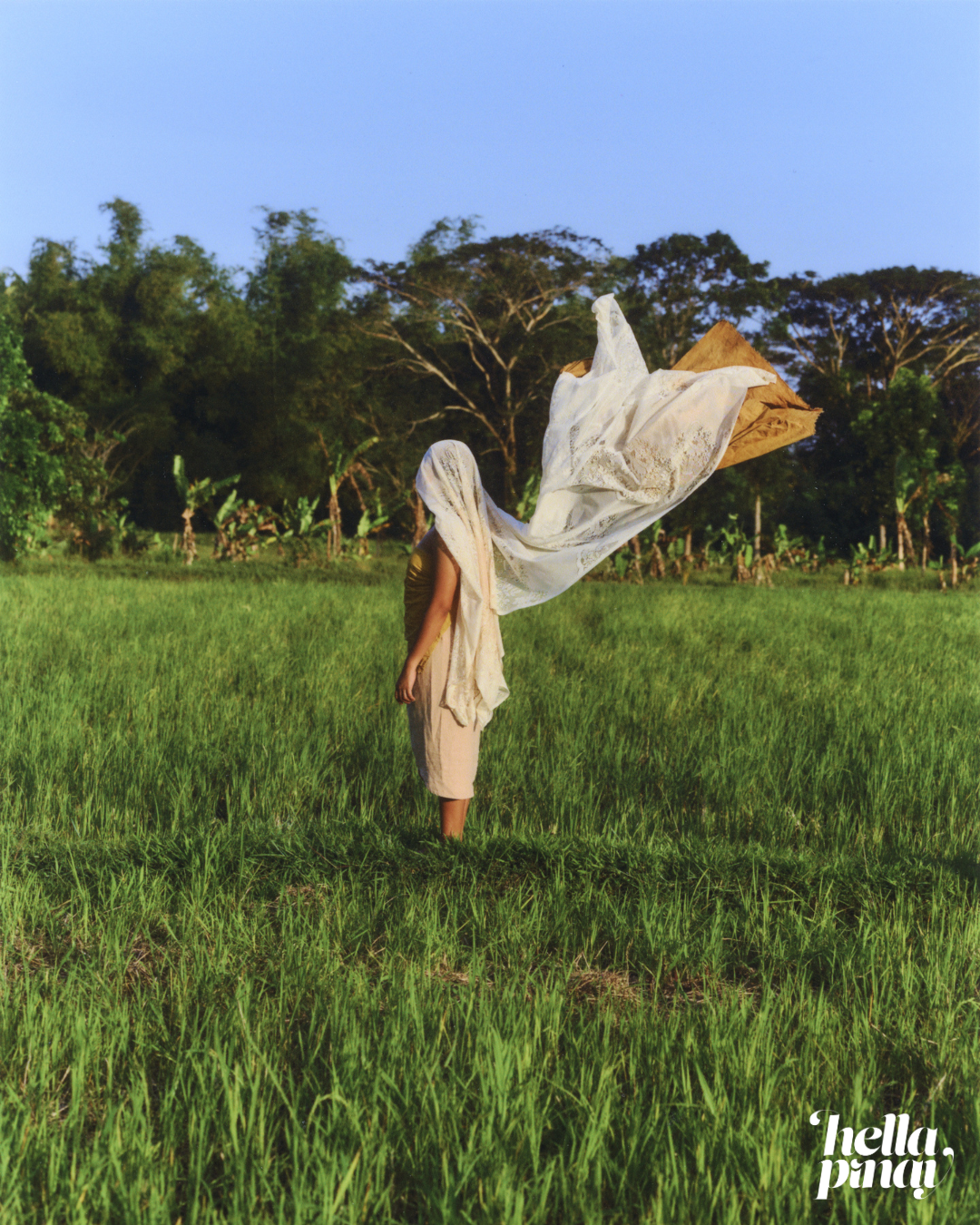
Photography Basil Vargas.
In learning more about her work and intentions for her art practice, the gift of natural dye is medicinal not only for herself, but also for her community and for the world. With how much the Philippines has had extracted from the lands, I see artists like Giah as equal parts culture bearer and land protector. Whether she’s using upcycled items found in nature or working with hablon weavers to transform Filipino textiles into living and breathing art imbued with the essence and color of plants, she reminds us all of the intention and focus we need to put back into the land. Giah is based in Panay Island, the heart of Ilonggo weavers. Her preference is working with cotton from these weavers but due to costs and accessibility, this isn’t always possible. Despite the high costs, Giah explains that centering these cloths is important.
“I love working with our Philippine tropical textiles, especially because [they are] handwoven by Filipina weavers, particularly Ilongga weavers. We have a lot here actually, in Panay Island – we're actually the tropical [textile] capital of the Philippines. And as of now, there [are] also a lot of projects going on here, like a lot of support coming from the Department of Science and Technology working with weavers here that are also sourcing the materials locally like cotton and abaca. It provides livelihood for our weavers, so I think it's very important to help support that craft and that industry so that we can actually revive this, tropical textiles that [are] our own. Because it's locally sourced, the abaca are sourced here, the piña fibers are sourced here, in Aklan. And then the women, the weavers are weaving it in their own cooperatives, in their own houses, and then they distribute it. But the sad thing is that it's still a bit not that widely distributed so that a lot of Filipinos can actually afford it, because of course the economy is not yet very accessible for Filipinos to use the fibers that we have. Because of the production costs and all that. So I think it still requires a lot of support from the government and policy change so that we can actually normalize using our own tropical textiles. As a natural dyer, it's also kind of our responsibility to help promote that craft, the weaving industry here in the Philippines. And as a natural dyer, as an artist, or as a designer, how do we support and promote that?”
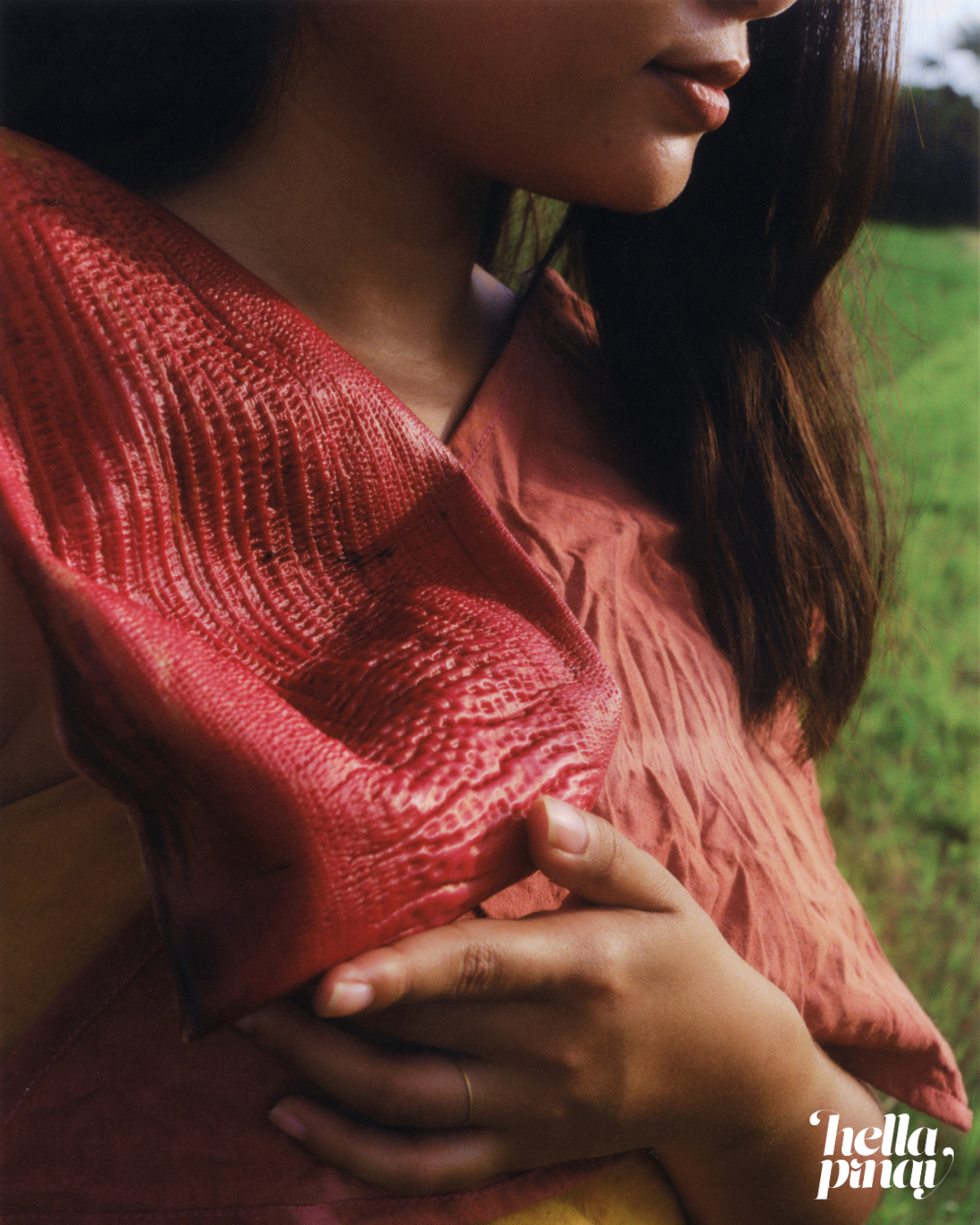
Photography Basil Vargas.
Photography Basil Vargas.
Giah’s story is a clear example of Filipinas being natural alchemists. She can shapeshift and transform her world and surroundings into art and beauty. I think it’s quite a radical act of love and liberation to embrace a practice that is a deep remembering of our ancestral brilliance and medicines. Giah’s art practice is an act of resistance – to slow down and savor the stillness which is the namesake for her natural plant dye line. With the hyper-vigilance we have adopted as Filipinas due to colonization and trauma, her art practice is truly an antidote to the fast paced, dizzying way of being in the modern world. Filipinas are also known as hard workers and caretakers. It is a beautiful form of protest to say: we deserve to play. To make mistakes and to be soft and tender despite how hard the world is. Creativity is such a gift and to be creative is not a talent but a way of life. An ability to play and to experiment. The very essence of playfulness is an openness to possibility.
“As a 21-year-old, I didn't grow up with a lot of privilege,” Giah says, “And at the same time, you kind of had to work twice or thrice harder so that you can experience a more stable life. I cannot deny the fact that I have met a lot of people, amazing Filipinas, women – Filipinas in the Philippines and abroad – that also offered support and help. I think there's this certain nurturing quality that is kind of innate for most of us, Filipinas…because some of them also struggled with their personal life and also faced a lot of circumstances. Being exposed to that community care of women supporting women – particularly also with the other work that I'm doing, volunteering for a psychosocial arts-based research and livelihood project for women in prison – I think it's one of my major exposures for community care and empathy by women supporting women. I think it's very important to have that kind of support system, that kind of [nurturing] quality always in mind. And to have this notion that it's really not about competition or getting on top, stepping forward with a lot of other Filipinas below you just to reach that sense of fulfillment. If you really want to empower other Filipinas, it takes a lot of courage, but at the same time, it takes a lot of humility. But just try to be a kinder person, especially for other women. Because as women, we already have a lot of systems that are already too harsh for us, that are already too hard for Filipina women. And I hope that whenever we encounter [another Filipina], we have this goal that we support and empower each other, and not bring another Filipina woman down.”
Photography Basil Vargas.
Photography Basil Vargas.
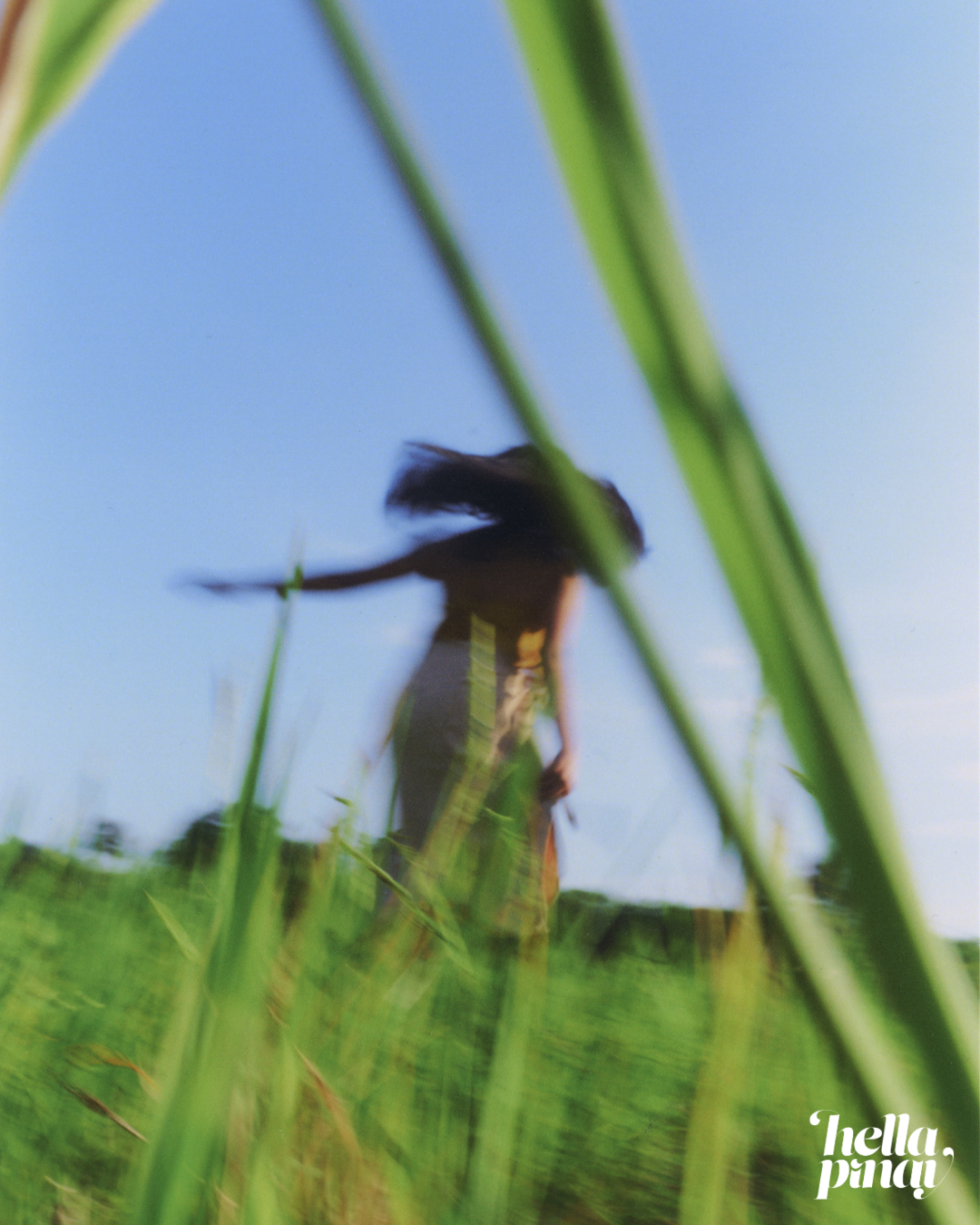
She shares her message of hope and love and asks us all to return to gratitude for each other and for the land. Just like the soft fabrics she creates through her art, She urges us to embrace softness despite it all. Filipinas are a balance of being tough and tender, or as Giah’s latest installation expresses…Soft like concrete.
Katawháyan is a beautiful prayer for our people; a prayer for a slow paced life with a sense of inner stillness. This process also means one must surrender to the possibilities which could also mean the results are not what you plan for. Perhaps our ancestor’s wildest dreams are realized in Giah: that rest and play are our birthright and the medicine that our people really need.
From Hella Pinay 04: The Fashion Issue. Get your copy here.
Models Giah De los Reyes and Jicel Nolar.
Shot on location in Iloilo, Panay Island, Philippines


