
PAGLINANG

Parangal Dancers in Tausug attire in a Pangalay pose. Photography Kyle Adler.
Parangal Dance Company cultivates connections through dance, education and traditional attire.
Text Kim Acebo Arteche
Photography Kim Requesto and Kyle Adler with retouching by Don Aguillo
From Hella Pinay 04: The Fashion Issue. Get your copy here.
Learning cultural dances and wearing your pride has always been important to the identity formation of many Filipinx across the US. But as our communities have dug deeper into decolonizing beyond college student organizational spaces, learning about folklore and incorporating fashion pieces from Indigenous communities in the Philippines has become more popular. Have the statement pieces of Tboli beaded waterfall necklaces or beautifully woven Ifugao textiles become a hit? Mega. Has it always been appropriate or respectful? Not always. We take a deep dive into the sophisticated process that Parangal Dance Company takes care in setting the stage for their cultural work.
Founded in 2008 by Artistic Director Eric Solano, Parangal Dance Company (PDC) is a non-profit Filipino Folk Dance & Music Company based in unceded Ramaytush Ohlone Territory (so-called San Francisco, CA). PDC has built a reputation in the Bay Area and across the world with their folkloric dance repertoire that celebrates and advocates for Indigenous communities across the Philippines. To support the richness and responsiveness of their stage performances, PDC takes yearly immersions to work directly with 70+ elders from over 30 tribal communities across the Philippines.
In recalling why this became so central to the process, Eric remembers his first encounter with Tboli culture bearers Maria Todi, Rosie Sula, Joel Ganlal and others from the Helobung Troupe in 2002, as facilitated by Kularts’ Executive and Artistic Director, Alleluia Panis. Even though Eric began his dance journey with Barangay Dance Company in 1993 and has had the chance to travel many places as a dancer, this was the first time he had encountered the dances outside of the studio in a richer context—in an authentic form, shared directly from the culture bearers. “Sa mga galaw mismo, sa music, yun ang pagkaiba” (In the movements themselves, in the music, that’s the difference.) says Eric. “When the Tboli came here, it was eye-opening.” That experience made Eric hungry to learn more and began his immersion trips to the Philippines regularly.

Boi Rosie Sula with Eric Solano, Artistic Director of Parangal Dance Company. Photography Kim Requesto.
From then on, things clicked: while the forerunning dance companies that established repertoire in Philippine dance were doing amazing things, he wanted to make sure advocacy, education, and sustainability became central to the mission of Parangal Dance Company. The relationships Eric and Parangal have built with the various Indigenous communities have become a backbone to PDC’s artistic process, and Eric holds the responsibility of making sure that these relationships are reciprocal. Building relationships with the various communities can sometimes take years, and their research process is extensive and thorough.
Immersion
Once Eric has made contact with a community, he introduces himself and expresses the group’s intentions of learning dances and music for the purposes of stage performance. After he’s been given approval to visit, Eric brings a group of dancers, musicians, and documentarians with him to facilitate research. Beyond the dance movements and musical repertoire, PDC takes detailed care in understanding what appropriate attire, props, or objects are used in each dance, the purpose or rituals behind each dance, any significant symbolism, and especially the environmental, cultural, and historical significance of each dance.
It’s really important to Eric and Parangal that they preserve and teach the wider understanding of each dance’s connection to the land, and learn traditions that may be losing popularity. On their return, the rest of the dancers learn what has been shared with them, dances have been set on the company, videos are exchanged with the culture bearers, and corrections are made. While some culture bearers can be stricter than others, PDC ultimately doesn’t move forward until they get the green light from the culture bearers. When PDC hits the stage, it is crucial to their practice that they center and honor the culture bearers and community that they have been inspired by.

Lyka Mohammed, a Maguindanaoan female sagayan dancer from South Cotabato, wears pakakes (pants), lembung (skirt), banggala na mama (top), kapasiti (headpiece) and is carrying a klung (shield). Photography Kim Requesto.
Parangal is active in educating the community through its performances and workshops – Eric and other instructors from Parangal facilitate dance classes across the US, at dance festivals internationally, and with local Pilipinx student organizations. It is crucial to Eric and Parangal that the wider communities know the names of each culture bearer, the names of each piece of attire, understand the purpose of each dance or ritual, and have a greater understanding of the lived experiences and culture of each community.
Parangal never claims that their work is authentic or traditional – they’re not of the Indigenous community being represented on stage, and the dances they present are ultimately inspirations of the original movements. Purchasing and ordering attire, textiles, and accessories directly from the communities is critical; that’s the only truly authentic part of the equation that they can claim. This has become one way that PDC supports each community’s livelihood. When Eric goes to teach with different dance companies and communities across the US, he reminds new dancers of their responsibility to support the Indigenous communities – which has led to a larger network of supporters and orders for the artisans. Eric and PDC are careful not to claim a stake or role in this way, but rather do what they can to support the community’s cultural sustainability.
The exchange and relationships that Parangal’s immersion trips have not only set a precedent for Philippine dance, but have inspired other cultural workers to expand their own practices.
“We need to remember we’re not just an umbrella of culture that does tinikling, lumpia, and Hip Hop. There’s so many different nuances across Philippine cultures and it’s important to name those who have been doing the work for generations to sustain culture.”
Sustaining Culture Through Photography & Dance
Kim Requesto is a photographer, filmmaker, dancer, and is on the Artistic Team for Parangal Dance Company. She has been traveling with Eric and PDC on their immersion trips since 2015. Kim has not only been crucial to learning the dances and building relationships, but has been an incredible documentarian through her film photography.
“I have to go into the mindset of remembering the trauma that Western and anthropological photography has caused Indigenous people by way of objectifying them and not humanizing them for who they were, and the communities they come from.”
When she engages in photography with the community, it’s about forming relationships and centering the subjects in how they’re photographed. Requesto brings various instant cameras with her to ensure she’s able to leave something physical with them and be centered in the photographic process. Some of these connections she’s been able to foster for years, so sometimes these research trips feel like visiting family and watching family members grow up.

Uwang Ahaddas and Kim Requesto in 2019. Uwang Ahadas was given recognition in 2000 as one of the Philippines’ Gawad sa Manlilikha ng Bayan (GAMABA) awardees, or a National Living Treasure, by the National Commission for Culture and the Arts. Uwang has been supportive in Parangal’s learnings of Yakan music, and is an invaluable pillar for the preservation of Yakan musical heritage in Basilan. Photo courtesy of Kim Requesto.
Through her work with Parangal, Kim has been able to expand her practice as a teacher, working with Filipinx youth, seniors in the SOMA Pilipinas Cultural Heritage District, and with her own programs. For Kim, her goal is to raise awareness of the different IP groups that exist and the vast amount of culture that exists within the Philippines. She attributes Sitti Obeso, or Aunty Lingling (Tausug Cultural Master), for inspiring her work with Pangalay Circle, a program that shares teachings of Pangalay, a bent-hip, fingernail dance from the Sulu Archipelago. “We need to remember we’re not just an umbrella of culture that does tinikling, lumpia, and Hip Hop. There’s so many different nuances across Philippine cultures and it’s important to name those who have been doing the work for generations to sustain culture” says Kim.
Consuming Responsibly
One of the main things we’re tasked with as Filipinx in the diaspora is to resist the consumerist & neo-colonial lens we tend to adopt when it comes to purchasing various Philippine Indigenous goods. Matt Hurry is the Co-Music Director for Parangal Dance Company and owner of Pamana Treasures. After Matt’s first PCN at UC Davis, he started learning from AGOS (formerly known as the American Center for Philippine Arts), House of Gongs, Little Manila Dance Collective, and Parangal. The mentorship from all of these organizations built a foundation for his understanding of Philippine Indigenous textiles, jewelry, and artistry. For Matt, building direct relationships have been central to building trust with the community and maintaining ethical practices in this field.
“It was the love that I felt in that region of the Philippines that I carried back with me to the States. When I was approached by Boi Rosie to help, I was compelled to do so. I felt drawn to Lake Sebu. It was so peaceful to be there. I recognize that although I felt love and peace there, a lot of communities within Lake Sebu don’t have that same level of peace due to land-grabbing, tourism, legal challenges within Lake Sebu, and modern-day colonialism. That was the biggest catalyst for me in understanding that even in the Philippines, we can continue to perpetuate colonial harm and the removal of Indigenous people.”

Parangal and Tboli community at Gono Hofo, a school of living traditions that that sits at the foothills of Sitio Tsafang, Barangay Klubi, Lake Sebu, in the province of South Cotabato on the island of Mindanao. Photography Kim Requesto.
From a dance company perspective, PDC makes sure to support local artisans as much as possible to accurately portray the traditional regalia for each community, down to the last piece of embroidery, down to the last bead. For everyday people however, there’s some distinction. Indigenous artisans are creating contemporary pieces that are meant to be worn and shared across cultures. Our tips for purchasing ethically: get to know the stories behind the stores that are carrying products. Are they transparent about their process and who they work with? Are they compensating the artisans and communities properly? In Matt’s opinion, contemporary Fil-diasporic fashion and retail houses still need to do more to give credit to the artisans, communities, and provinces each piece comes from.
As for Pamana Treasures, Matt doesn’t plan to keep the business in retail forever. Matt is mindful that this hasn’t been about the profit for him–between what people are willing to pay for these products, shipping costs, and properly compensating the communities, Pamana Treasures hasn’t profited until this year. For him, Pamana Treasures is a business that supports the community, one that helps build bridges and supports the artists. Matt hopes that in the future, Pamana Treasures can expand into cultural education and partnering with local Philippine tourism. His hope beyond all of this: that younger generations will be inspired to pick up the work of deepening our relationships to various communities across the Philippines.

Master Chanter and Cultural Bearer Boi Rosie Sula showcasing patterns on the agung. In 2024, Boi Rosie was awarded the Gawad sa Manlilikha ng Bayan (GAMABA) award, also known as the National Living Treasures Award. Photography Kim Requesto.
“I recognize that although I felt love and peace there, a lot of communities within Lake Sebu don’t have that same level of peace due to land-grabbing, tourism, legal challenges within Lake Sebu, and modern-day colonialism. That was the biggest catalyst for me in understanding that even in the Philippines, we can continue to perpetuate colonial harm and the removal of Indigenous people.”

Photography Kim Requesto.
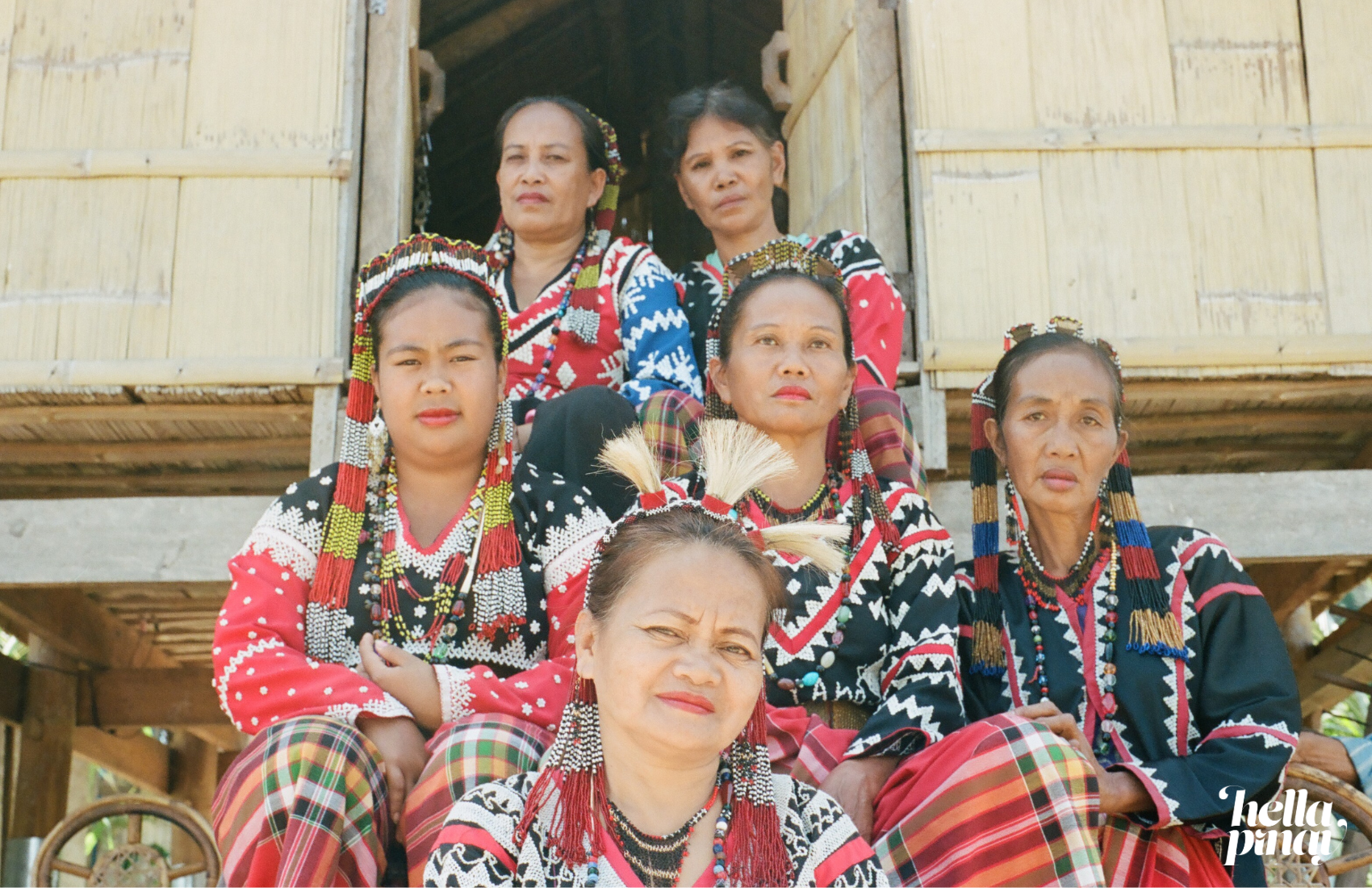
Photography Kim Requesto.
Meditations on Cultural Fashion
For Indigenous communities across the Philippines, each garment and accessory tells a story of not only the culture, but of the people, the land, and the ancestors past and present. In today’s consumerist culture, we don’t think twice about how our style and fashion connects us to what’s beyond our own individuality. In the US, we’re obsessed with what designer names we’re wearing, whether that be luxury fashion, brand name, or small fashion house. In Philippine Indigenous attire, it is rare that you’ll see one specific brand or designer take credit for their work–the emphasis will often be about the collective.
In Lake Sebu, traditionally woven Tnalak patterns cannot be mass-produced. The fibers are made of abaca, and are sustainably harvested. The dyes are made from guava leaves and barks that are harvested from right outside of their weaving longhouses. The patterns themselves are gifts from Fu Dalu, the goddess of abaca, that come through the weavers’ dreams once they are of age. This process ultimately connects the weavers not only to the plant materials and the energies of the plants they work with, but the generations of women that come before them and after them, their ancestors, and Fu Dalu.
There has only been one famous weaver and elder that has ever signed her name to her patterns: Lang Dulay (1928-2015), who was awarded Gawad Manlilikha ng Bayan (National Living Treasure) in 1998. Lang Dulay was honored for maintaining traditional motifs in weaving during a time when commercialization and modern designs by non-Tbolis were becoming popular. She had a mental repertoire of over 100 patterns and designs, and established the Manlilikha ng Bayan Center workshop in her town to promote traditional Tnalak weaving in 2014.

Tboli Master Chanter and Cultural Bearer Boi Rosie Sula going over their native foods. Photography Kim Requesto.
In my years of cultural work going back and forth to the Philippines to study these traditions, and connecting with rituals and weaving practices in my own lineage, it has made me reflect on our disconnect to even simple things, such as what we wear. Witnessing the weavers and community in Lake Sebu reminds me of the spiritual power and armor that they’re able to adorn themselves with: their traditional wear is lovingly crafted by hands in their community, drawing essence and spirit from plants, and blessed by ancestors and generations of weavers. Imagine the power!
Here are some questions I’d love to offer you, regardless of what stage you’re at in reconnecting with your heritage:
How can we pay more attention to what we wear–the fibers (synthetic or natural), whose hands were involved, and how did this piece get to me?
How can what we wear be a reflection of not only my individuality, but of our collective? Of our ancestors? Of our land?
Learning more about these communities shouldn’t stop at education or supporting these communities, but should also make us reflect on how we can unlearn and heal through the ideas that just because we’re in the diaspora, we’re automatically disconnected from these craft and ancestral ecologies.

Tboli community members showcasing how they play the agung. Photography Kim Requesto.

A Tboli community member showcasing an offering for a ritual. Photography Kim Requesto.
Impact: Building Bridges
A significant impact that Parangal Dance Company’s work has planted is inspiring others to not only wear Indigenous attire proudly, but to reconnect with their own communities. Eric mentions he often gets questions from people: “Most of these come from Instagram. [Comments like] Oh, I see your work, and the things you do. I’m also from this town, but I don’t know how to connect with my people.” Eric tries his best to connect them with people from those communities. “They want to know where they’re from.”
Connecting people with communities in the Philippines has been a powerful effect of Parangal’s ethos. Not only do they direct people to learning about their own heritages, they are inspiring other dance groups to be more responsible in how they present Philippine dance. Many are realizing the harm that they’ve perpetuated through representing these communities irresponsibly. Eric has been supportive in mentoring other Philippine dance group leaders in doing more to learn and connect with each Indigenous community about how they present their dances.
Their impact in the Philippines is also notable – Parangal has more Facebook followers in the Philippines than in the US. Parangal has been able to garner this reputation with the folkdance community and various Indigenous communities in the Philippines, simply because of how they center the importance of their culture bearers. “We’re the ones that are performing, but the star of the work is really the culture bearers and their community.”

Photography Kyle Adler.

Photography Kyle Adler.
To learn more:
–
Kim Acebo Arteche is an interdisciplinary community artist, educator, cultural strategist, and healer. She is currently the Co-Executive Director of the Berkeley Art Center and founder of ilaya.co. To learn more: www.kimacebo.art
From Hella Pinay 04: The Fashion Issue. Get your copy here.


Growing up Pinay, self-love and acceptance are ever growing and transforming