
Filipiñana Director Rafael Manuel on Class, Colorism, and Reclaiming Filipino Storytelling
Filipiñana is one of the most exciting films to emerge on to the global stage in years, and now that it’s the Philippines’s official pick for Best International Feature, it could very well also make Oscar history. Hella Pinay chats with writer-director Rafael Manuel about how he crafted his visually-stunning, divisive slow burn.
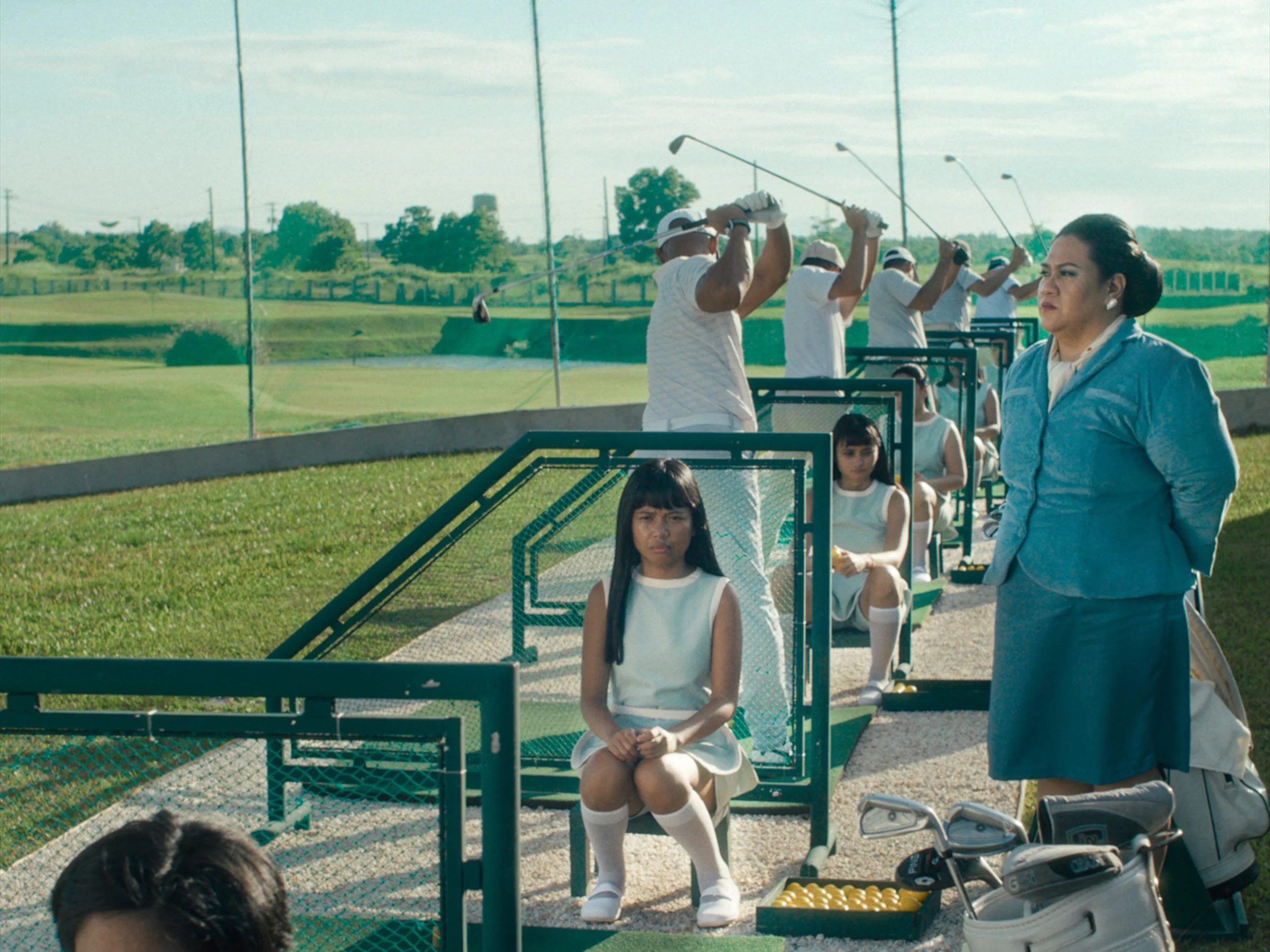
Photo courtesy of Kino Lorber.
Text Raffy Ermac
What originally started out as a thesis project for an up-and-coming filmmaker is now one of the most exciting pieces of Filipino cinema to emerge onto the global stage in years. And with the news that the film is now the Philippines’ official pick for Best International Feature Film at the upcoming 99th annual Academy Awards, it’s ready to go the distance — and possibly make awards season history.
Rafael Manuel’s feature-length film debut Filipiñana, based on his award-winning 2020 short of the same name, has been making waves these past few months for its unflinching depiction of class and social hierarchies in the Philippines. Taking place in a singular day in one of Metro Manila’s many private and exclusive golf courses, the film turns a mirror on modern Filipino society and how working class people (specifically women) are treated, with their pain and turmoil so easily glossed over by those in positions of power and privilege.
Lush, colorful landscapes and beautiful architecture collide with the cruel, strict treatment of the golf course’s many, mostly female employees. Paired with a captivating performance from Jorrybell Agoto as the film’s main protagonist Isabel, a poor, Ilocano “tee girl” whose sole job is to literally queue up golf balls for men who are using the driving range, Filipiñana is an unnerving and unapologetic look at the ever-expanding class gap and a perfect commentary on the broader social ills that that currently plague the Philippines when it comes to social and economic equity.
Filipiñana is also the Philippines’ official entry for the Best International Feature Film category at the 2027 Oscars (to date, no Filipino movie has ever been nominated in the category), so with all the critical momentum, it’s an exciting and thrilling time to be a fan of Philippines cinema.
Hella Pinay sat down with Rafael Manuel to talk about the crafting of Filipiñana, what the feedback has been like from certain audiences, why he chose to be specific about showcasing the plight of Filipino women, and more.
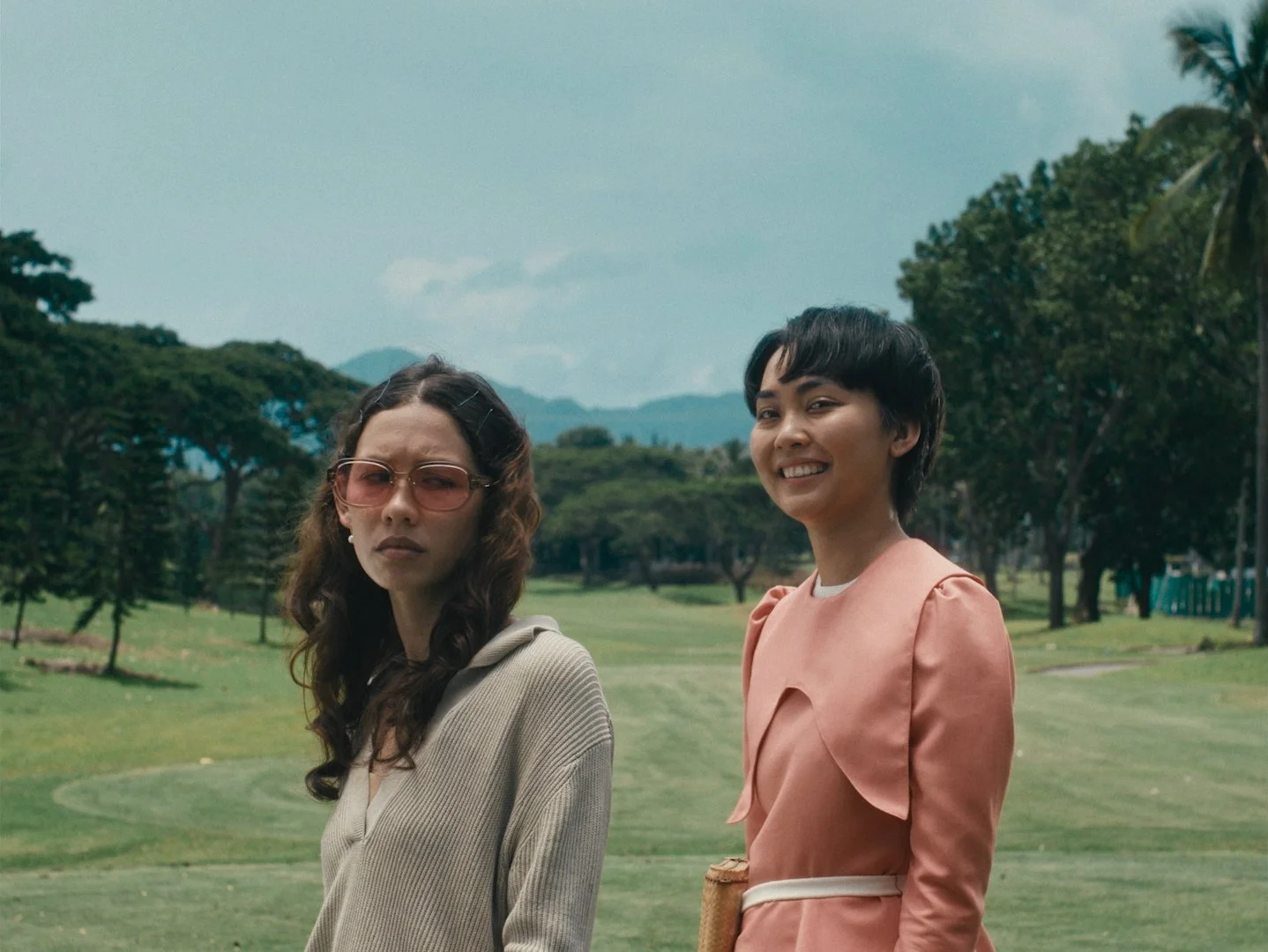
Photo courtesy of Kino Lorber.
What was your main inspiration and what made you want to tell this story and share it with the world?
Rafael Manuel: The milieu, the environment that the film explores is most definitely the genesis of the film. Metro Manila is a city of about 15 to 20 million people. We have only one public park, but we have about 50 golf courses. So I think that this privatization of land and how land is so privatized in the Philippines is a very important jumping off point for this film and the themes that this film wants to explore. Also, when you take into consideration the colonial historicity of golf courses, and that the first golf courses in the Philippines were in American military bases, I don't think you can speak about the Philippines without alluding to our colonial reality, which is the root of so much of our current malaises in Philippine society. The fact that we're still experiencing these things after generations being removed from colonization, quote unquote, but that we still see the effects of it.
What has the reaction of the film been like so far? I know you've already had success at Sundance and all these other places. What has it been like going around the world showcasing the film and what has the feedback been like?
Rafael Manuel: The critics' feedback, the professional critics and foreign and local, has been overwhelmingly positive, for sure. With theatergoers, it's quite a divisive film, which I really like because people are talking about it. We just opened the Film Forum in New York last weekend and we were their highest-grossing opening weekend in a decade. This for a Filipino film is nuts, you know? People either love it or they hate it. And I love this because this film is anti-gentrification. And what is gentrification but making something that tries to please everyone?
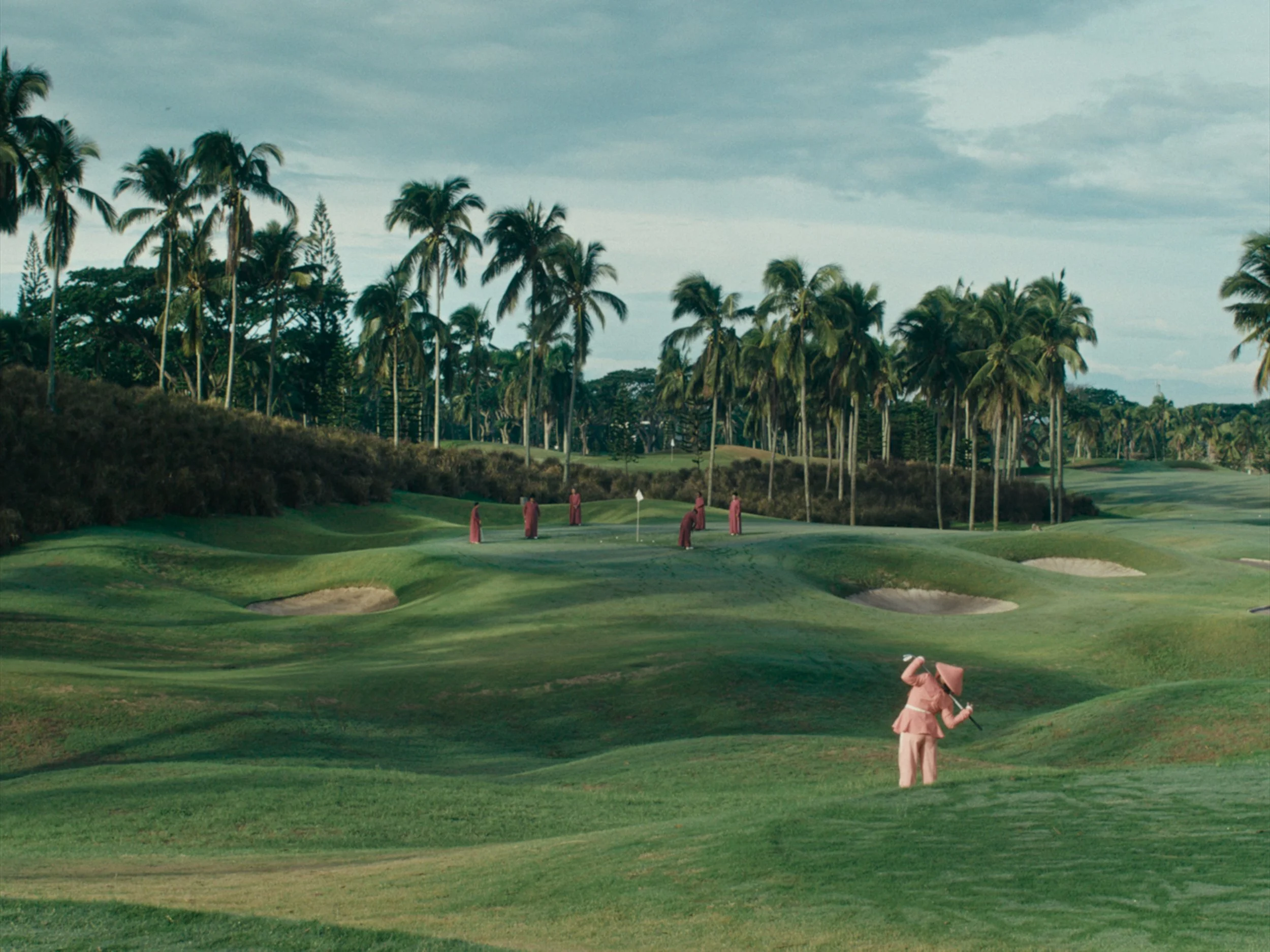
Photo courtesy of Kino Lorber.
I’ve spoken with my relatives in the Philippines who still live there and some of them, they didn't even know what gentrification was. Why do you think that something like that is? Is it cool to see that your film is opening this dialogue and opening this discourse to people in the Philippines? For me, one of the first things that comes to mind when you think of Filipino cinema is always those silly, fun little rom-coms. But I feel like this is an important discussion. Can you talk about that and getting to expose Filipino audiences and worldwide audiences to these kinds of discussions that don't happen often?
Rafael Manuel: Yeah, it's scary, right? Because Filipinos can be really brutal, especially online. This is also a remnant of colonial mentality, right? Because in order to subjugate the people, you have to divide the people.
It's really interesting to see how Filipino audiences who didn't like the film, what they're asking for is more story, more narrative, more things that are introduced to us by the west in terms of narrative conventions and story plot conventions, because Hollywood is like the mecca of narrative story beats. With Filipiñana, what we wanted to do is take more inspiration from pre-colonial storytelling that's more oral in nature and even extends into music. Instead of acts and scenes, we thought about constructing this narrative in terms of verses and choruses and interludes. It's kind of an ode to pre-colonial storytelling.
That's something that's not “lost” to the Filipino viewer, but because we as a culture consume so much Hollywood, consume so much American media, it's a bit ironic how when something actually is more Filipino in its construction, is presented to them, then it becomes an “alternative” mode of storytelling.
I find it really interesting because this is a hot topic in the Philippines now, of them actually complaining about formulaic storytelling in the Philippines, how we always do these rom-coms and things like that. But then when they're faced with something like this, something that challenges them, they're like, “Oh, no, no, no, this is not what we want.” So it really makes me think about when you talk about “alternative” forms of storytelling, are you just talking about Hollywood films, but with brown faces? That's not alternative storytelling.
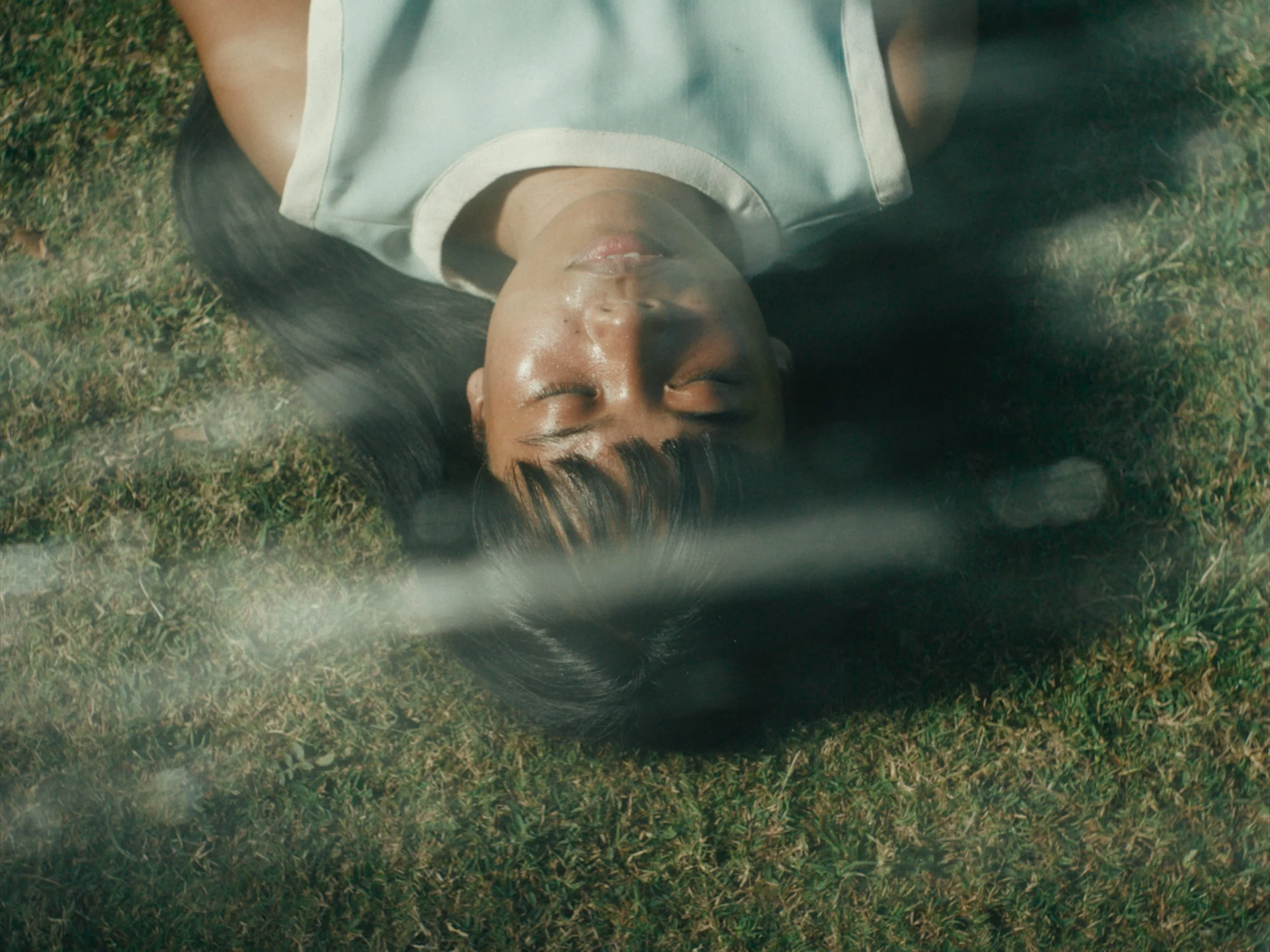
Photo courtesy of Kino Lorber.
A lot of main characters in mainstream Filipino media don't look like Isabel. Can you talk about the intentionality of that, especially in the context of working-class Filipinos? There's still a lot of colorism so can you talk about the intentionality of having Isabel be a brown-skinned Ilocano girl?
Rafael Manuel: Yeah, and it's a really big pet peeve of mine. When I watch Filipino films, and even some films that I consider to be masterpieces, it's such a pet peeve when I see a lead character that really just stands out from the rest of the extras. It's like they're supposed to be playing this working-class Filipino, but they're about a foot taller than the rest of them and a shade whiter, paler than the rest of them. It's just really weird. I can name 20 teleseryes that do that. It's so funny. Even pieces of proper cinema, they do that. It's so ingrained into our culture.
What this also kind of does, it sort of papers over the class divide in the Philippines. It says, no, we're one as a people. We're not. We're fragmented as a people. And so in Filipiñana, yes, you'll see so many different skin tones, but they belong to the classes that these skin tones allude to. For me, it's a proper representation of what colorism and the class divide in the Philippines really looks like.
And obviously, Isabel wouldn’t have been brought to life without Jorrybell. What was it like casting her and then working with her and getting to bring Isabel to life through her?
Rafael Manuel: Jorrybell, I've known for about seven years now. I first met her when I was doing casting for the short film. And I remember that when she walked into the casting room, she didn't make an immediate strong impression on me, but the more time I spent with her, the more her presence grew on me. And I thought, “This is Isabel to a tee.” Someone whose presence grows, whose confidence grows, whose boldness of action grows. It's been such a joy to collaborate and to watch Jorrybell's journey with the film over these seven years. It's really a gift to be able to collaborate with someone through an extended period of time like that.
A lot of my work with actors happens before principal photography starts or before production starts and really spending as much time with them as possible and building the world and the inner life of the characters with them. Once I'm on set, my directing style is really just to try and get out of the way as much as possible and trust that all the work that we did in pre-production and everything we did leading up to these moments, that we try to capture on camera. Whatever choices they make as actors when the camera is rolling are correct, because we built the world and we set the parameters. In a way, their acting becomes a sort of a playful resistance to the world and the parameters that we set. This is what I like to try and achieve with the actors.
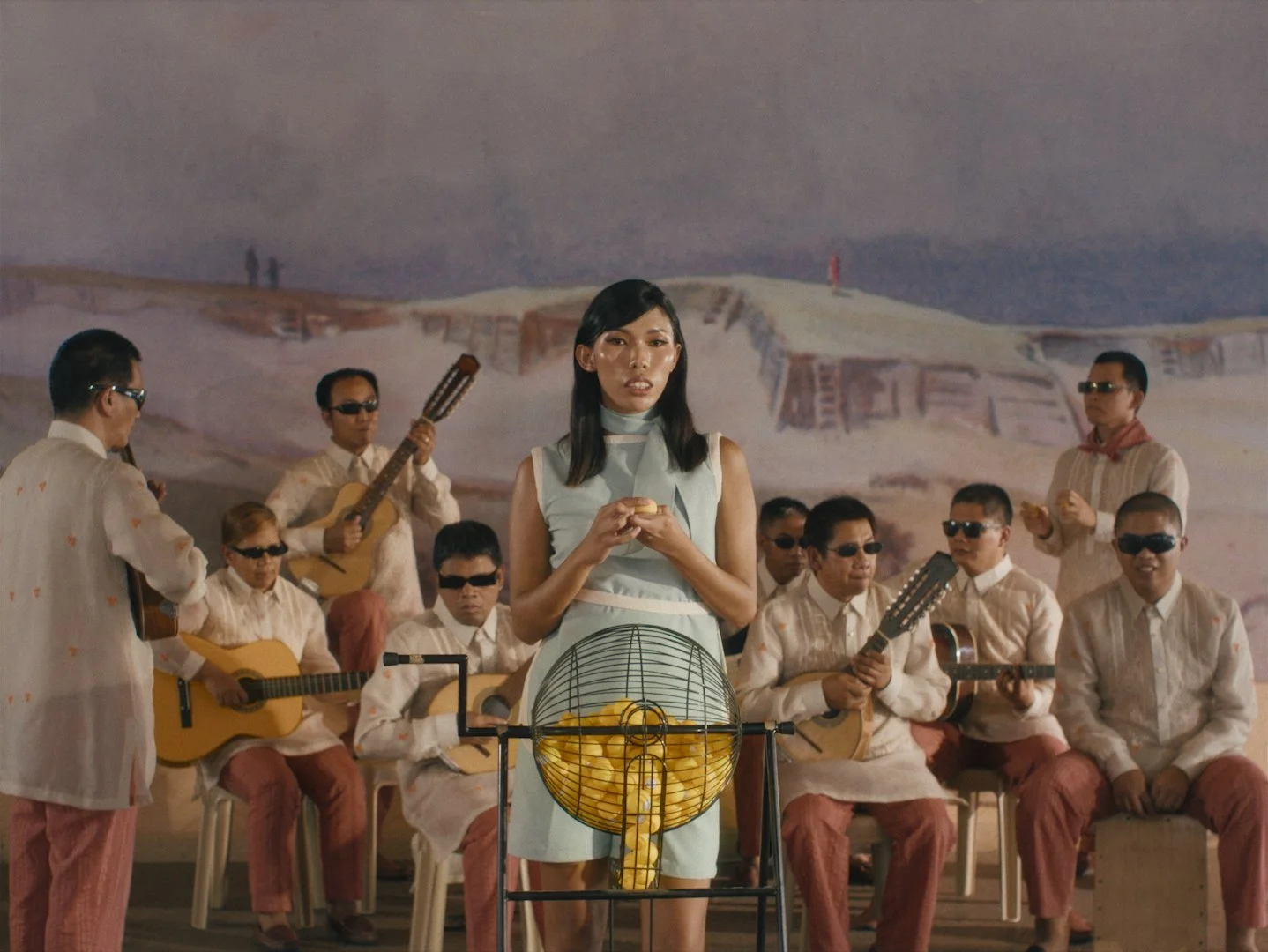
Photo courtesy of Kino Lorber.
One of the most poignant scenes in Filipiñana, for me, was when a caddy asks Clara, “If you don't have caddies in the US, who carries your bags?” Can you talk about that scene but also the greater message of how the working class in the Philippines are not aware that there's different systems in the rest of the world at work, and that it's inconceivable to her that someone wouldn't be a caddy for someone. So can you talk about the intention of that scene and getting to portray something like that against such a wide gap with class privilege?
Rafael Manuel: Golf is such a nuanced and particular world, right? Jorrybell is a tee girl, right? The fact that this job exists, but only exists in the Philippines and some other parts of Southeast Asia, that a girl has to sit on a stool the whole day serving golf balls for golfers, because they can't be asked to tee off the balls themselves. But yeah, when Ina, that's the name of the [caddy] character, asks Clara about who carries her bags in the States, it just speaks to, for me at least, a lot of these jobs in the Philippines that are created just because there's so many people. And because there's so many people, especially people coming from the far-flung provinces, going to Metro Manila looking for a job because it's the cosmopolitan dream, which is a trickle down effect of the American dream, the wide-selling of the American dream.
We have all these jobs that are just superfluous in a way. People at toll gates, parking lot attendants, the tee girls… I was really interested in thinking about what it is that they, because they have a lot of free time, their job is free time… I was really curious what goes on in their head during all this free time.
A lot of them said they were thinking about saving up to start a business or what it would be like if they worked at a department store instead? Some of them were sharing with me, actually, their journals. Some of them wrote poetry in their minds, and they were thinking of golf balls. I just found that quite, quite interesting.
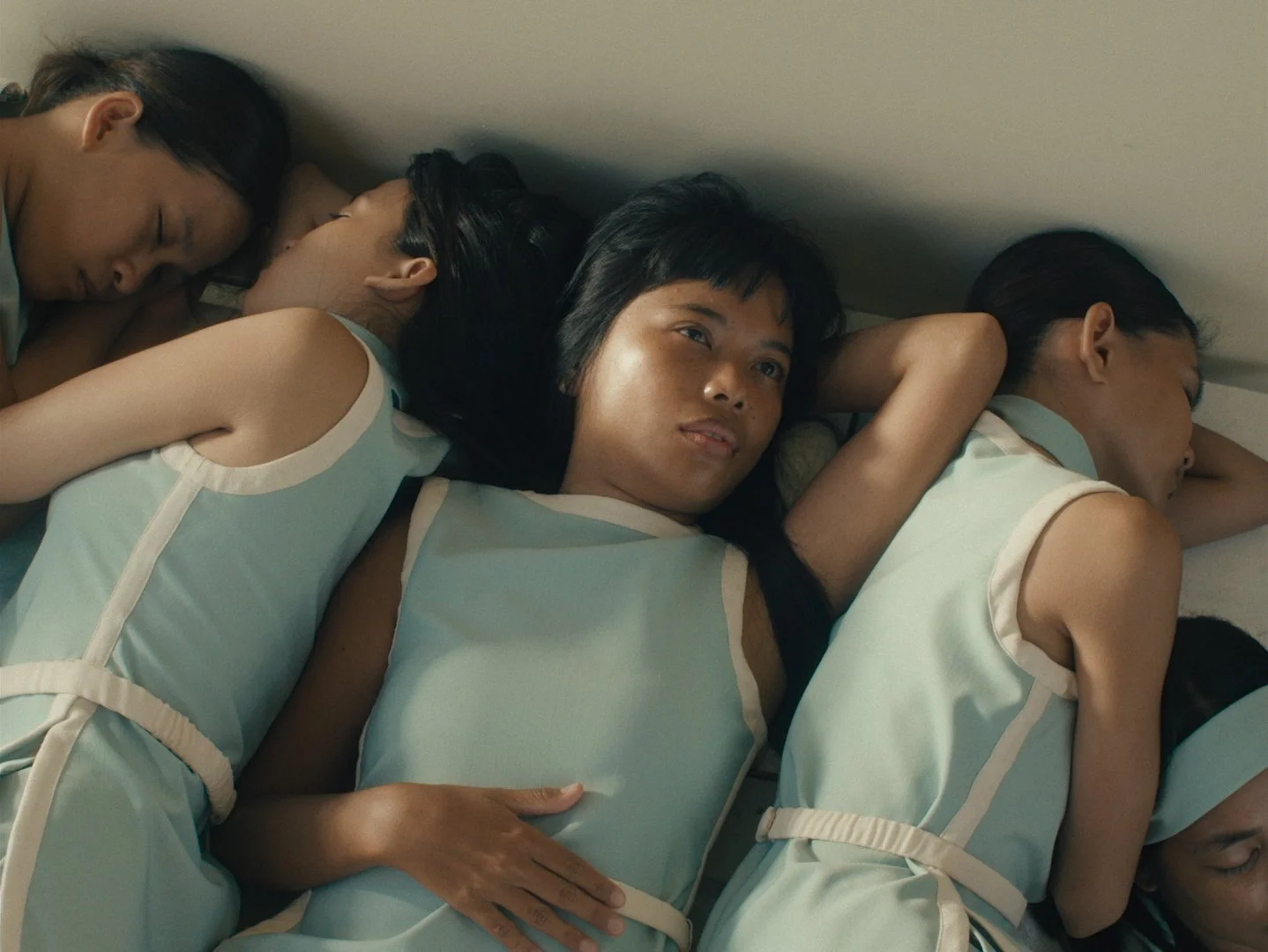
Photo courtesy of Kino Lorber.
Women are a majority of service workers in the Philippines, and all over the world for that matter. Why did you want to be specific about telling a story about a working class Filipino woman and show the world that this is the kind of thing they go through on any given day?
Rafael Manuel: For me, it was really important to explore the image of a tee girl. The very fact that this job exists, and the fact that it's women that are doing this job… that's just a socioeconomic reality in the Philippines. So it had to be a girl, because tee girls are girls.
It was a very interesting perspective [for a tee girl] to explore the golf course environment because it's a very kind of alien perspective. They come from the lowest social strata. It's a position in the golf course that's very much almost outside the golf course in that way, because they're so othered. And I think that exploring environments and spaces through the perspectives of those that are othered, those that feel alienated from it, is a very interesting perspective to explore because they see and they hear things differently from the people that are super ingrained into that environment. It's like going through a city with the eyes of a tourist. You look at a city very differently when you're not part of that city, when you're not part of that society.
The advantage, also, of exploring it through the tee girls is that because of their part of the lowest strata, they're almost invisible. So Isabel kind of uses this invisibility to her advantage and she's able to roam around undetected. So I thought that was an interesting sort of contradiction.
Filipiñana is now playing in select theaters. Watch the trailer for the film below.


