
Collective Frequencies
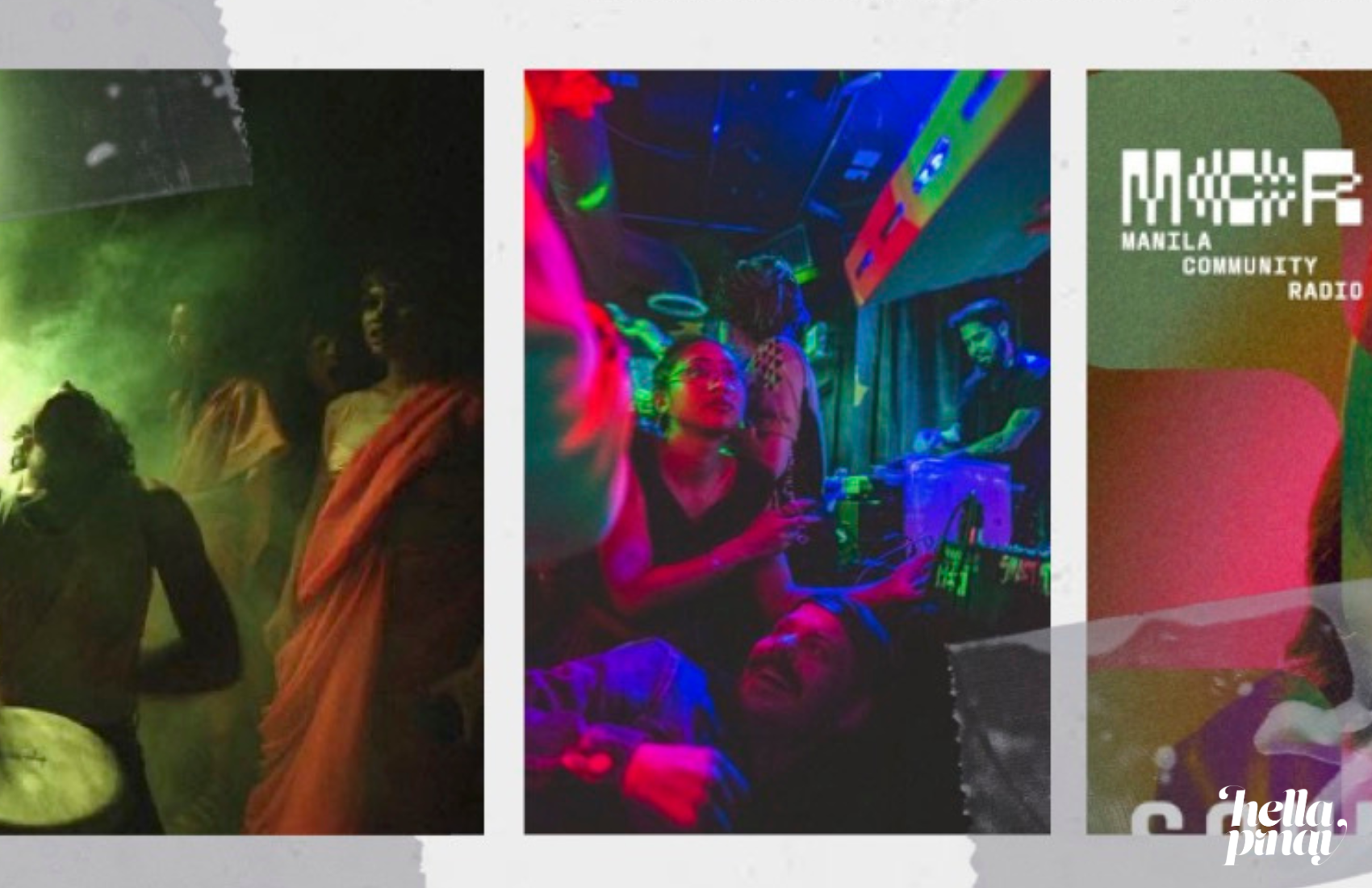
Meet Manila Community Radio, SMARTBOMB, and Elephant: three music collectives bridging communities together towards a progressive post-pandemic industry
Text Samantha Nicole
From Hella Pinay Issue 02: Interconnected - Fall/Winter 2021.
Two years into the global pandemic, the nightlife and music industry has seen unprecedented upheaval. Clubs, festivals, and venues were forced to shut down or operate at half capacity. Artists, promoters, crew members, and staff were driven to find employment elsewhere, with the majority unable to receive a subsidy or radically shifting their plans.
In the midst of the COVID crisis and now with the industry slowly taking back its momentum, creators across the map have taken it upon themselves to keep the music playing. It's supercharged music collectives like Manila Community Radio, SMARTBOMB, and Elephant to make progressive moves to bring communities together — empowering change in their local cities in hopes of igniting global acceptance.
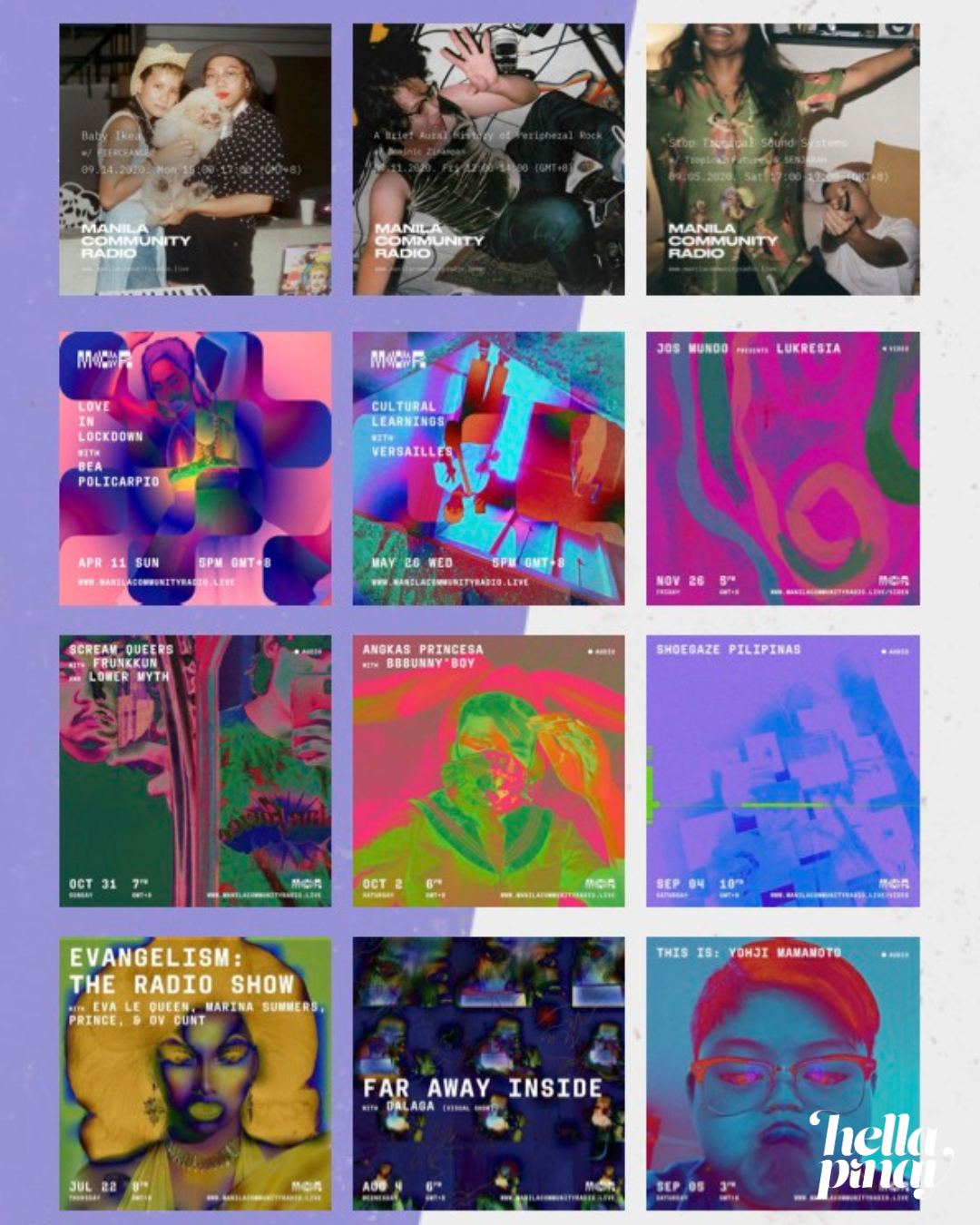
Manila Community Radio flyers.
Manila Community Radio
Connecting frequencies through independent radio
The Philippines rode out the world's longest lockdown led by a tumultuous, often-criticized leadership. Despite numerous subculture spaces closing their doors for good and an awful lack of government support, artists and crews sought out monumental means to make themselves heard.
Manila Community Radio (MCR) was born in the country's metropolis amidst the COVID quiet, showcasing a distinct stack of shows free of corporate advertisement clutter — an element co-founder Jorge Wieneke V believes is core to keeping the platform independent and community-funded.
"We just wanted to create something that not only cultivates a better environment but also operates as a way to give voices to the voiceless apart from that we aim to really push a type of diversity that is lacking in traditional radio, in an effort to decentralize and give back the power to the actual community, while delivering some of the most exciting, fresh and creative selections cut across the whole spectrum of music."
Adamant in featuring inclusive and uncontrived Filipino talent in the airwaves, MCR is seeing its efforts pay off, with an average of 2,000 monthly listeners mainly from its motherland, US, Canada, UK, Singapore, Australia, Japan, and France. It's also expanded its repertoire beyond artists across the archipelago by bringing together the local community in amplifying queer voices, aiding victims of storm-stricken areas, utilizing small spaces like OTO, Futur:st, and Play Record Stop to broadcast from and celebrating its first-year milestone with a 15-hour non-stop stream last July.
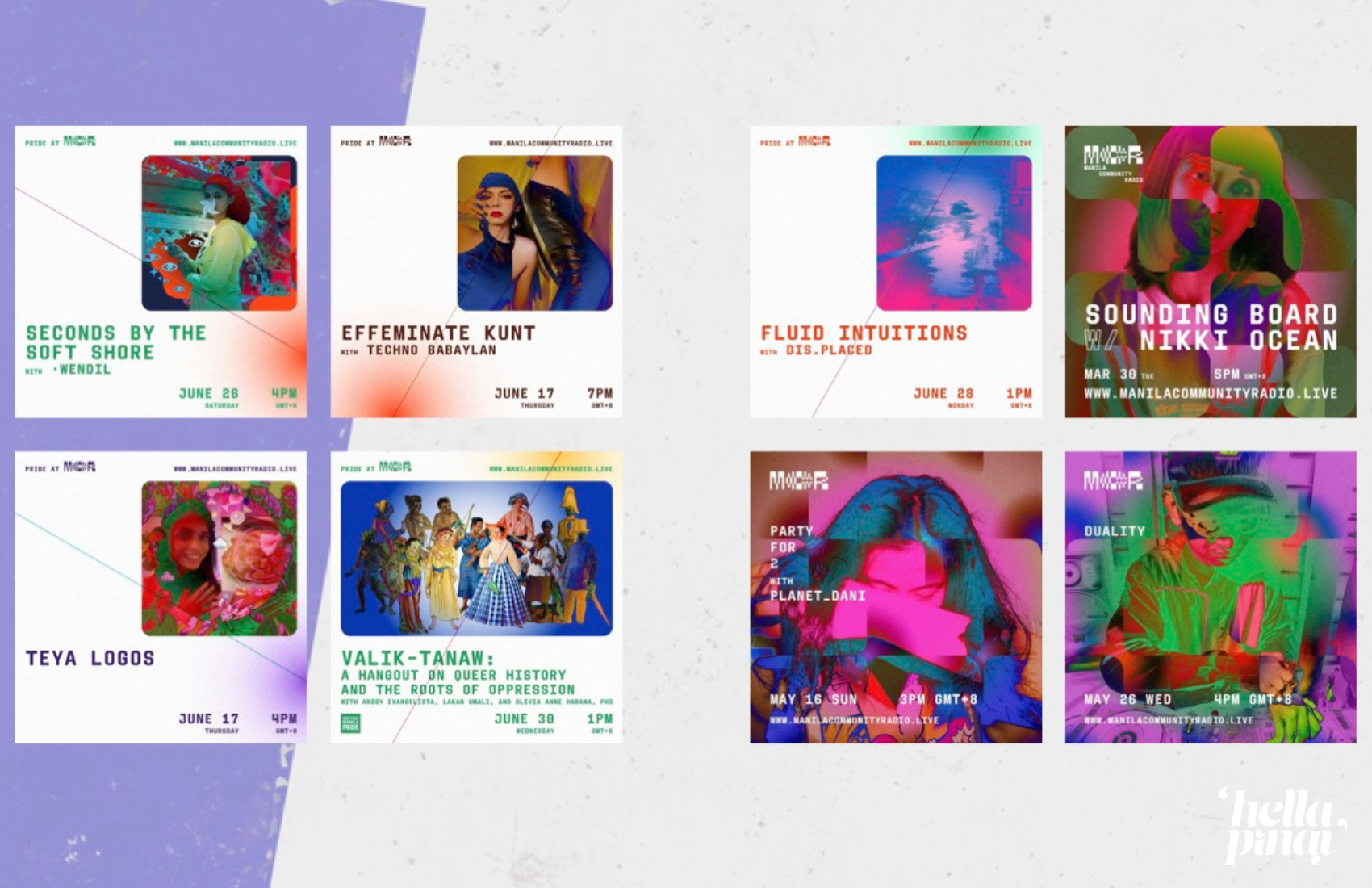
Manila Community Radio flyers.
"I think it heavily works to be mindful of inclusivity, diversity, and gender parity in terms of our programming as well as occasionally trying to listen and hear out our listeners and having an open line for submissions and people who are interested in hosting shows too. I think it also helps to really center our activity on the community itself, their experiences, and their concerns too," Wieneke explains.
The level of commitment to keep MCR running without the shackles of brand loyalties and sponsorships borders a certain sense of madness — one that the Filipino collective takes a lot of pride in, and one that could inspire the future of true freedom of musical expression.
With madness comes method, as the platform seeks to fuel its manifesto on and off the air through more residencies, exchange programs, as well as frequent on-site streams.
"MCR invites people to approach things with a bigger mind and heart for inclusivity, diversity, and with all things to think of how to push collaboration and harmony amongst the different parts of a community. To go beyond and to keep digging and pushing for safer spaces for all walks of life. There is still much to learn but from working on MCR alone, I’ve learned so much about working with so many strong and talented people and I’d like this to serve as an example that these spaces can exist and need to exist not just online but when physical spaces resume."
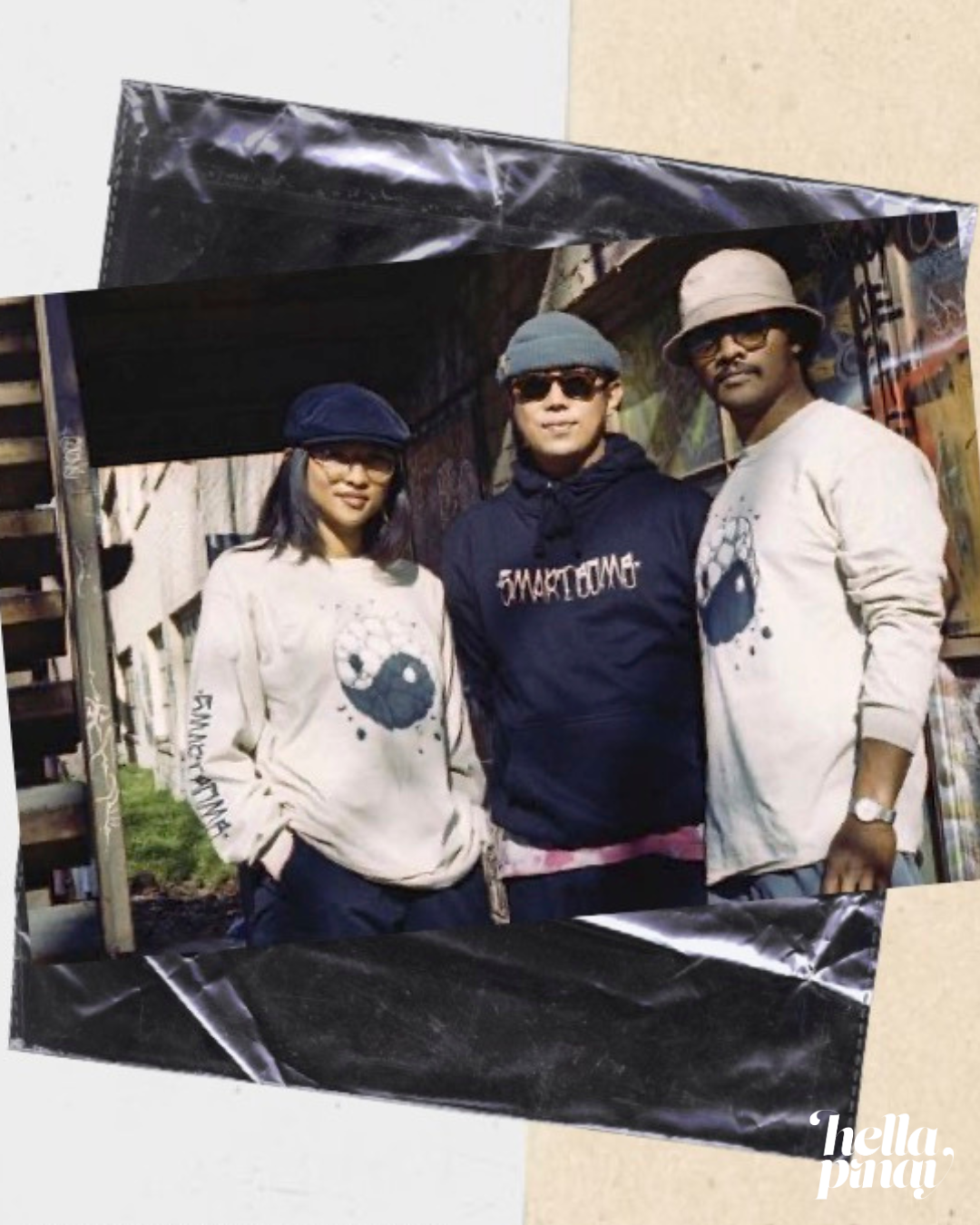
SMARTBOMB x Colin Taniguchi collab tee, co-founder Jason Garcia pictured center. Photography Tessa Shimizu. Photo courtesy of SMARTBOMB.
Smartbomb
Creating textural tapestries through sound and art
Meanwhile in Oakland, California, improvisation and spontaneity have found a home with audio-visual showcase SMARTBOMB. Co-founder Jason Garcia, who performs under the moniker W.A.L.A., envisions breaking the boundaries between performance and artistic installations, allowing unadulterated fluidity between beat music, visual arts, and motion graphics.
Having moved from the northern island of Subic a few hours from the Philippine capital to the ethnically-diverse city of Vallejo, CA, Garcia eventually started an underground hip hop movement whose members were predominantly Filipinx.
"Our grassroots events brought conscious and positive hip hop shows that the city lacked, and we would draw the whole town, all hoods, and sides, Black and brown kids coming together for the love of the music. Those years truly enlightened me to my purpose and passion. The East Bay has a spirit that is intrinsically in the air, the history of the people and past movements are still felt strongly, and inform all the new ideas that continue to flow from everyone. It’s a futuristic place."
From finding a home in the iconic Legionnaire Saloon and performing in the renowned Yerba Buena Center for the Arts to getting the attention of Red Bull Music, the crew's desire to champion their community has led to lasting collaborations, as well as a shift towards still-mind-bending online shows at the height of the pandemic.
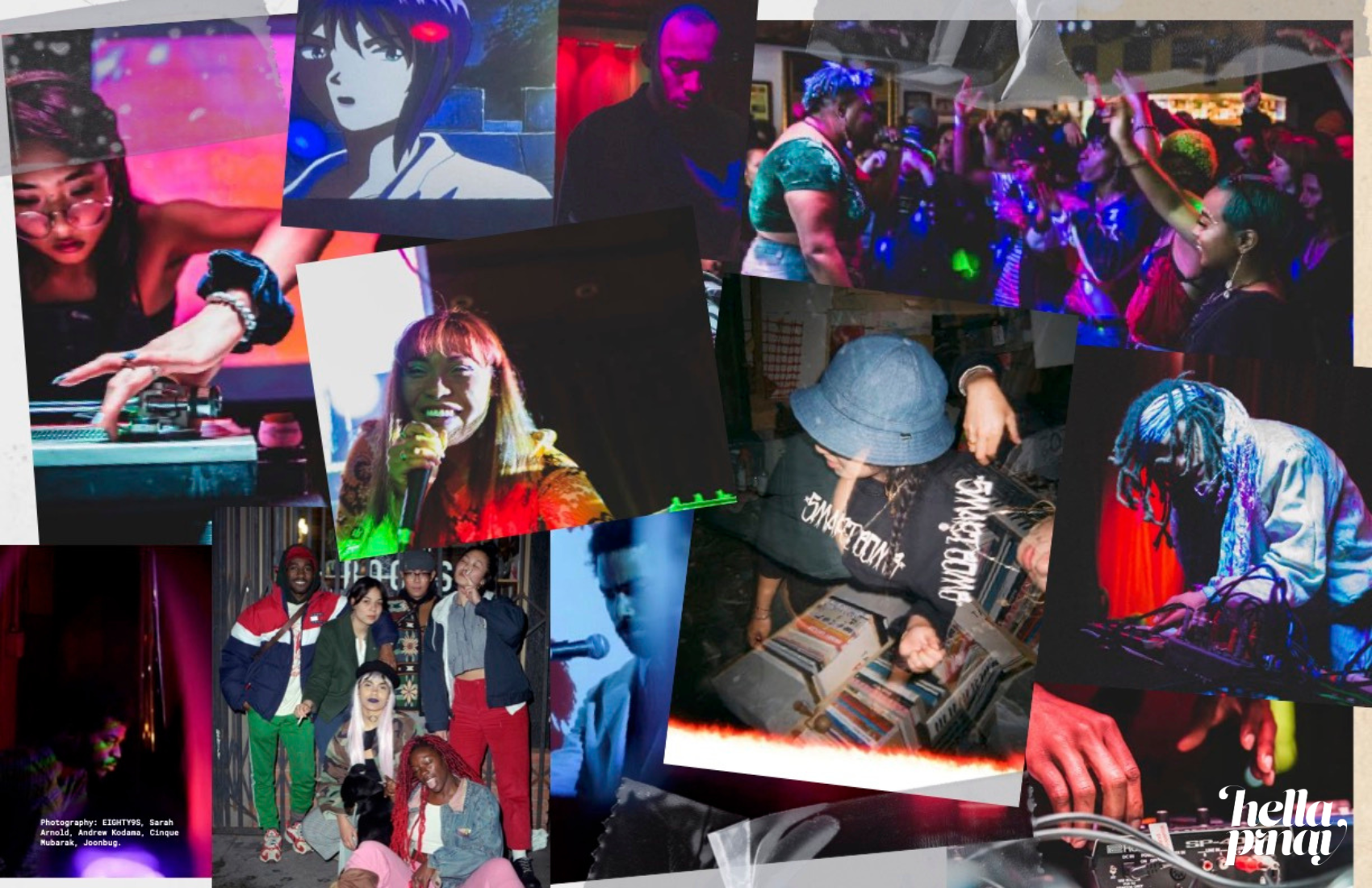
Photography EIGHTY9S, Sarah Arnold, Andrew Kodama, Cinque Mubarak, Joonbug. Photos courtesy of SMARTBOMB.
"It was rough at first, of course; the weight of everything in the world upon all of us — our own outlets of release and creative expression being stripped from us was hard," Garcia shares. "I hit the drawing board to start something new. I had been speaking to Stanley Ipkuss about streaming SMARTBOMB events prior to the pandemic. I dusted off an old idea that Cheflee, mejiwahn, Cinque, Pat Messy, and I would always talk about, which was a variety show. This idea would develop into Video Home System: a movie-like experience of audiovisual music sets, short films, skits, animations, and more all woven together into two-three hour broadcast specials airing free worldwide."
Harnessing the power of an immersive, multi-sensory experience, Video Home System was a digital evolution that made sense, with SMARTBOMB already having been heavily intertwined with visual and motion graphic artists.
"It was always our intention to shine a light on all of the creative talents in our universe. Though we gained an early reputation as a poppin' "beatmaker party", I always felt that as a slight to all the other musicians and mainly the supremely talented visual artists around us. We made a point to curate shows and projects that equally highlighted the visual and audio art forms, and in turn, we were discovered and embraced by more facets of the community."
Similar to Manila Community Radio, Video Home System is a purely independent production, centralizing its efforts on communal support that has proven to be a pillar of fueling change and gaining sincere, unwavering support — one that constantly fuels Garcia and the rest of his crew to grow.
"We have big dreams and high hopes for our loved ones. 2022 will mark nine years of SMARTBOMB. The number '9' in many belief systems can mean 'birth', 'born', or completion to start anew. So with that, we move forward with new missions and new concepts that bridge our former and current realms into exciting new spaces and experiences for the Bay Area community and worldwide."
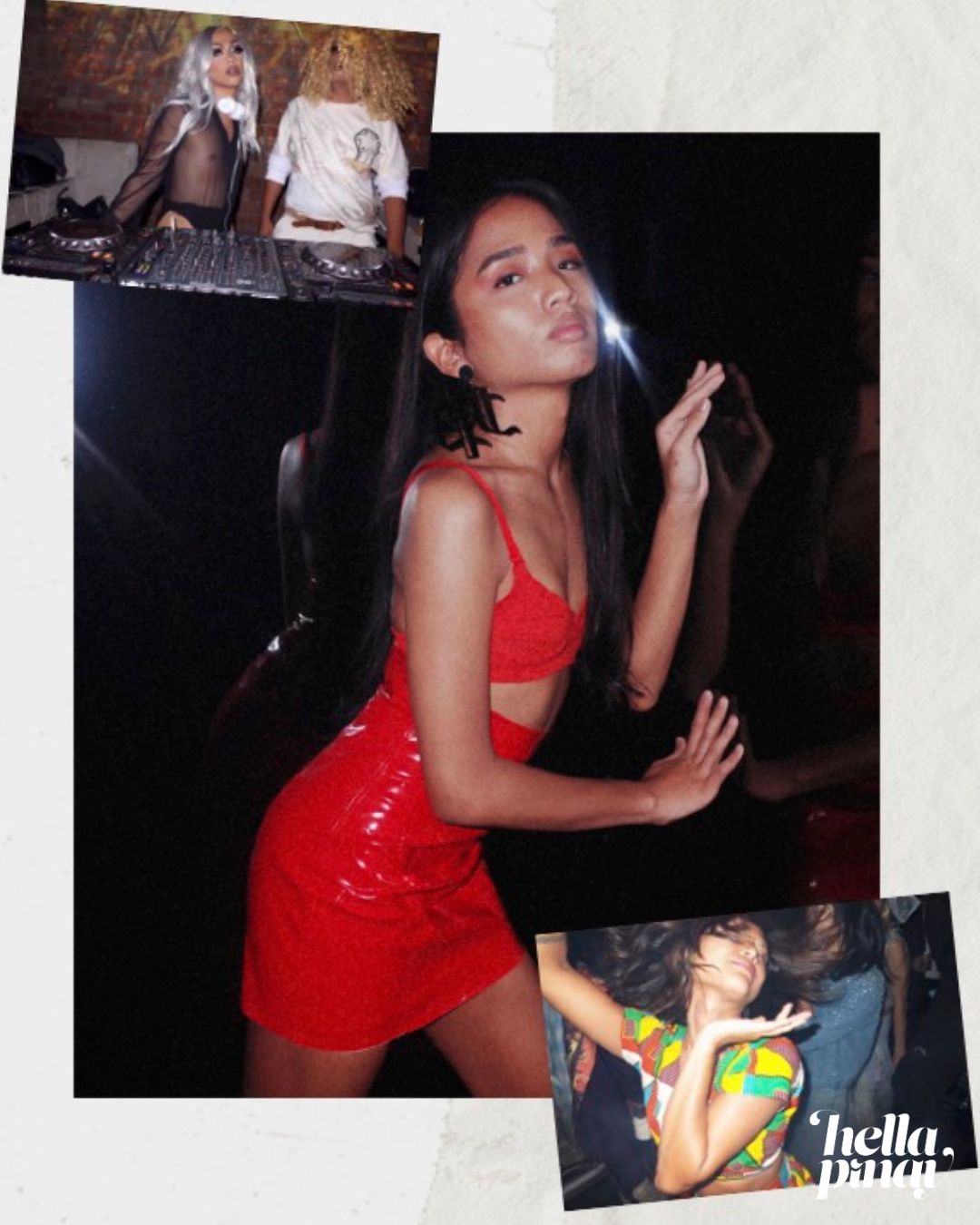
Photography Jack Marion for Elephant. Photos courtesy of Elephant.
Elephant
Embracing the Elephant in the room
Queer acceptance on other continents may finally start to feel permanent instead of tidal. However, in the Philippine archipelago, a constant push and pull still dominates.
To say that genuinely safe spaces for the LGBTQIA+ in the country are limited is an understatement — no thanks to corona’s further impacts to uneven the field by forcing the majority of inclusive venues to shut down. To date, no national law exists to protect the community against discrimination, resulting in countless hate crimes, microaggressions and a significant number of local leaders voicing out their refusal against “the minority.”
Despite innumerable knock-backs, allies and supporters are undeterred in their fight for acceptance. For queer-charged, techno-driven collective Elephant, it’s about claiming space and dominating through the dance floor.
“I think presence alone is already very empowering — to see a group of queer, gender-nonconformists coming together in the same movement and carving a spot — and thriving — in an otherwise hetero-dominated scene. It gives us a sense that anything is possible for the LGBTQIA+ folks,” co-founder Shahani Gania, aka SuperStarlet, explains.
Its conception was an invitation to embrace individuality and inclusivity through eccentrically-themed parties at their weekly nights in the now-defunct XX XX, that allowed patrons to embody their unapologetic, free-spirited selves. It also paved the way for Gania, together with Paul Jatayna, Jujiin Samonte, Paulo Castro and Anna Ong, along with its core members, to truly create a space that helms freedom of expression. Echoing other LGBTQIA+-safe subculture spaces and events such as ABG’s, Fluxxe, Today x Future, and Panty Monsters, Elephant made its message loud and clear: the future is queer.
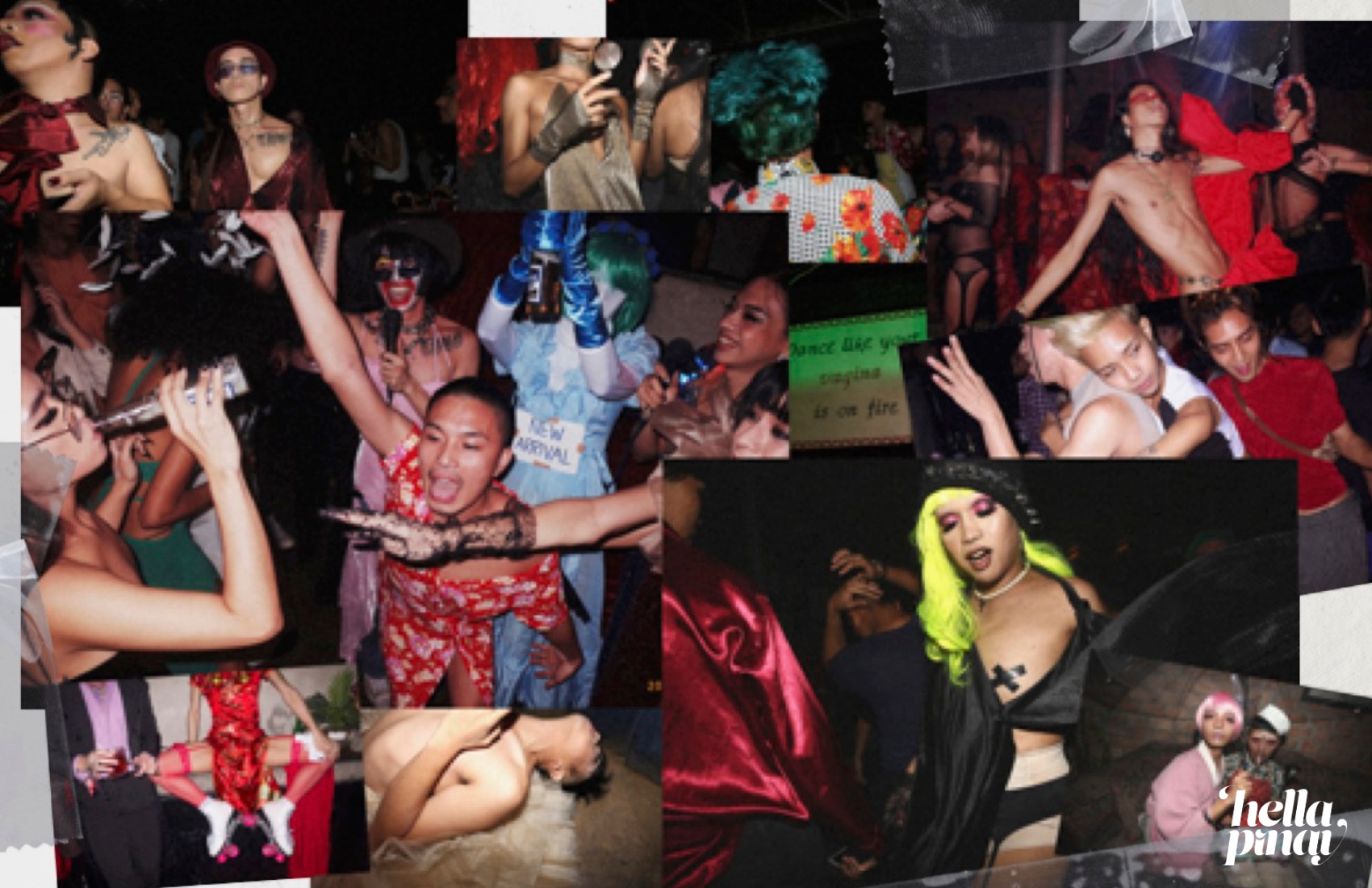
Photography Jack Marion for Elephant. Photos courtesy of Elephant.
“Paul understood the importance of creating a new environment that welcomes a specific niche that is in the spectrum of the queer community. We both wanted to hear new good music, I think that was also very important to the both of us. We really did struggle in the beginning, but we kept faith and stayed true to what we felt was our very core, and eventually the people came,” Gania shares. “We’re very lucky that we were surrounded by people who supported us with this vision — artists, friends, the club that we were in. Manila deserves to have its own queer techno community and I think we were able to bring that here; rainbow representation is important and must never be a divide.”
As the rest of the world’s nightlife industry was pushed into non-existence, Elephant continued to endure and find ways to keep its community and allies — local and global — engaged and empowered.
“Roadblocks become insignificant once you get past them, and every week there was one that we had to get through. I think one we had to struggle with in the past was tokenism within the clubbing community. I don’t know if we would still experience that once things go back to normal. I hope not,” Gania says. “The most significant success that we’ve ever had is being able to connect with different international queer clubbing communities. It’s something that started in the club and carried over to livestream collaborations during the pandemic. It’s a really wonderful feeling to have, when you get to meet people outside the country who are also into what you’re into.”
The pandemic may be relentless in throwing hurdles, just as countless continue to cast stones on what they perceive as unacceptable and unnatural. However, Elephant, like Manila Community Radio and SMARTBOMB, are hellbent on rising to the occasion; to give the independent, often-silenced yet prolific voices the platforms they truly deserve.
These collectives understood the assignment: to dedicate themselves to the mission of holding the torch and passing it on, full blast.
From Hella Pinay Issue 02: Interconnected - Fall/Winter 2021.


Growing up Pinay, self-love and acceptance are ever growing and transforming