
The Filipiniana (R)evolution
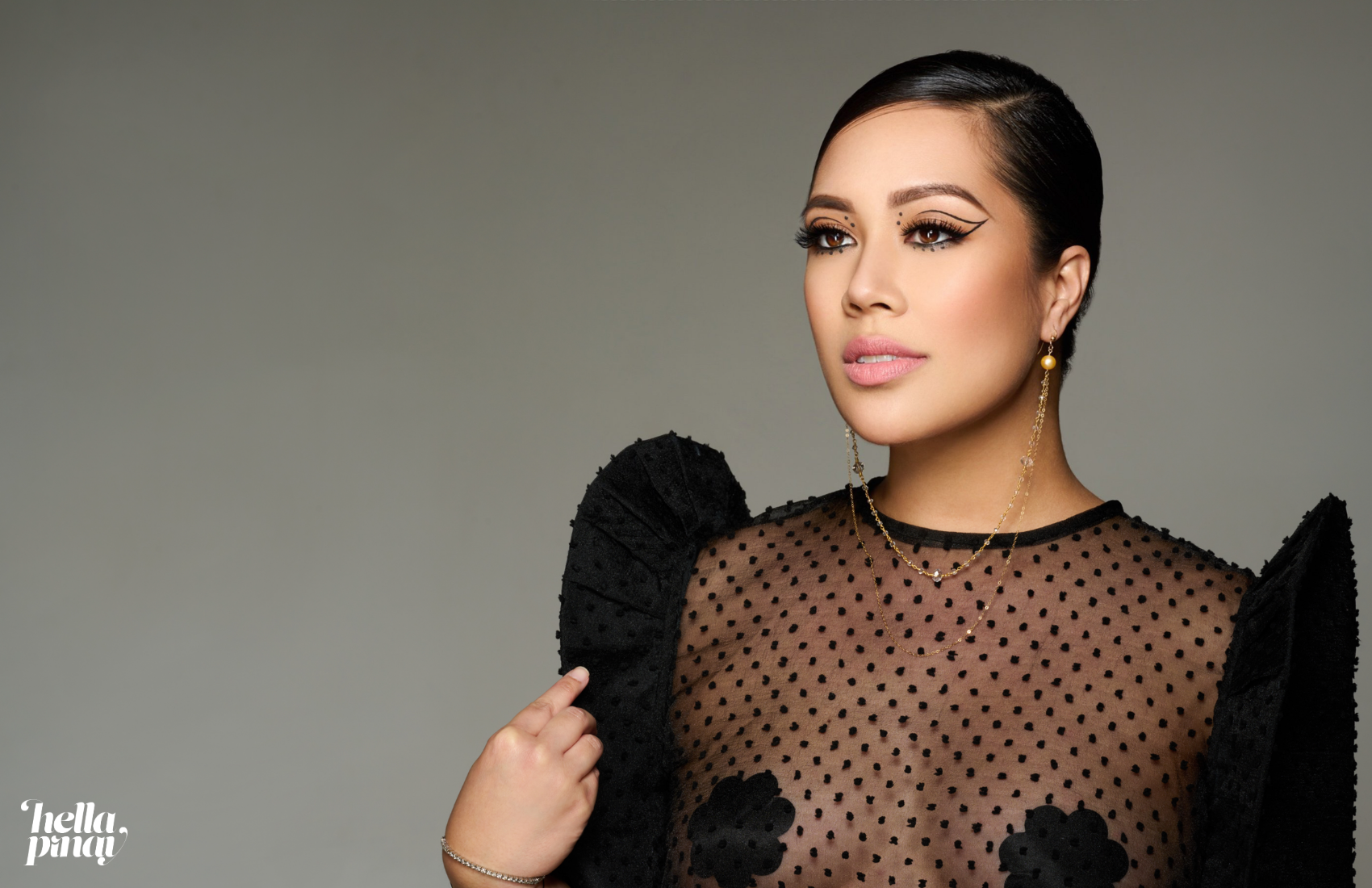
Keesa Ocampo in a custom sheer terno by Veejay Floresca, champagne pearl, faceted rock crystals and 14K gold-filled chain bali-og earrings by Barbara Lee. Photography Vincent Gotti.
An exploration of cultural fashion as statement couture
Text Ariel Neidermeier
From Hella Pinay 03: The Culture Issue - Spring/Summer 2022.
The Filipiniana, like its people, is a diverse collective of Indigenous roots, colonial influences and contemporary elements. Much like the islands of an archipelago, it’s difficult to unite the many interpretations of the Filipiniana into a singular definition of meaning. “Filipiniana” is an umbrella term used to describe the traditional dress of Filipino women. But, what constitutes ‘traditional’ and who are these women? Must an ensemble include the distinctive butterfly sleeves? Should it be crafted of certain materials or by certain hands to be deemed true Filipiniana?
The Filipiniana, as an art form, has survived through adaptation. In a reflection of the Filipino people’s own mastery of metamorphosis, the best known iteration of Filipiniana — the terno dress — features sleeves flattened like butterfly wings. It’s an elegant reminder of the transformational strength of the Filipino people: we keep going, picking ourselves up after the last occupation or typhoon, crossing oceans to safety from violence, blending our heritage with what we find on the other side. Today, what we find is the global reclamation of the Filipiniana as a powerful symbol of identity, pride and (r)evolution.
Many (R)evolutions
The Filipiniana has evolved throughout the centuries, from the "Maria Clara" or baro't saya ensemble of the 1800s, to the terno of the 1920s (called a “terno” because of a blouse and skirt set that matched in fabric or embroidery), and the terno dress (marked by butterfly sleeves) of the 1950s. The adage that the Philippines spent “300 years in a convent, 50 in Hollywood” could not be truer than when it comes to its fashion. The iterations of the national dress reflect both its Indigenous roots and colonial history, from the conservative and class-defining Traje de Mestiza during Spanish colonial rule to the cinematic and glamorous terno of the American occupation.
As noted by Caroline Mangosing, Founder, CEO and Creative Director of VINTA Gallery, the Filipiniana, at its core, is a template of evolution. “The very idea of ‘modern’ Filipiniana is actually inaccurate. Filipiniana has always been current and contemporary throughout the ages. We have always evolved with the times and our influences.”
Even when these influences are rooted in adversity, the Filipiniana mirrors the collective consciousness, inspiring self-examination and transformation throughout. Just take Imelda Marcos’ uniform of opulent terno dresses. Not only did they inspire her nickname the “Iron Butterfly,” they also associated the style’s silhouette with the corruption, violence and greed of the Marcos regime (1968-1986).
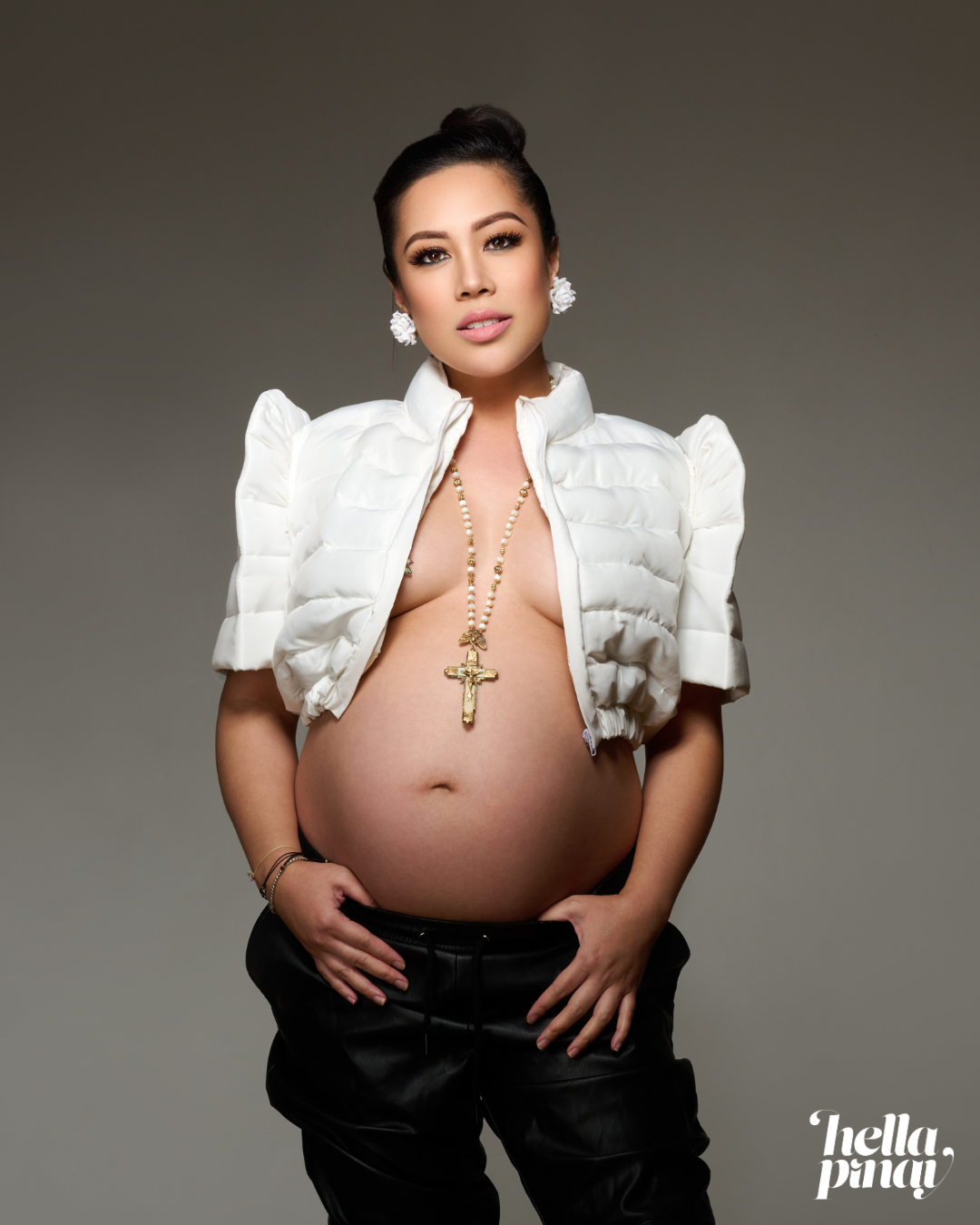
Keesa Ocampo in a custom cropped terno puffer by Ia Coca, Filipiniana rosary necklace by Barbara Lee and earrings by Ken Samudio. Photography Vincent Gotti.
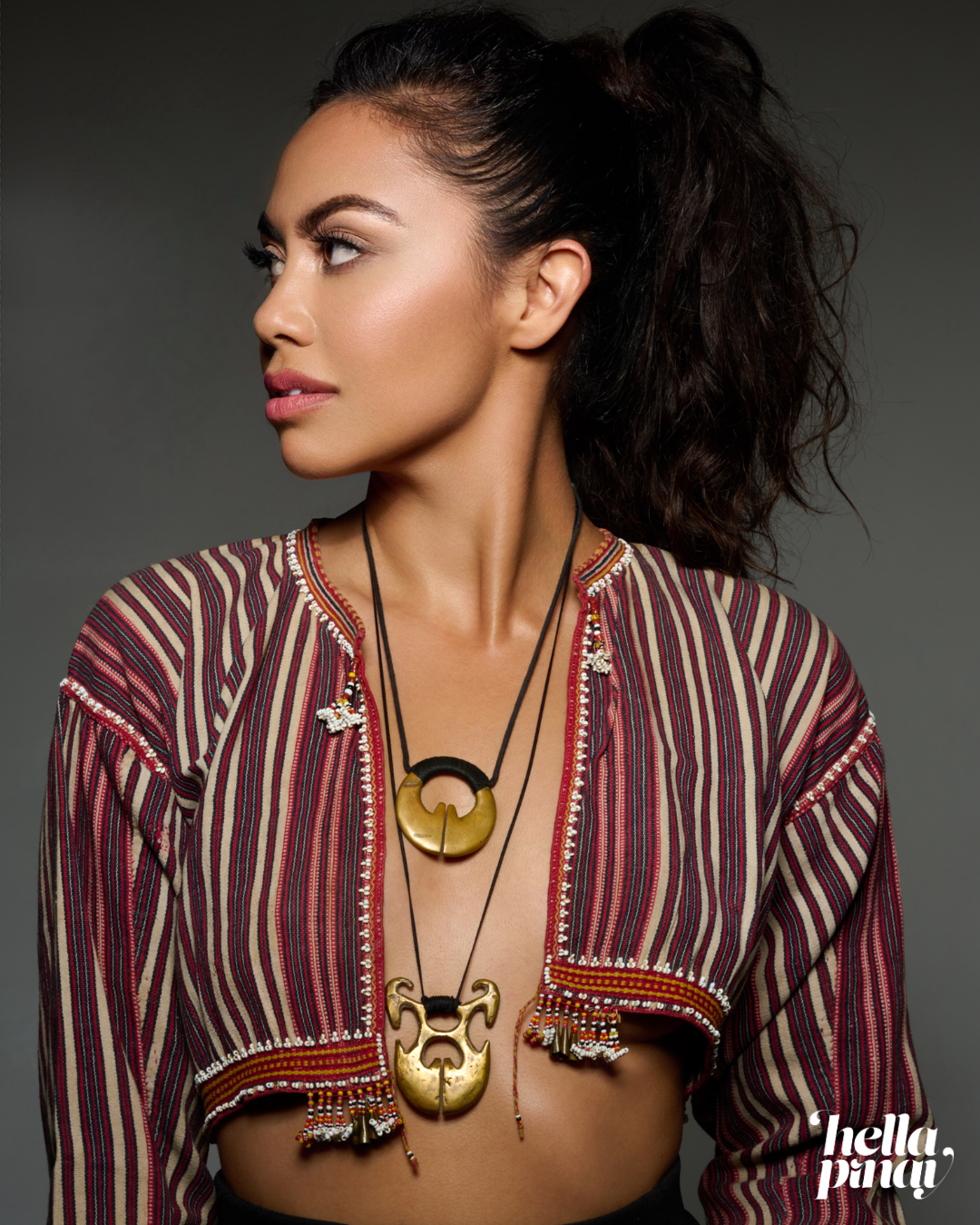
Ariel Neidermeier in a traditional hand-stitched Gaddang woven top with glass beads and layered brass Ling Ling-o necklaces with black cotton twine by Barbara Lee. Photography Vincent Gotti
Many Hands
Trends bloom in an alchemy of vision, timing, and luck. To Emmy Award-winning TV writer and producer turned brand architect, Keesa Ocampo, the modern trend towards Filipiniana is the result of years of dedicated and unrelenting work by the fashion community.
“Often, and especially for under-represented markets, trends are the effect of a concerted effort to strategically push an agenda and, in this case, it’s taken many hands, many forerunners and the most audacious brand crafters to say: it’s OUR time.”
From the rise of TernoCon and ready-to-wear versions of the terno to its appearance in mainstream media and on the feeds of influential tastemakers, there’s no question the Filipiniana is having a moment. What started as a repressive way for Spanish colonizers to cover the bodies of Indigenous Filipino women has evolved into a distinctive fashion statement for a new katipunan of people who are challenging norms, beauty standards, and cultural definitions. “The terno just exudes power and resilience. When I see a woman donning those butterfly sleeves, I see a person who is independent and has pride for her culture,” said Ia Coca, whose work has been worn by celebrities like Bretman Rock.
While a design does not necessarily have to include butterfly sleeves to be considered Filipiniana, this structural element is unmistakably Filipino. When Sarah Jessica Parker wore a terno-like top on an episode of the Sex and the City reboot, And Just Like That, a bevy of Filipinx fashion press erupted questioning if it was Filipiniana. For the record, the “dirndl top” was created by designer, Batsheva Hay, who is known for “retooling historical looks”. While the creative origins of the blouse are questionable, the inspiration is not.
“The fact that [the Filipiniana] is ours, inspires me to be a part of keeping it alive,” says designer RJ Santos, who creates custom pieces out of scrap fabric with non-traditional embroidery featuring tattoo- and even Pokemon-inspired motifs. Filipinos have a long history of confronting systems of oppression by claiming their cultural traditions and keeping them alive through adaptation. In the same way, our fashion designers have turned the act of defiance into a wearable art form. As said by designer and fashion icon Rajo Laurel, “We are a supremely talented people and we have a beautiful culture. We have a right to have a seat at the global table of fashion. We must be heard, seen and worn.”
Many Masters
There are many designers who have shepherded the Filipiniana through decades of reinvention and continue to pioneer it as an art form through design, craftsmanship and sourced materials. Spanning continents and generations, their work and voices inform us of the contemporary context within which our fashion lives.
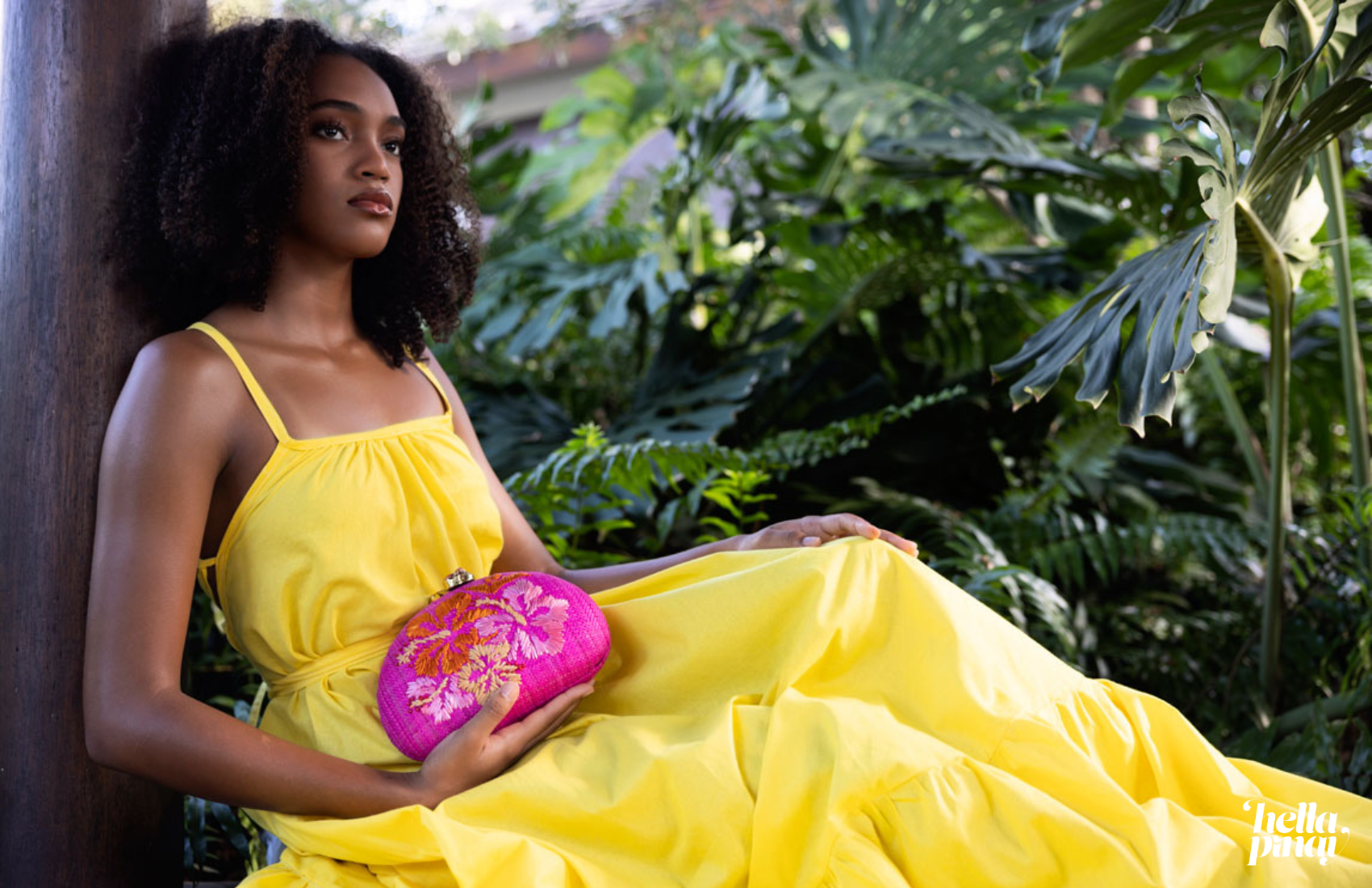
Photo courtesy of Rafe Totengco.
Rafe Totengco
Rafe, New York.
In what ways have your designs been influenced by your Filipino heritage?
Rafe Totengco: Reminiscing about growing up in the Philippines always comes to mind whenever I start to [design for] Resort or Spring and Summer: White sand beaches, exotic fruits, tropical flowers and the variety of seashells. The references are endless. My bags evoke a sunny and optimistic attitude, much like the demeanor that Filipinos are known for.
If the Filipiniana was a minaudière or handbag architecture, how would you describe it?
Rafe Totengco: Sculptural, distinctive and beautifully handcrafted. My bags are showstoppers. Take one of my designs to a dinner party and put it on the table and it’s game over. Everyone will be asking about it.
How have you integrated the Filipiniana style and message into your designs and made it accessible for the modern woman who may or may not be familiar with Filipino culture or Filipiniana style?
Rafe Totengco: The devil’s in the details with everything that I do. Hand embroidery and hand-woven materials merged with modern functionality … always showcasing the level of craftsmanship that Filipinos are known for.
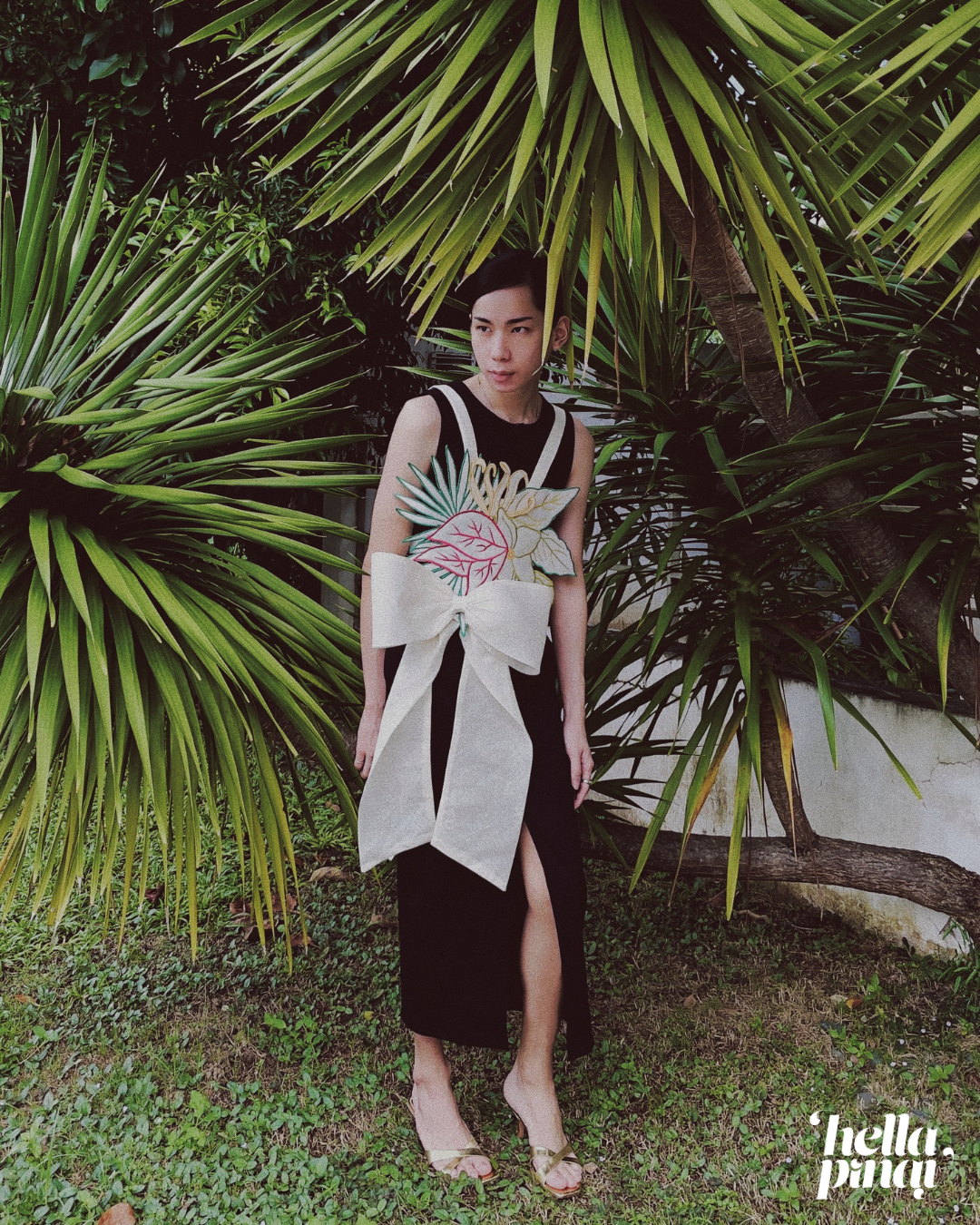
Photo courtesy of Gabbie Sarenas. Model JV Librea.
GABBIE SARENAS
Gabbie Sarenas, Manila.
What story do you want to tell in your clothes?
Gabbie Sarenas: I want our clothes to communicate a love letter to the Philippines in the way they’re designed, processed and presented. I want to bring out the best of Philippine creativity in various aspects — fabric, embroidery, and storytelling. I want to craft our designs with our (my team and I) hands as hands are what we use to write letters and they have the power to create and obliterate.
What does the Filipiniana signify to you? How do you pay tribute to it in your clothes?
Gabbie Sarenas: Filipiniana is a reflection of the times and one's self expression. Filipiniana clothing is in fact a product of people's hard work from start to finish. Can you imagine how many people have worked on your clothes before they reach you? It is a symbol of years of knowledge and sincere hard work.
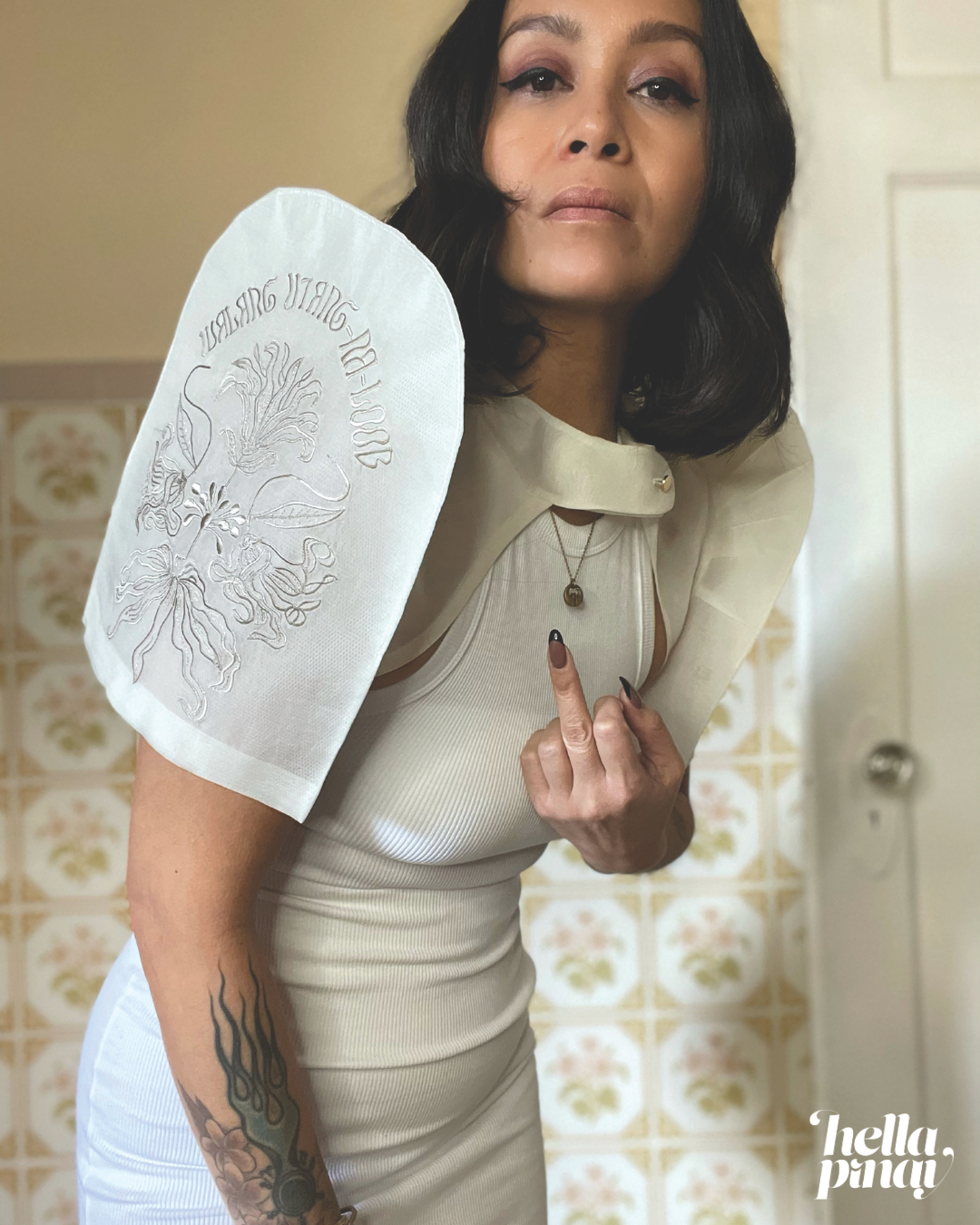
Caroline Mangosing. Photo courtesy of VINTA Gallery.
CAROLINE MANGOSING
VINTA Gallery, Toronto.
What inspires you most about the Filipiniana?
Caroline Mangosing: Filipiniana for me is Philippine culture, and Philippine culture is my muse because I can take ownership. It is something that is mine. Being inspired by my culture is a form of freedom for me.
Why do you think young Filipinx-Americans are responding to your brand and Filipiniana today?
Caroline Mangosing: I think that [the Filipinx diaspora is] hungry for our culture. We didn't get enough. Our parents’ generation still [has a] colonial mentality. And, the idea of "decolonizing" has only crept into our collective consciousness in the last 10 years… The clothing that we are making is not only catering to the fact that Filipinx folx are innately stylish, but also to that hunger for a cultural touchstone.
What does your identification as a “rebel Filipiniana” mean to you?
Caroline Mangosing: Rebellion is central to my artistic expression in general … As a third culture kid, part of that "rebellion" is actually an evolution. I questioned the very patriarchal traditions and values that I was raised with that kept me down, that [were] actually oppressive. So in my creative work, I looked at Filipiniana as something that is a beautiful expression of our culture and history, but there were things that I wanted to innovate and update to reflect who I am, and how I need to be able to wear these clothes in the context of where I am (part of the diaspora of living away from the homeland). I have definitely been told by traditionalists that what I am doing is wrong. So, in that way, my rebellion… parallels and also intersects with my approach to creating Filipiniana fashion. Rebellion = Evolution.
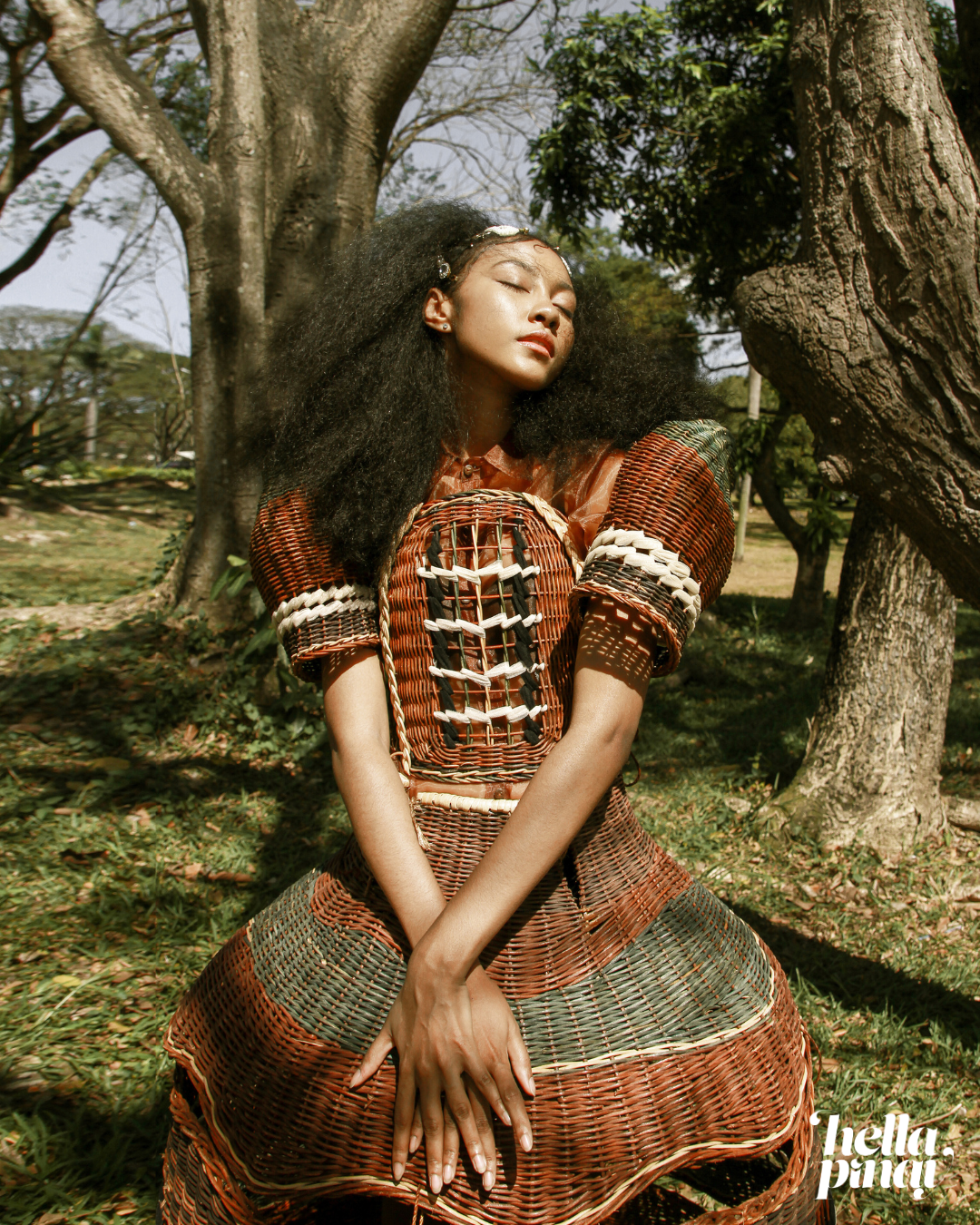
Photography Makie Cruz. Photographer Assistant Jenny Rose Garcia. Model Lorraine Ojimba.
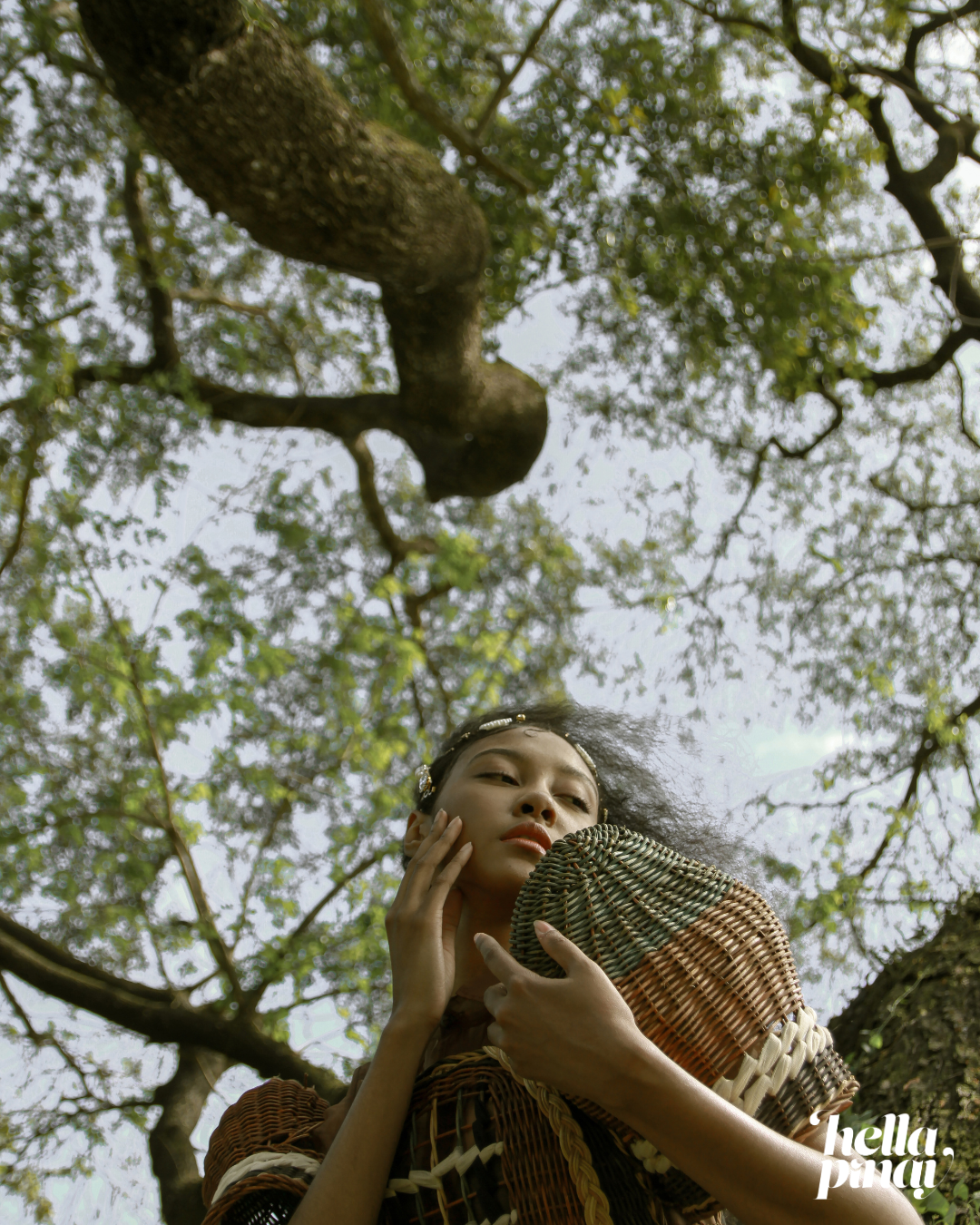
Photography Makie Cruz. Photographer Assistant Jenny Rose Garcia. Model Lorraine Ojimba.
IRICCA LEE
Ricaci, Quezon City.
What inspires you about traditional dress like the Filipiniana?
Iricca Lee: There is an unmistakable feeling when you see a Filipiniana. It has a certain level of grace and elegance that can’t be matched with any other article of clothing… Traditional clothing is inseparable to our sense of belonging to our country. As a designer, I feel a need to contribute to the development of our national costume so that it [lives] on [for] future generations.
What’s the inspiration behind your rattan terno?
Iricca Lee: Throughout history the terno [has] gone through several changes. Similarly, rattan has become a medium to pass down traditions of tribes that are applied endlessly to the agriculture and livelihood of Filipinos. The rattan terno is a part of my LIKHA collection [and takes] inspiration from the Bilaan tribe’s creation story in Southern Mindanao. One of the things that inspired me [in the story] is how the dirt is molded and how rattan came before humankind. I wanted to convey the resiliency of both objects by creating a rattan terno that showcases the butterfly sleeve similar in shape but not in its classic flat form. Instead, it’s loosely curved akin to molded pottery and the bodice is made similarly to a flat basket tied with abaca lacings on the side.
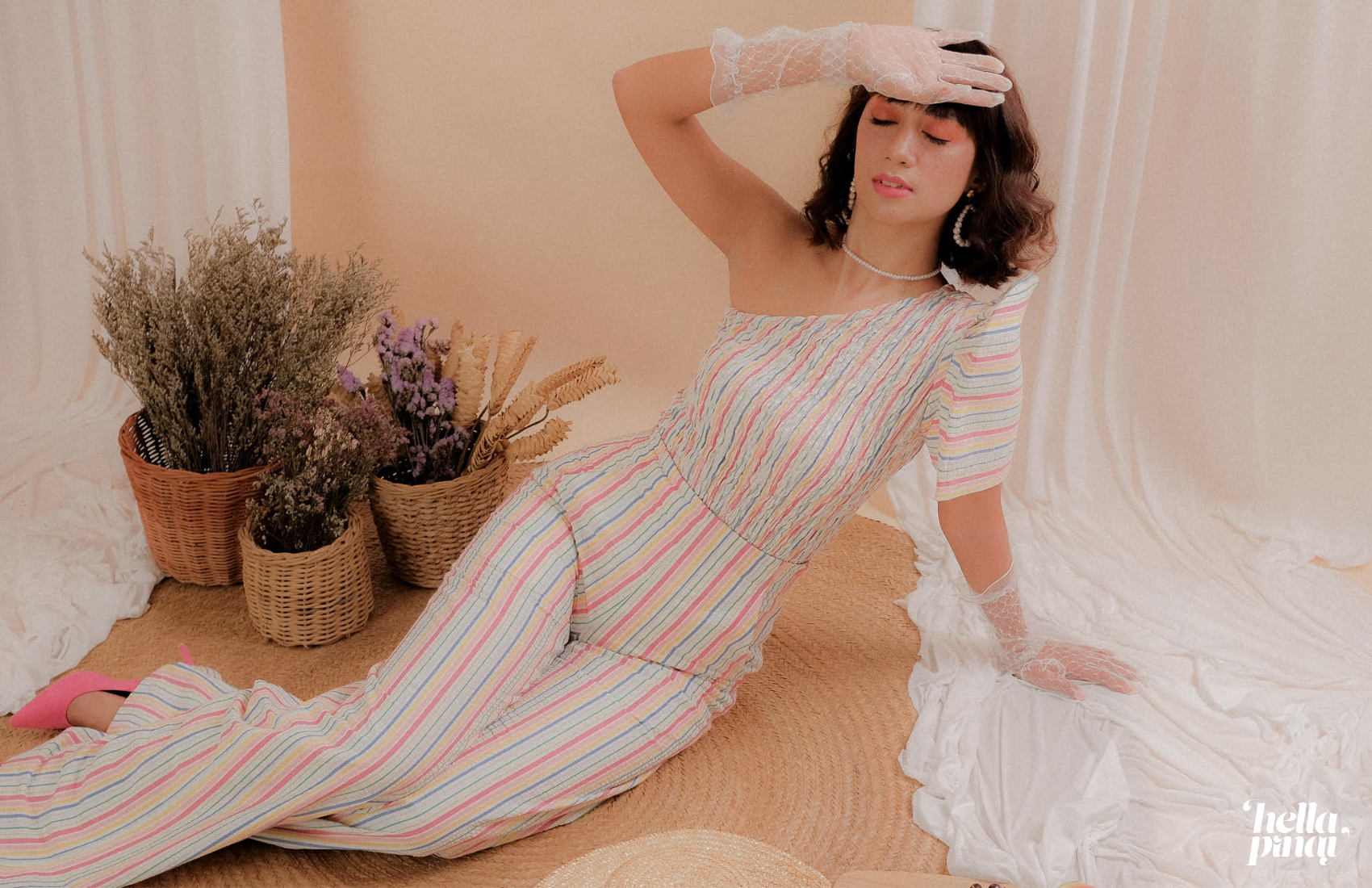
Photo courtesy of Ia Coca. Photography worksbehindkrafts.
IA COCA
Ia Coca Atelier, Cebu.
How does the Filipiniana influence your designs?
Ia Coca: The more I learn about its history and its craftsmanship, the more it’s influenced my sense of heritage which I apply to my design. I have come across diverse types of local woven textile, know the differences and similarities of tribal patterns among regions. These are just examples of how I become more informed creatively because of the Filipiniana.
How do you make the Filipiniana relevant for the modern, edgy woman?
Ia Coca: I want people to start thinking of a Filipiniana not only as a costume but as a part of our lifestyle. That is the reason I design iterations of Filipiniana as streetwear to make it more accessible and palatable to the new generation of women. And as part of the newer breed of designers, I feel it is our responsibility to reinvent and keep the Filipiniana fresh.
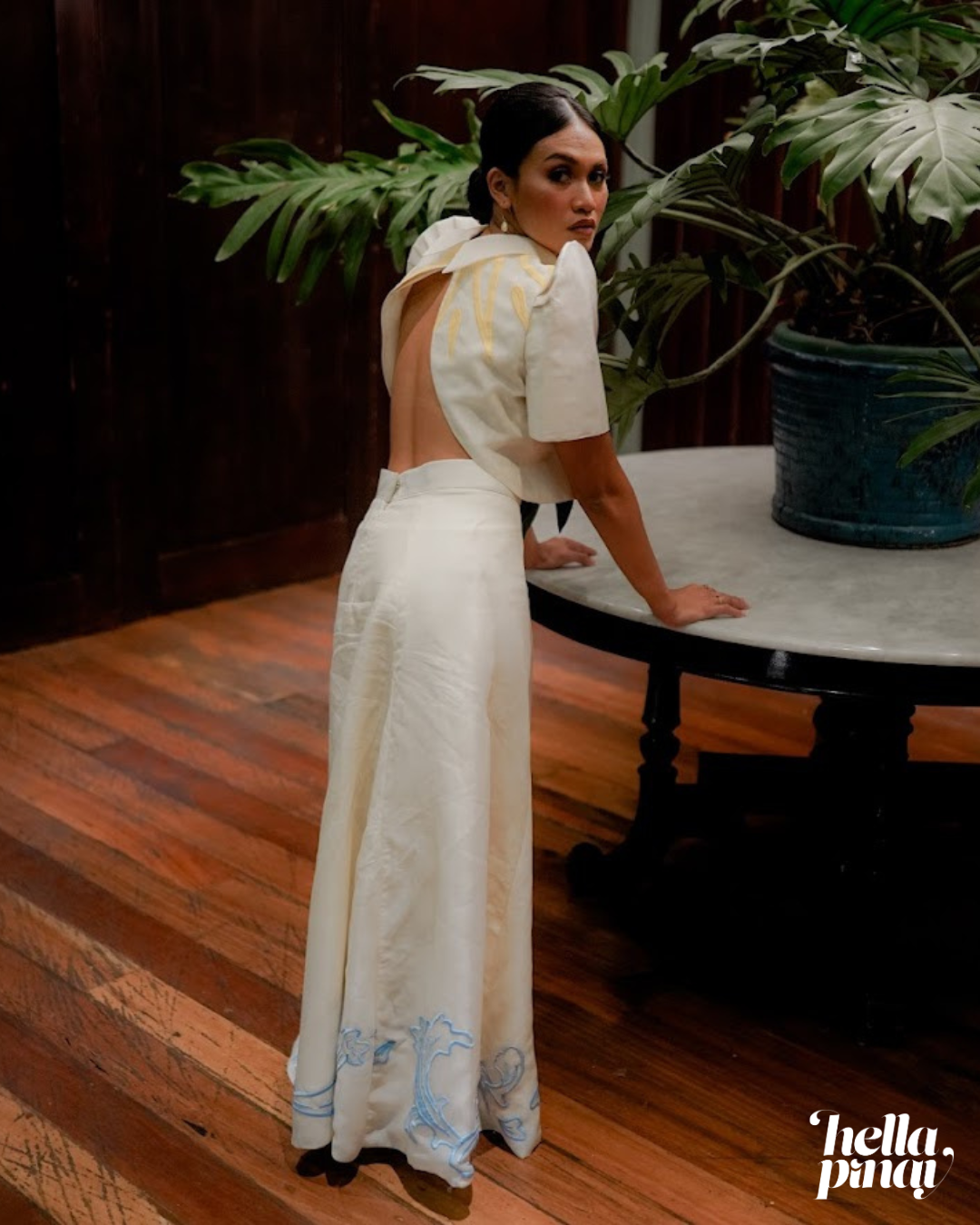
Photo courtesy of RJ Santos.
RJ SANTOS
Randolf Clothing, Cainta, Rizal.
How do you want the modern Filipinx individual to feel in your clothes?
RJ Santos: My ultimate goal is for them to feel empowered and comfortable in my clothes. I create pieces to highlight and give focus to the wearer, and I want people wearing my designs to feel really good about themselves.
What story do you want to tell in your clothes?
RJ Santos: I want to tell the wearer’s story. I want the wearer to use my clothes to be able to express what they are going through or how they are feeling.
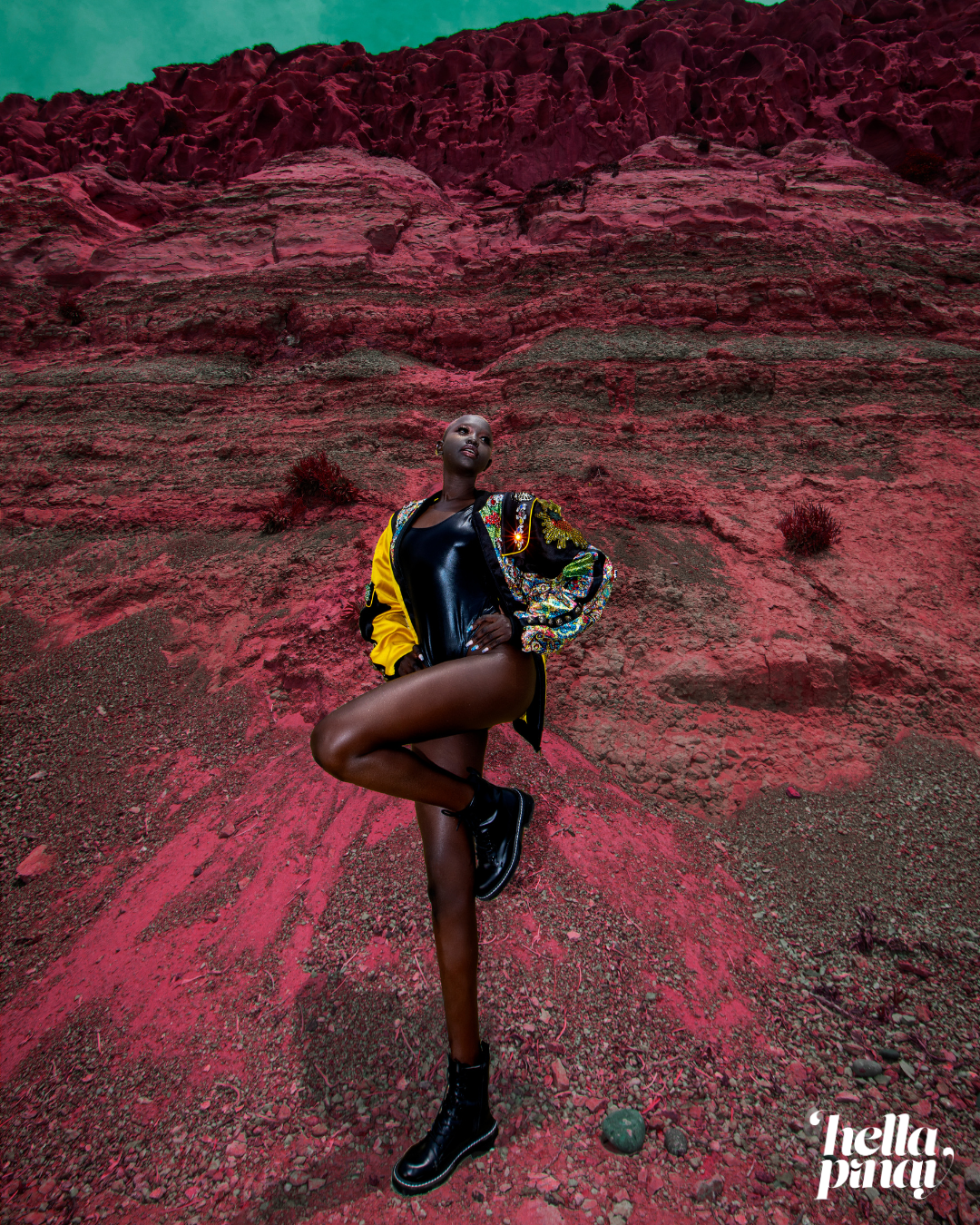
Photo courtesy of Kenneth Barlis. Photography Reinhardt Kenneth.
KENNETH BARLIS
Kenneth Barlis, San Diego.
How has the Filipiniana inspired your designs?
Kenneth Barlis: Filipiniana is always a great inspiration for every Filipino designer and personally, I get [inspiration] from the oversized shoulder structure, as well as appliqué detailing. I love how every woman looks so polished and powerful everytime they wear it.
What do you hope Filipinx viewers take away from your time on Project Runway?
Kenneth Barlis: When I joined Project Runway, one of my goals was to represent every Filipino in the mainstream design platform. I hope to inspire them and show them that hard work really does pay off.
What is your hope for the Filipiniana and the role of designers in the global fashion industry going forward?
Kenneth Barlis: Being a fashion designer I have the platform to preserve and influence the fashion global scene by keeping elements of Filipiniana in every design with a modern twist. I would love to keep my culture alive in any way I know how.
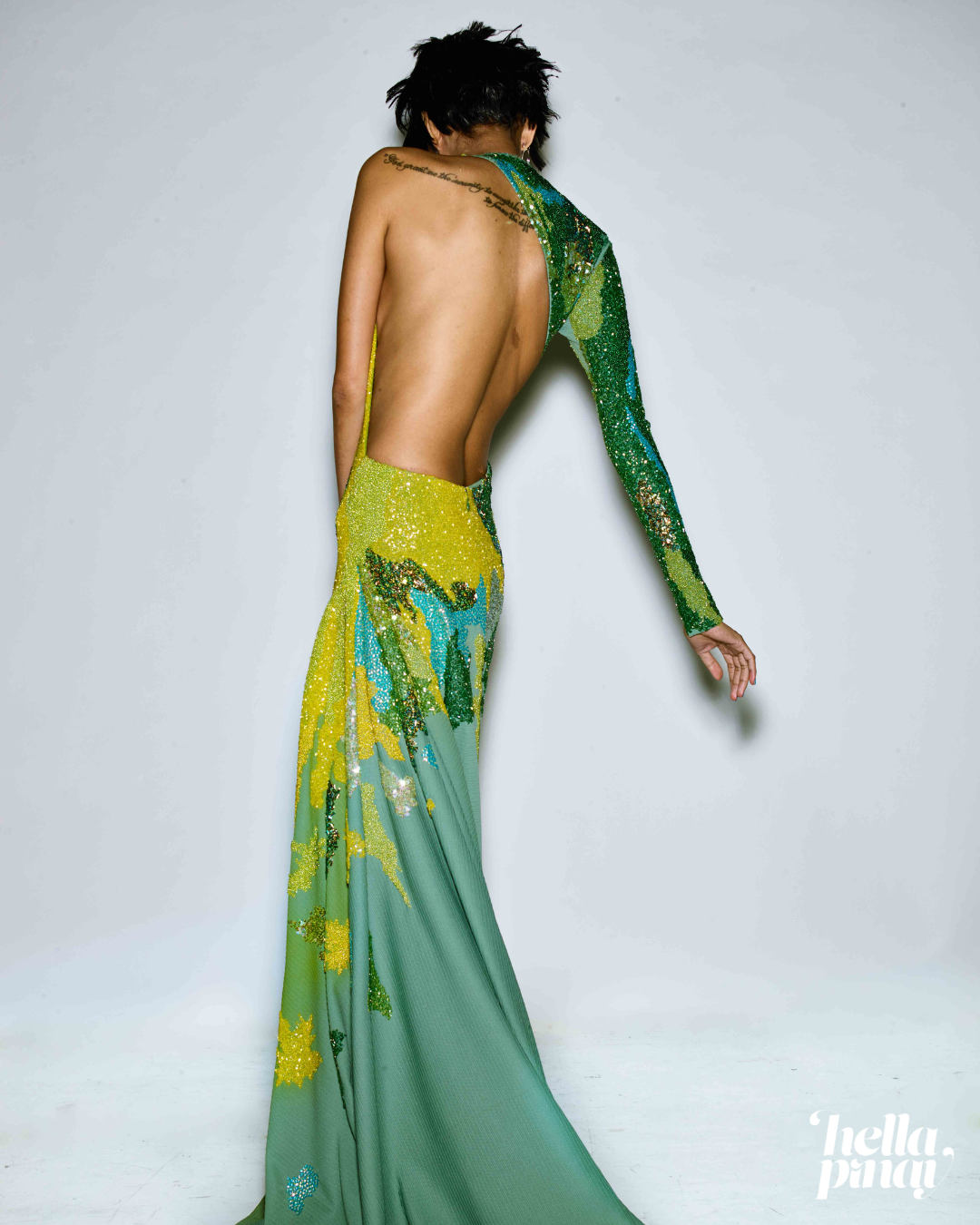
Photo courtesy of Rajo Laurel. Photography Mark Nicdao. Styling Pam Quinones.
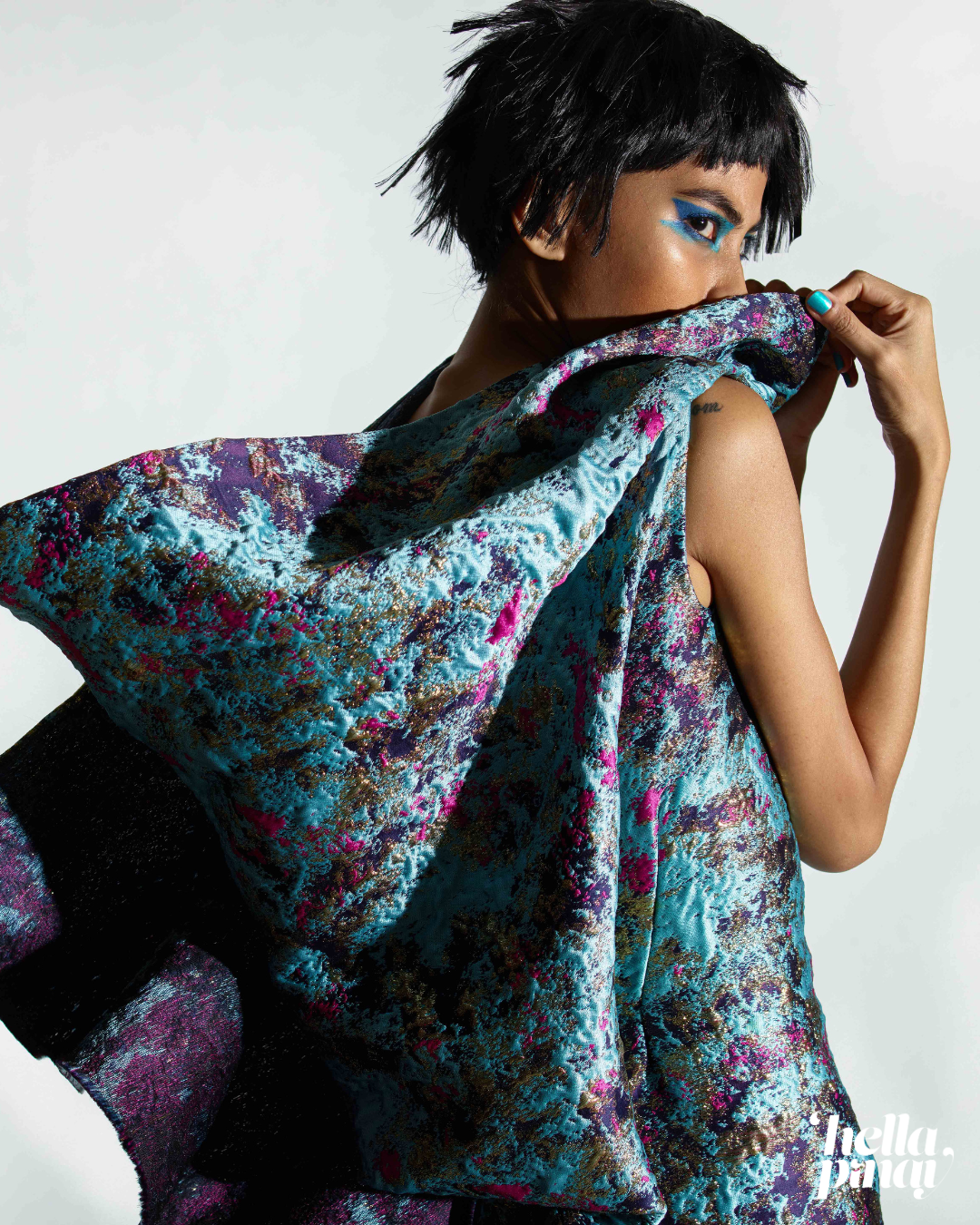
Photo courtesy of Rajo Laurel. Photography Mark Nicdao. Styling Pam Quinones.
RAJO LAUREL
The House of Laurel, Manila.
How have you adapted Filipiniana-inspired clothing to be relevant to the modern, global womxn?
Rajo Laurel: If you do not adapt you essentially will fade out and die. As a creative, one must adapt and be sensitive to the current flow of contemporary life. We need to address all of this in a delicate balance of practicality and fantasy. I always think that it is my job to empower women. To give them the needed “armor” to fulfill their fullest potential.
Do you think Filipiniana, interpreted in nontraditional ways, is still Filipiniana? Can it/should it evolve?
Rajo Laurel: I have no objections to all versions of interpretation because fashion is all about freedom — freedom to create, to dream, to discover. It is the evolution that I am most excited about. Just as long as the interpretation comes from a place of good intent without malice and with respect, then our voice and our culture will live, thrive and survive.
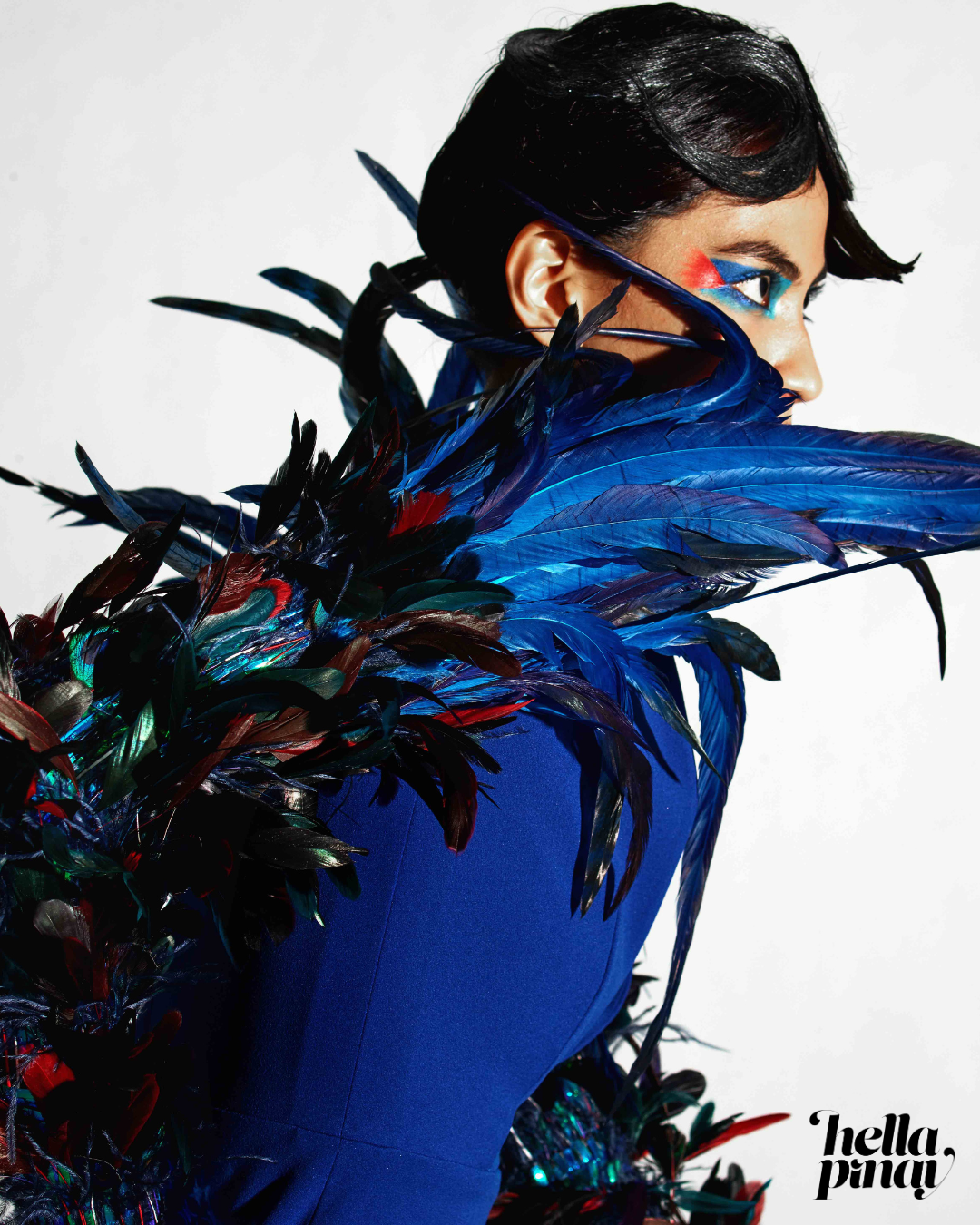
Photo courtesy of Rajo Laurel. Photography Mark Nicdao. Styling Pam Quinones.
The Butterfly Effect
Today, with the diaspora stretching the globe, Filipinx culture further epitomizes an archipelago: multifaceted, vast — the very definition of diversity in an ever-evolving cosmos of identity. Much like the butterfly effect, where an ecosystem of elements affect one another, trends are no longer rooted solely in Manila but co-created by craftspeople across continents. The Filipiniana will continue to evolve to meet this expansion, reminding us of our culture and the many (r)evolutions of our people who continue to defy systems of oppression through metamorphosis, art and, sometimes, the help of a little sleeved armor.
From Hella Pinay 03: The Culture Issue - Spring/Summer 2022.


Growing up Pinay, self-love and acceptance are ever growing and transforming