
LABAN KID FOR LIFE
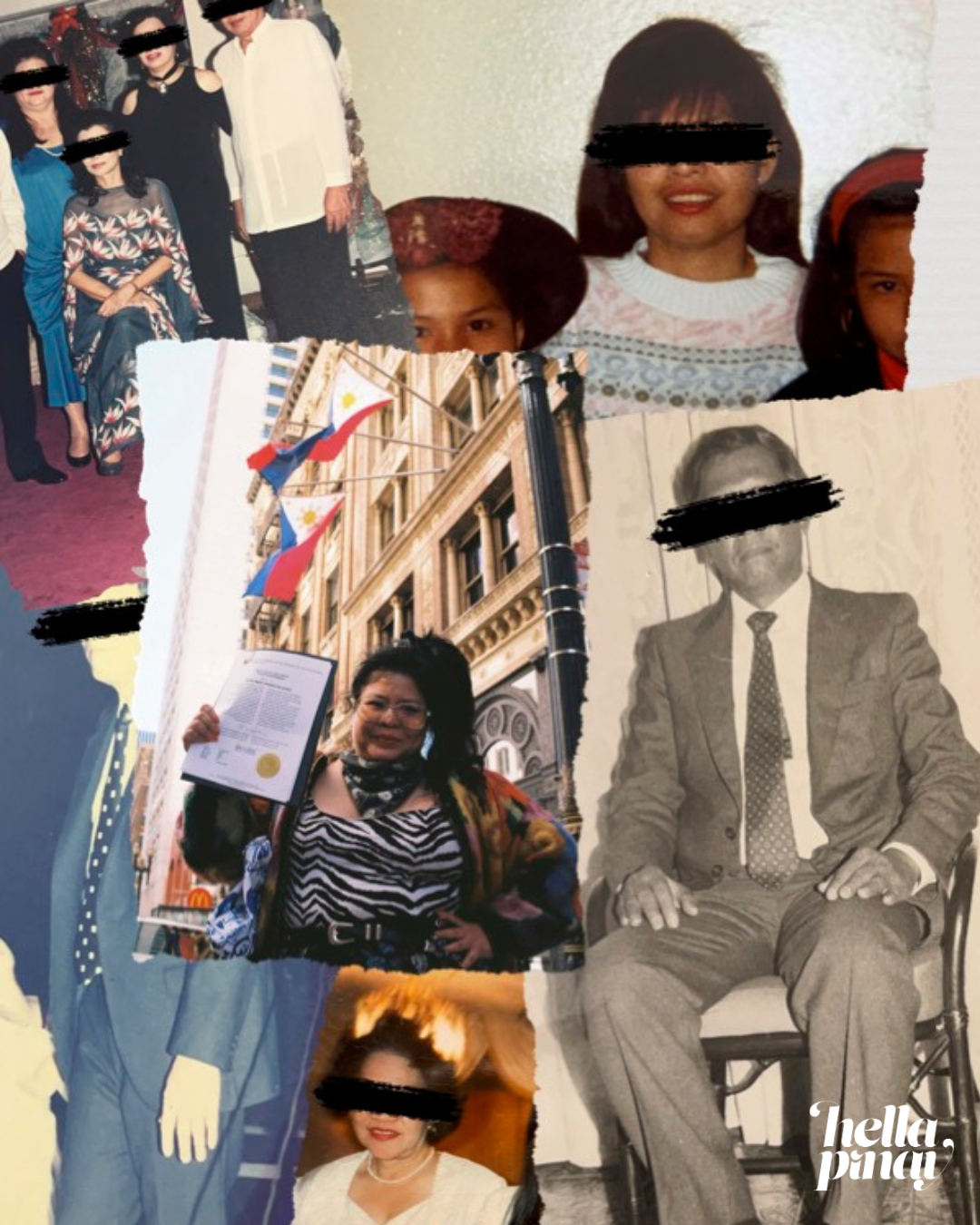
Photos courtesy of the author. Collage Vi Viray.
How the EDSA Revolution taught me how to raise hell and love my homeland
Text nic feliciano
Collage Vi Viray
From Hella Pinay 03: The Culture Issue - Spring/Summer 2022.
Damn, February 1986 was a wild month. The four days that spanned between February 22 and 25 that year hold some of my most vivid memories, ones that would shape my life forever. I was an overactive five-year-old kid whose parents had just split up a few months prior, living in a multi-generational home in a gated community blocks away from Epifanio de los Santos Avenue, aptly named after a martyr of the Philippine Revolution of 1896. EDSA, as we called it, was not only one of the main thoroughfares of Metro Manila connecting the cities of Caloocan, Quezon City, San Juan, Mandaluyong, Makati, and Pasay; it was also the main thoroughfare of my existence growing up in the Philippines.
If life was a highway, mine would be EDSA. My whole life revolved around this road: we moved around a lot, but the homes I grew up in, the hospital where I was born, and my school were all there. Across the street from school was Robinsons Galleria, one of the many malls along EDSA where we would go after class to dodge the mythical half-man half-snake creature that lurked in two-way mirrored dressing rooms, ready to devour us from underground. We would weave through EDSA’s 10 official lanes (20 in traffic), in my paternal Lola Mamita Glo’s red Toyota Tamaraw –– an aircon-less truck named after one of our national animals, the buffalo –– to make palengke and to pick up profits from her many side hustles in Cubao. Growing up off the busiest highway in Manila has made chaos a beloved part of my existence.
Although Mama and Papa’s marriage was short lived, I wouldn’t say that I grew up in a broken home. Both of them lived with their parents and siblings, so my childhood was full of precious moments with my titos, titas, lolos and lolas and a million cousins running around. I had so many cousins, I never needed friends. My main home at the time was Mama's, led by my Mamita Letty and my Lolo K. Lolo K was the second in line and the eldest of the boys in his family of eight siblings, who migrated to Manila from his home province of Baliuag, Bulacan. Mamita Letty was a well-read former beauty queen and stunning seamstress turned businesswoman from Legazpi, Albay, whose family also migrated to Manila when she was a young woman.
Lolo K, my maternal grandfather and fellow Scorpio, is a significant main character in my life. He stood 6 feet tall and was only ever seen dressed in an Americana, what Filipinos call American-style two-piece suits. Lolo K was known around town as a ruthless but principled businessman. As sharp as he looked and as shiny as his black leather shoes were, it was a known fact that if you looked at the soles you would find that they were riddled with holes from running around town, cutting deals and hustling. Lolo came to Manila with the help of his ate (older sister), whom he called Chairman, to secure the clan’s future through various business ventures. Chairman was the boss, but Lolo brought her all the business deals. They were an infamous team.
Due to the nature of the types of businesses he ran –– beerhouses, sauna parlors, motels, sabungan rings –– he was reduced to a seedy businessman by the press; but to me he was the Lolo who would play with us in the garden, rattling our macopa tree to make it rain beetles on us on his days off. He seemed to take a particular liking to me as his first female grandchild born from his unica hija, only daughter out of four children. From a very young age, he would give me advice that I still remember to this day. In his booming deep voice and powerful Tagalog accent, he would say to me, “Apo, you must always shake the hand of a jeepney driver the same way you would the President of the Philippines.” He was the only person who spoke to me like an adult, and I’m grateful for the sense of agency that bestowed upon me.
One day that particular February, we were told that we had to stop playing outside. Playing was my life –– running around in the backyard, taking showers in the rain, patintero on our driveway, and listening to teleseryes with my Yaya. You couldn’t even get me to take a bath if it was interrupting my playtime. From what I remember, I could hear commotion in the distance. I was used to the sound of gunshots; my dad and uncles would bring out their firearms every New Year’s Eve and make such a show of it. It was the bullet shells pitter-pattering on neighboring tin roofs that really shook me. Everyone was glued to the TV and the radio, yelling Coup! For the longest time, I thought that word meant “war.” It wasn’t until much later that I would come to understand its real meaning.
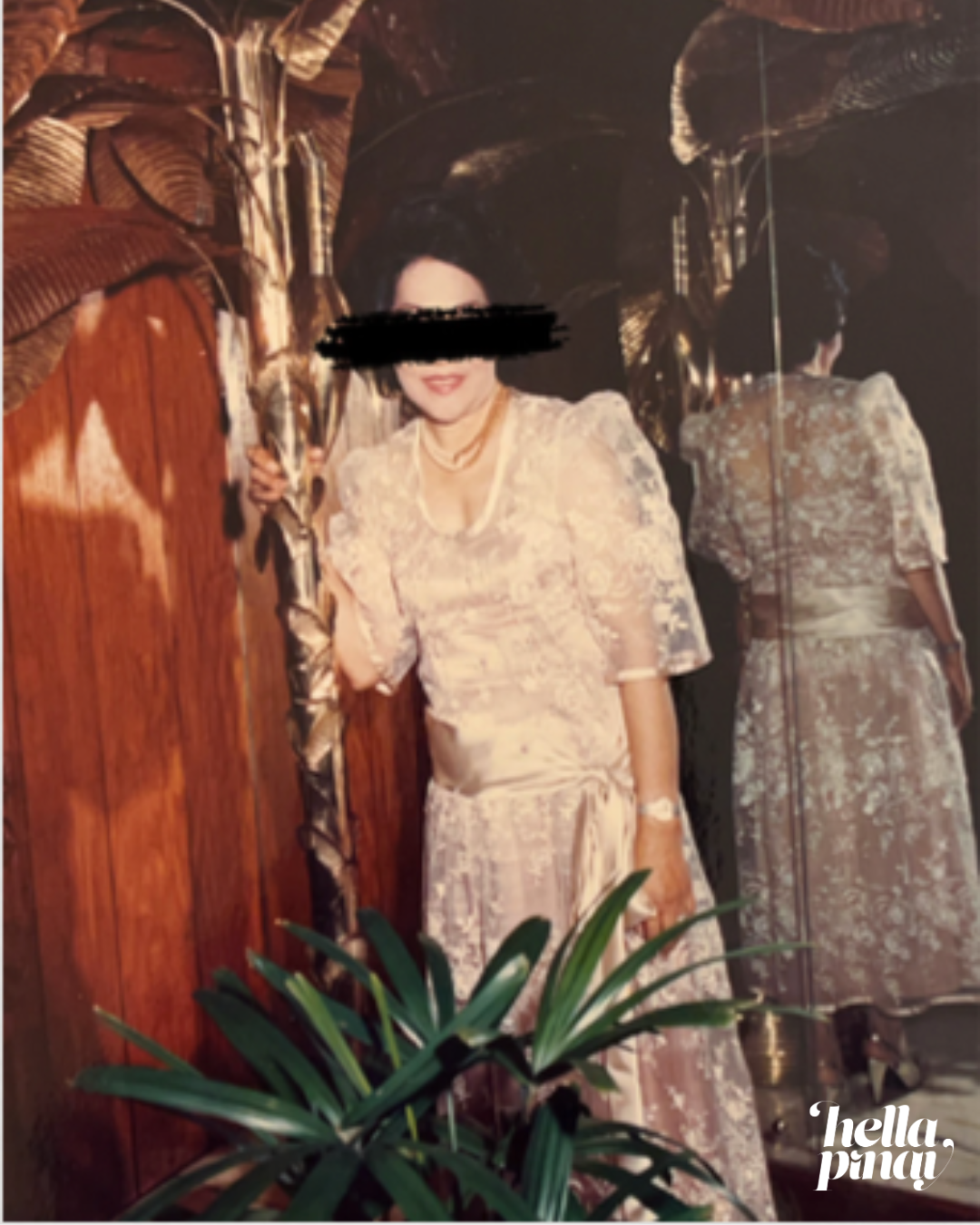
Photo courtesy of the author. Edit Vi Viray.
Things finally came to a head those four days in February, but it had been a long time coming. Ferdinand Marcos, a charismatic, well-decorated military man with a hot wife, had been President of the Philippines for 21 unchecked years. He served two terms; the first one legit, the second one shady. With unwavering support from the United States, Marcos took out endless foreign loans to fund many development projects in the Philippines. His presidency brought hope to the people at first. During his first term, he built the Cultural Center of the Philippines Complex, an active institution which preserves and promotes Filipino culture to this day. I follow a Brutalist architecture page on Instagram, and as I admire the incredible display of Filipino architecture and design, I shudder to think that most of these structures were built during the Marcos era wrought with a build build build mentality that left in its wake endless labor exploitation –– evident when 169 laborers fell to their death while building the Manila Film Center in 1981.
As a military man himself, Marcos had been putting his most loyal generals in high positions of power since the beginning of his presidency in 1965. Public unrest mounted surrounding the corruption of his re-election. This, along with the growing “communist threat” and “rebellion” in Mindanao, was his justification for declaring Martial Law in 1972. The United States at the time was benefiting greatly from Marcos’ “friendly” demeanor, which allowed them to continue military base occupation and have pretty much free rein business-wise. One of my favorite examples of this dynamic is the amount of low-budget exploitation films that were shot in the Philippines during this time, as well as the big-budget Francis Ford Coppola film Apocalypse Now; Marcos provided the set with helicopters and pilots from the country’s own military and allowed land and farms around Baler to be blown up. This endless cycle of exploitation between the Philippines and the U.S. made their silent support of Martial Law loud and clear.
Under Martial Law, every aspect of governance was controlled by the military. This included the courts, the press, the police, everything. During this time, Marcos –– who was once known for economic growth and development –– drove the Philippines deep into poverty and crippling economic debt, all while his family continued to amass great wealth. Along with a long list of human rights violations and politically-motivated murders, the Marcos regime was issuing Arrest, Search, and Seizures Orders (ASSO) to anyone who defied him. This allowed the government to arrest and detain folks without a warrant or due process at the whim of Marcos and his cronies. Even Lolo K fell victim to this at one point because he refused to get bullied by a prominent mayor/Marcos crony over a land dispute. Lolo K sat in jail for some time and was subjected to house arrest until his trial, where he was fully exonerated. Martial Law was formally lifted in 1981, although Marcos’ shenanigans continued.
In August of 1983, Benigno “Ninoy” Aquino, Jr., longtime political prisoner and leader of the opposition movement against Marcos, was assassinated MLK, Jr. style on the tarmac of the Manila International Airport, now named after him. Ninoy was on that plane sneaking back home from exile in the United States, to help organize the growing opposition to the current government. His murder was the nail in the Marcos regime’s coffin. It caused a national uproar that eventually led to the 1986 snap election where his widow, Corazon “Cory” Aquino, was thrust into the spotlight and stepped up to run against Marcos for president.
On-brand with the Marcos way, the 1986 snap election was rife with voter intimidation, sporadic violence, again murder, and tons of electoral fraud. Vote counters were quitting in protest. Citizens were banding together to physically protect ballot boxes. The Catholic Bishops’ Conference of the Philippines condemned the elections, issuing a statement that it was fraudulent. Even the church had had enough at this point. Yet within a week, Batasang Pambansa (the House of Representatives), declared Ferdinand Marcos and his running mate the winners of the 1986 snap elections. Putang inaaaaaaaaa (r&b run).
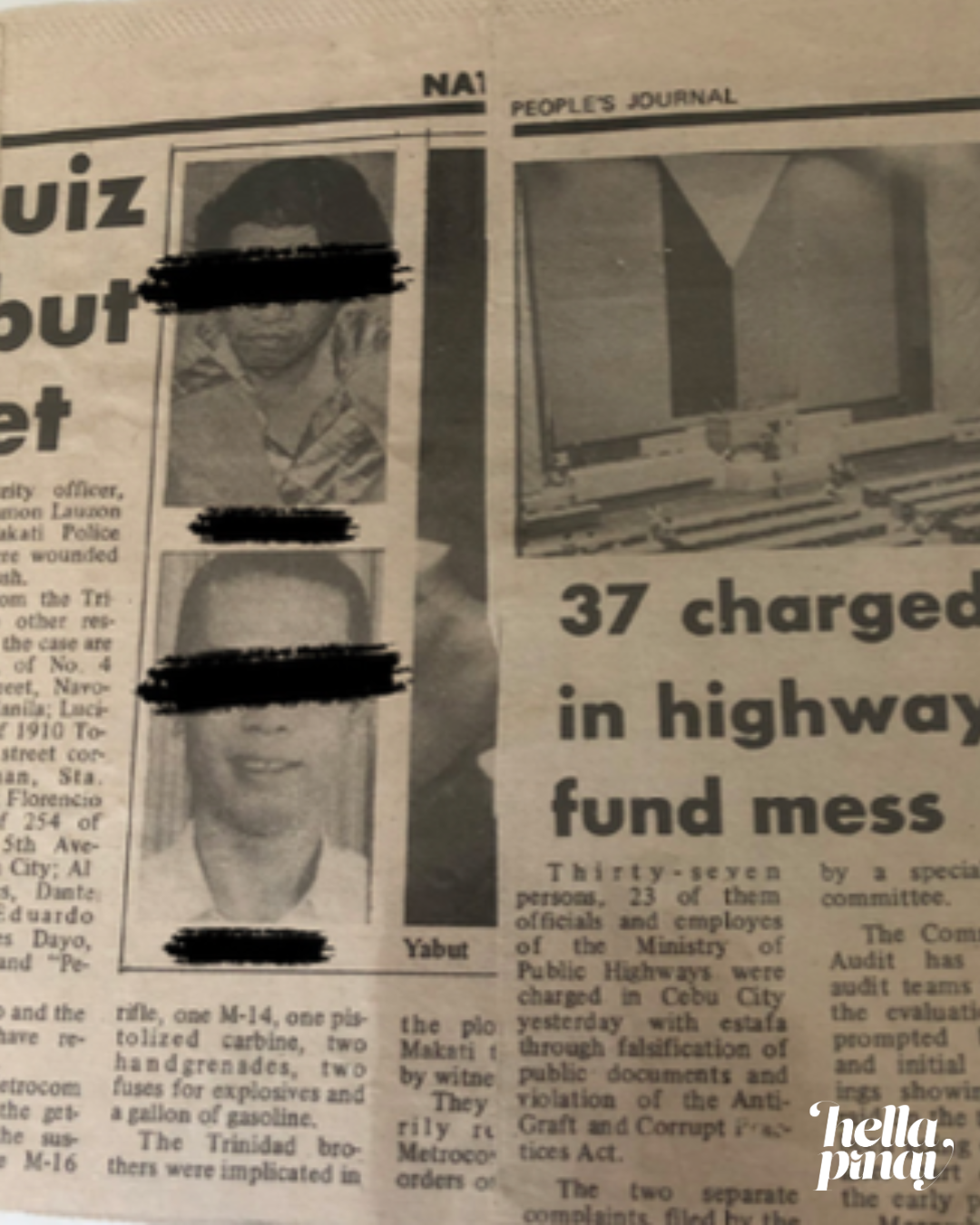
Photo courtesy of the author. Edit Vi Viray.
People came out to vote on February 7th, and by the 16th, two million angry Filipinos gathered at Luneta in protest of the election results. At this point, the organizers of the opposition officially call for nationwide civil disobedience. Cory, in full support, campaigns on behalf of this call. Meanwhile, things are falling apart amongst Marcos’ generals. A group of them known as Reform the Armed Forces Movement (RAM) were also fed up and actively staged a coup, which is essentially when a small group causes the sudden, often violent, overthrow of an existing government. RAM was planning to blow up Malacanang Palace, the official residence of the President and his family. The gag is that they actually failed, and eventually joined Cory’s civilian-led movement instead. So although some people refer to it as a military coup, it technically wasn’t; this was all People Power Revolution, baby!
It was peak monsoon season, a slightly less-sticky 29°C (84°F) day on February 22 when Cardinal Sin, the archbishop of Manila, got on the radio and called for citizens to come out and support the movement. This was probably the point when Lolo K threw me on his shoulders, gathered the family and went to the corner of EDSA and Ortigas, just blocks from the gate of our subdivision. I remember sitting on my tall-ass Lolo’s shoulders as the vision of a sea of people extending into the horizon washed over me. I don’t think I’ve ever seen a crowd that large since. The sound and energy were palpable. In the distance, I could see tanks amidst hundreds of thousands of bodies. There was a cacophony of sound that was a mixture of singing, prayer, drums, chants, and radios. I’m not a religious person by any means, but seeing images of tanks and nuns amongst Virgin Marys, activists, and bodies of many ages and abilities was a holy experience. This changed my perception of what is possible forever.
On the morning of February 25, Cory Aquino was sworn in as President of the Philippines up the road at Club Filipino where my sister broke her tooth in the pool and where we ate the best pancit canton (according to Mamita Letty). A month after that, Lolo K passed away suddenly at the age of 52, just as his political career was starting to take off. Remember the mayor/Marcos crony that locked him up? Well, he died a month before Lolo did. So, Lolo was gearing up to take his seat as mayor. As a matter of fact, Lolo’s ex-assistant and right hand-man ends up taking that mayoral seat in his place, becoming one of Cory’s first appointed public officials. He even goes on to become Vice President of the Philippines under Ninoy the Third. That could have been Lolo.
Ever loyal to the clan, all of Lolo’s assets were transferred to the family under the control of Chairman after his death; but a year later, in an effort to recover all of Marcos’ ill-gotten wealth, Cory’s administration sequestered everything in Chairman’s name –– implicating all of Lolo’s business ventures and casting a huge mystery on my family’s fascinating and nuanced history that I’m still trying to unfold to this day. I know one thing for sure: it’s complicated. And based on the conversations I’ve had with my elders back home: in countries like ours, politics are more based on survival than they are ideals. Chairman, whom I adore and admire, once told me that to secure the wellbeing of the whole family, it would have been unwise to choose one side. So she chose Marcos and Lolo chose Laban.
Lolo’s untimely death made it crystal clear that Manila was a dead end for Mama. He died in March of 1986 and by March of 1991, Mama had saved enough money from a job she took after college and we were “off to Disneyland” (air quotes). Papa, a typical Manila boy, was too busy partying and Mama wasn’t having it; she had two daughters she wasn’t trying to raise around these men. After a month of eating sugar cereal, drinking Minute Maid fruit punch, and watching cartoons with my totally cool, side ponytail-wearing, 12-year-old cousin in Walnut, CA, Mama asks us, “What do you think about living here and going to school like your cousin?” Are you for real?? My sister and I squealed YES immediately! We thought the boxes we brought with us were pasalubong, but when we opened them, they were filled with SO-EN panties from Divisoria along with our prized belongings. Looking back, it makes sense now why Papa was at the house all emo when he was saying his goodbyes in the Philippines; everyone knew we were migrating here for good except my sister and I. Mama set it up so that we could feel like we made the choice together. God, she’s so smart.
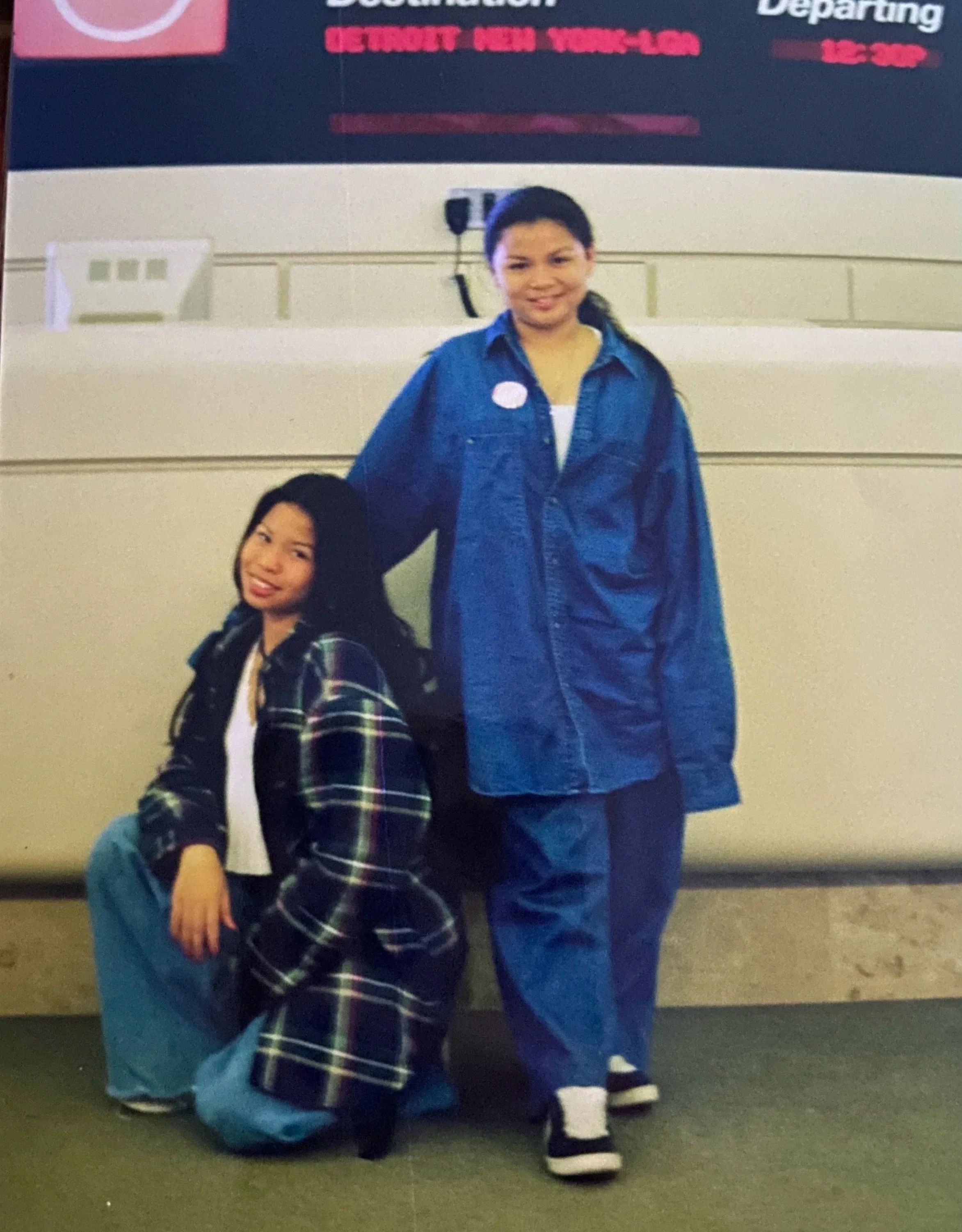
The author and her sister. Photo courtesy of the author.
Mama had something to prove out here. It was important for her to be independent from her family’s dwindling access to wealth. She had haters back home taking bets on how long it would take for her to give up and come back. The next few years would be spent with Mama hustling two under-the-table minimum-wage jobs, relying on kapwa to survive, and me and Sissy trying our best to navigate this new planet called Orange County, CA. It was all fun and games till the first day of school when it became clear that we didn’t belong here; I was called the n-word and told to go back to Africa by the first blue-eyed person to ever speak to me. That shit never stopped. When a blonde girl made fun of the way I read “intestines” out loud, pronouncing it more like mangostines, I stuck my half-eaten Blow Pop in her hair. I was a 10-year-old fish out of water, boiling with rage, and honestly, I knew right away that I was never gonna take it. All the me so horny’s, all the love you long time’s. Jesus, I even had a boss in high school ask me once, “Feliciano, how are you so loud when your eyes are so small?” I clapped back, “I don’t know. How does it feel to never see your dick coz your gut is so big?”
I believe I owe that energy to what I witnessed on EDSA that day back in February 1986. It was a challenge making it through my adolescence here full of disdain for authority, cheap insults from white kids, and many fist fights – but I’ve seen my mom, my family, my country, fight too hard for me to shrink and just take it. I wouldn’t be at peace with myself or my life without the love and pride I have of where I come from. It’s not lost on me, though, that all of us in the diaspora who have had the privilege to rely on our culture to inform our identity and our work, owe so much of that process to the people who live in the Philippines now. It cut a huge hole in my heart when I finally filed for U.S. citizenship in my late twenties, and was forced to “renounce” or abandon my allegiance to my home country in order to gain this one. Something that felt so violent to my soul, being that my entire family lived there still. Not to mention the loneliness of being this far away from home. Even til this day, whenever I go back to visit, I’m tortured with reconciling my reality here versus the reality that my family faces there, often putting me into a state of depression for months after coming back from these trips.
During peak quarantine and the existential crisis that it came with, I flooded my media intake with content and news from home. Something I do often when I feel lost or untethered is retreat back to what I find familiar, where I feel safe; for me that’s my concept of “home.” I became familiar with the work that Patreng Non was doing with the Maginhawa Community Pantry in Quezon City – someone who, like many of my friends here, is also an art school kid with a revolutionary spirit. Here in Oakland, similar movements were happening like Town Fridge and the long-standing Punks with Lunch collective, where artists and community folks work together to provide food and resources to those in need. Even my little street food hustle provided free arroz caldo on the streets when we could.
The parallels between here and home were more eye-opening than ever. Late last year, news of Leni Robredo running for President started to hit my family Viber chat. I wasn’t too familiar with her at the time, but I loved the hope that her potential campaign brought to many of my cousins and aunts, particularly my queer and femme family members. The radical energy coming from home made me think of how incredible it would be if I could vote in the next Philippine election inspiring me to look into my dual citizenship situation. I’m very skeptical of every established government to ever exist, and you will never catch me vouching for the electoral process here or anywhere; but just like getting an education, voting is a privilege I have because of the hard work and sacrifice of my mother. I participate to honor that, and because of EDSA, I march and dissent every time I have a chance. I lined up my documents, which included ordering my birth certificate from the Philippine Statistics Authority, and in October 2021, I jumped at the first appointment at the Philippine Embassy in SF to get my Filipino citizenship back. I can’t tell you how good and how whole that experience felt.

Photo courtesy of the author.
It’s wild to think that here we are again, another Marcos running for President; but what’s been most fascinating to me is the new generation of young Filipinos making it be known that they are not falling for the same old tricks. Unlike EDSA, the marches and demonstrations supporting Leni’s campaign are only anti-Marcos by default and not necessarily their main focus. This campaign invigorated otherwise “nonpolitical” family members into action. Earlier this month, I witnessed my post-EDSA Revolution-born cousins participate in Leni’s massive rally in Pasig. Seeing their real-time posts reminded me of the sea of people I saw on top of my Lolo’s shoulders that day in February of 1986. But instead of tanks and crying nuns, I saw thousands of my kababayan experiencing and practicing radical joy. The sight of hundreds of thousands of people singing corny pop songs in unison with huge smiles on their faces made me grab my karaoke mic to learn Ariana Grande’s Break Free immediately. I saw folks sharing food with one another peacefully. They even left the streets spotless. Basically, I saw the best parts of our culture, true kapwa, personified en masse. I instantly felt so happy that my cousins and thousands of young people got to experience this in their lifetime, and I hope that it leaves a similar impression on them, the way EDSA did for me: that together we are powerful.
With my Filipino citizenship back, I look forward to amplifying the voices of the people I care so much about back home by voting in this upcoming election. I encourage everyone in the diaspora to do the same with one caveat: participate with humility and let folks from home take the lead. Find a way to connect with people or organizations back home first, so that we can default to their needs instead of imposing our diasporic ways on them. You can find more information on the Dual Citizenship process by visiting the website of your local Philippine Embassy.
In the final speech Ninoy Aquino was unable to deliver to his beloved home country due to his untimely death, he wrote: “I have returned to join the ranks of those struggling to restore our rights and freedom through non-violence." These words, minus the non-violence part, will always resonate with this Laban Kid For Life. Because no matter how long or short we’ve been in the diaspora, we should always leave room in our hearts and talents for our kababayan and the motherland. Paalala lang po, if Filipinos back home are not free, none of us will ever be.
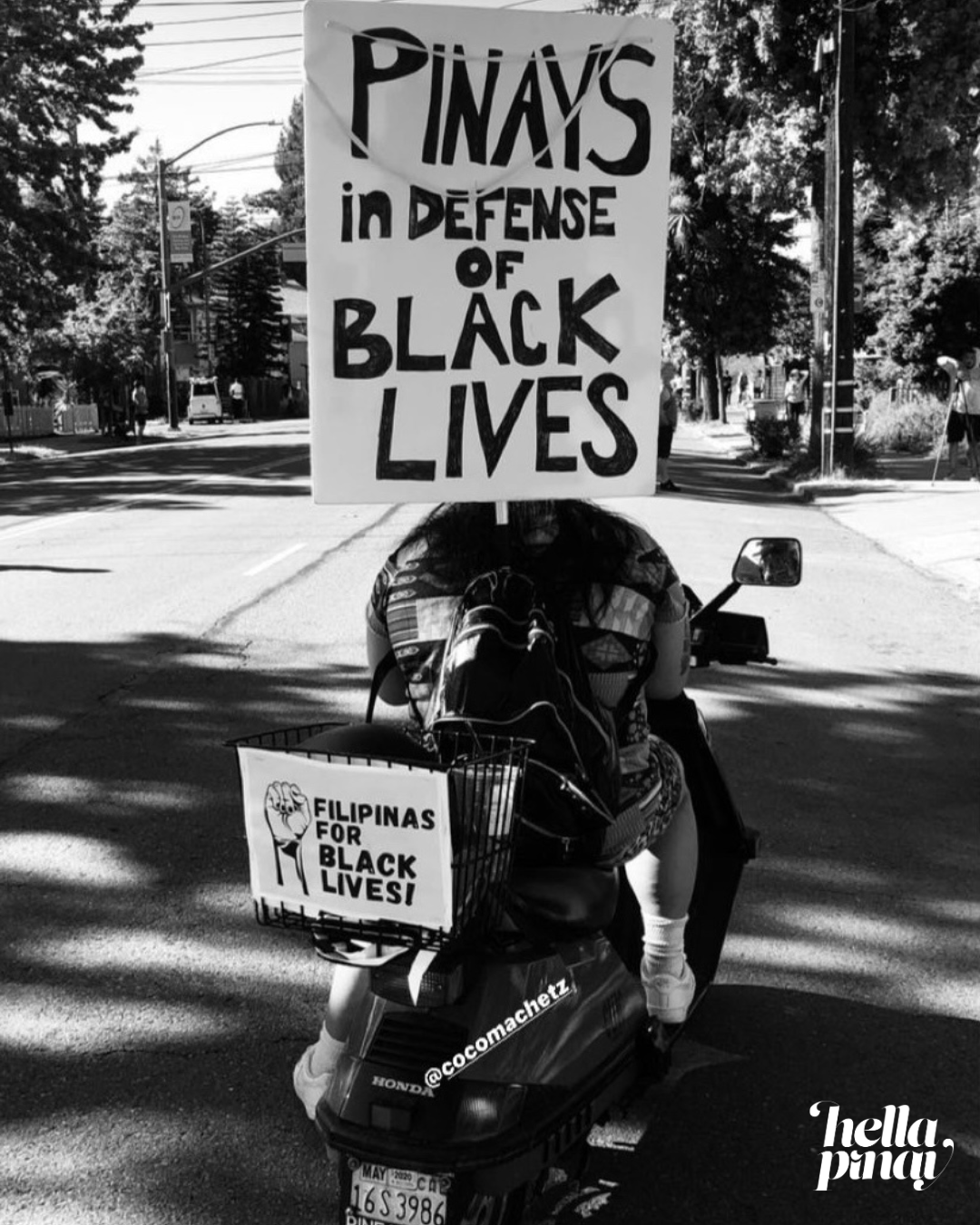
Photo courtesy of the author.
Notes:
Almonte, J.T. and Dañguilan-Vitug, M. (2015, February 25). Reform the Armed Forces Movement: We won. What shall we do? Philippine Daily Inquirer.
Castro, A. (2019, April 1). Americana vs. Camisa: The History of Filipino Men's Fashion. Esquire Philippines.
Francia, B.R. (1988). Imelda and the Clans: A Story of the Philippines. Solar Publishing Corporation.
How the Weather Helped Shape a Revolution. (2016, February 28).Panahon TV.
Lingao. E. (February 22, 2011). A 25-year rebellion. Philippine Center for Investigative Journalism.
Maranan, J.G. (2016). Countdown to Martial Law: The U.S-Philippine Relationship, 1969-1972. [Graduate Masters Theses, University of Massachusetts Boston].
Moyer, R. (1986). Bayan Ko! Images of the Philippine Revolt. Project 28 Days Ltd.
Ninoy Aquino’s Final Words. (2007, August 21). Our Awesome Planet (OAP) blog.
Official Gazette of the Republic of the Philippines. (2019, April 18). Executive Order No. 30, s. 1966 | GOVPH.
Pasion, K. (2016). Batasang Pambansa declares Marcos-Tolentino as snap election winners. Indio:Bravo// blog.
Pedrajas, J. (2021, May 6). Who is Patricia Non, the woman who sparked kindness through the Maginhawa community pantry? Manila Bulletin.
PhilLife (2018, November 7). Manila Film Center Deaths: When Art Becomes Catastrophe. Phil Life.
Po, L. (2020, August 10). The Real Life Monsters of Manila that created the Snake-Man of Robinsons Galleria. Medium.
Puhm, C. (2017, April 21). The Wild East: When the Philippines Was American Cinema's Final Frontier. Esquire Philippines.
Robles, R. (2016). Marcos Martial Law: Never Again. Filipinos For A Better Philippines, Inc.
Santos, M. (2015, February 25). 29 things about EDSA you may or may not know. Coconuts Manila.
Wikipedia. (2021, December 25). Pterocarpus indicus.
From Hella Pinay 03: The Culture Issue - Spring/Summer 2022.


Growing up Pinay, self-love and acceptance are ever growing and transforming