
9 Women and Nonbinary Filipinx Artists Transforming the Tattoo Landscape
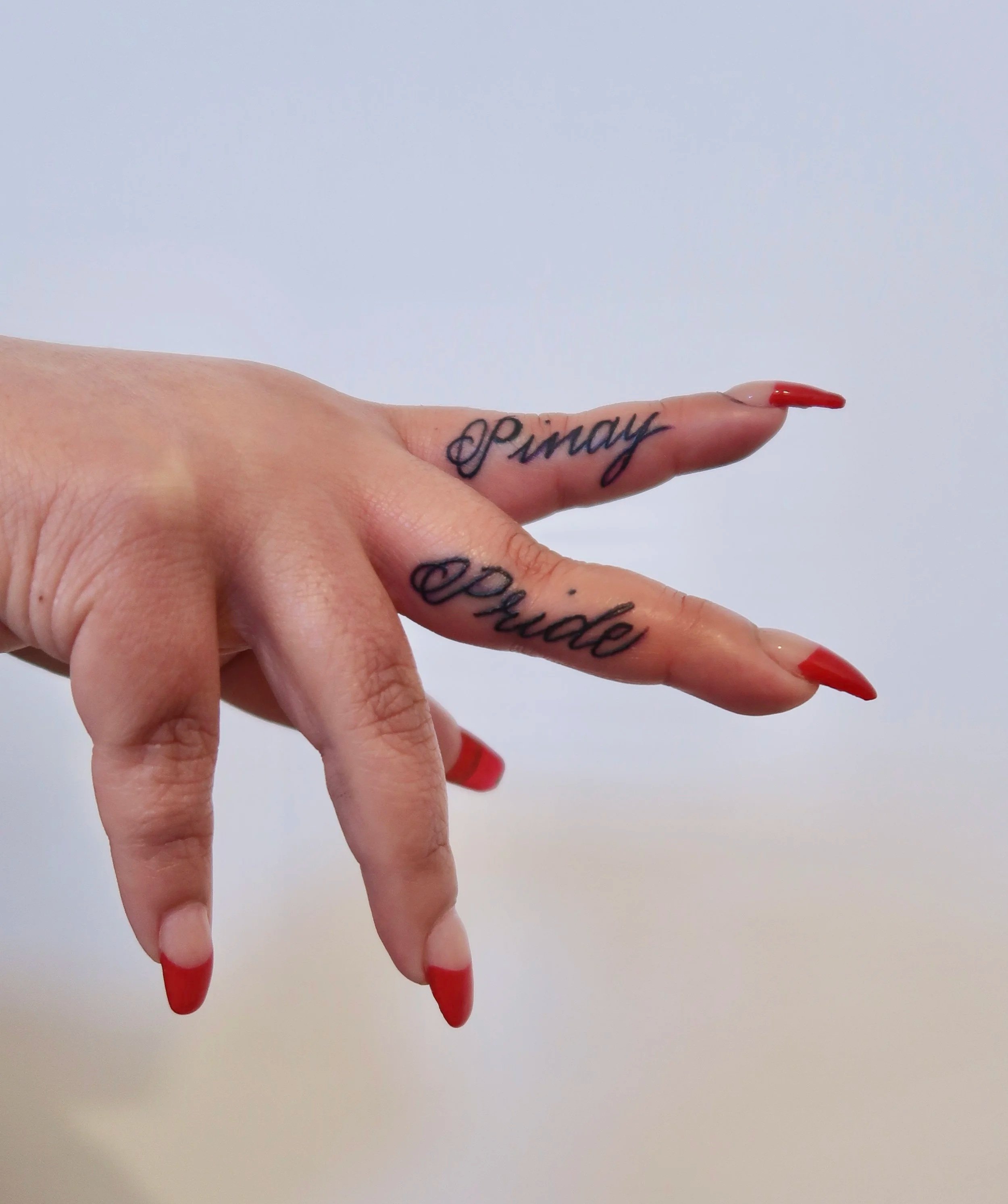
Tattoo by Jamie-Lynn Medina at Sorry Mom, Oakland, CA. Photo courtesy of the artist.
Meet a new generation of tattooists preserving their ancestral legacies
Text Melissa Pandika
From Hella Pinay 03: The Culture Issue - Spring/Summer 2022.
While your conservative titas’ disdainful glances at your tattoos might suggest otherwise, Filipinxs have a long history of inscribing our skin. In fact, the heavily inked locals Spanish colonizers encountered when they made landfall in the 16th century led them to call the Philippines “Las Islas de los Pintados” — “the Islands of the Painted Ones.”
Today, many of us see tattoos as primarily decorative. But in the pre-colonial Philippines, they not only adorned wearers, but also created cartographies of their lives, beliefs, and communities, social anthropologist Analyn Salvador-Amores wrote in the Philippine Daily Inquirer. They indicated political and religious affiliation, social rank, rites of passage, and valor. Others were protective talismans. In many traditions, tattoos were thought to allow passage to the afterlife.
By the 18th century, the presence of the Spanish military and Catholic Church had wiped out traditional tattooing in the Visayas, tattoo anthropologist Lars Krutak told the BBC. But the practice persisted in Mindanao and in the Cordilleras in northern Luzon.
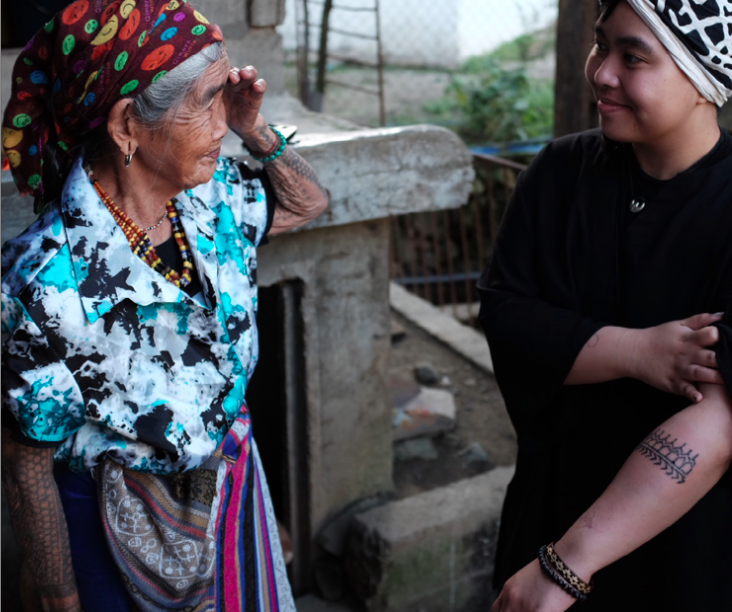
Apo Whang-od in Buscalan, Tinglayan, Kalinga (2017). Photography Britt So.
In the mountainous Cordilleras, a revered tattooist, or Mambabatok, would tap a charcoal-dipped thorn anchored to a stick into the skin with a mallet, a 1,000-year-old technique known as batok. Kalinga male warriors would seek a Mambabatok for tattoos to signify their bravery after a victorious headhunt, according to ABS-CBN News, women to enhance their beauty and attract a partner. Women without tattoos were seen as ugly.
Traditionally, Mambabatok were men, according to Salvador-Amores. Now, it’s the women who keep batok alive — most famously 105-year-old Whang-Od Oggay, the first woman tattoo artist in Kalinga and the last living Mambabatok. Since the Kalinga believe they can pass on tattooing only to those in their bloodline, and Oggay has no children, she’s been teaching her grandnieces, per Atlas Obscura.
While the income from tattooing visitors helps support the village, it raises complicated questions about the commercialization of cultural traditions, according to Atlas Obscura. Kalinga designs held deep meaning for the warriors Oggay used to tattoo — not so much for tourists, who tend to choose designs based mainly on aesthetics to express their individuality, rather than their belonging to a tribe.
Oggay might be the most celebrated example, but a new generation of women and nonbinary tattooists is preserving our ancestral legacy, too, although not necessarily through batok. Instead, that legacy might look like tattooing a “BASTOS” candy heart; reminiscing with a client about Jollibee; or opening studios that resist white, macho tattoo culture, where women and nonbinary BIPOC and LBGTQIA+ can exist as they are. These artists not only redefine Filipinx identity, but also create a sense of belonging — not unlike what those who came before us sought to signify with their tattoos.
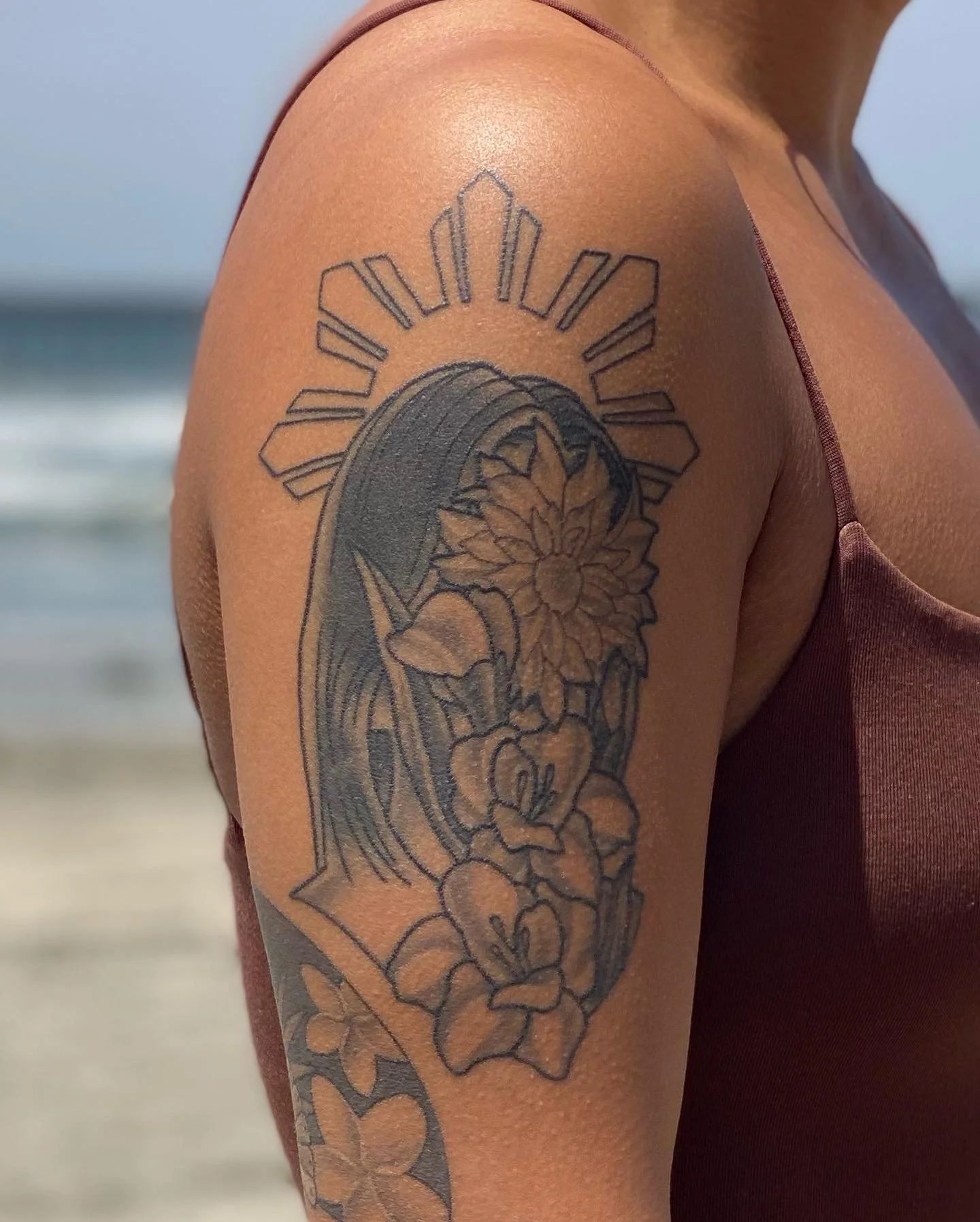
Tattoo by Raychelle Duazo. Photo courtesy of the artist.
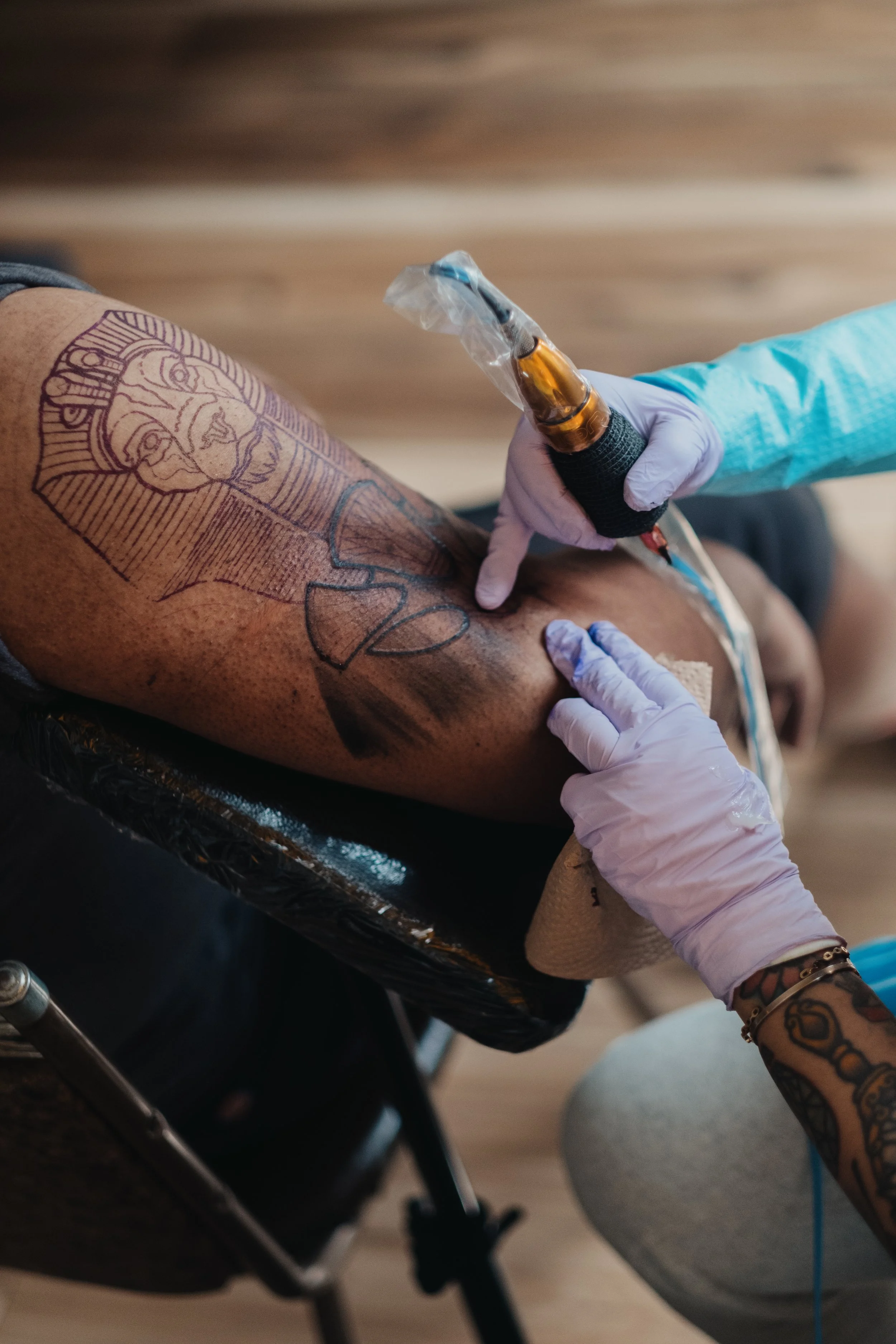
Tattoo by Raychelle Duazo. Photo courtesy of the artist.
Raychelle Duazo
When Raychelle Duazo started getting routinely inked in 2014, she saw it as an addicting, exhilarating way to commemorate all she’d been through. A friend suggested she begin an apprenticeship at a studio, and in 2021, she opened her own — Sorry Sorry Store — with Angela Maria Jessie Franco in Seattle, which both believe to be shaped by the warmth and authenticity of its community. “I hope our little shop encourages other queer Pinxys to follow their own dreams — whatever they may be!” Duazo says.
She cites horror, florals, and music and lyrics as sources of inspiration. Although some of her designs, like the forkful of pancit she recently tattooed, speak directly to Filipinx identity, she doesn’t believe they need to do so to be considered Filipinx.
“If I, a Filipino, is tattooing another Filipino, then the tattoo itself is inherently Filipino,” she says. “We are redefining what it means to be Filipino just by creating new traditions to pass on, new symbols to display, new people to be.”
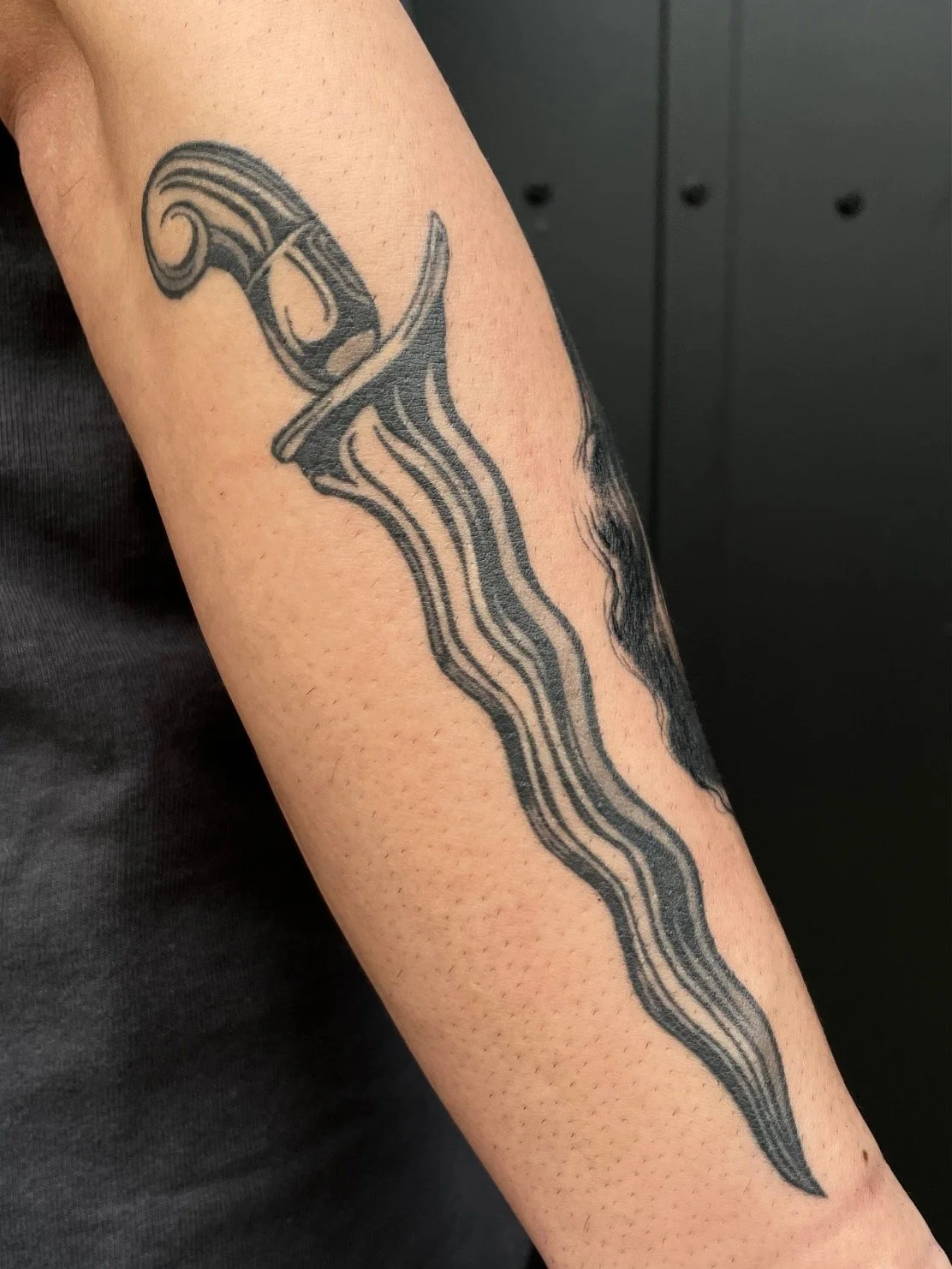
Tattoo by Angela Maria Jessie Franco. Photo courtesy of the artist.
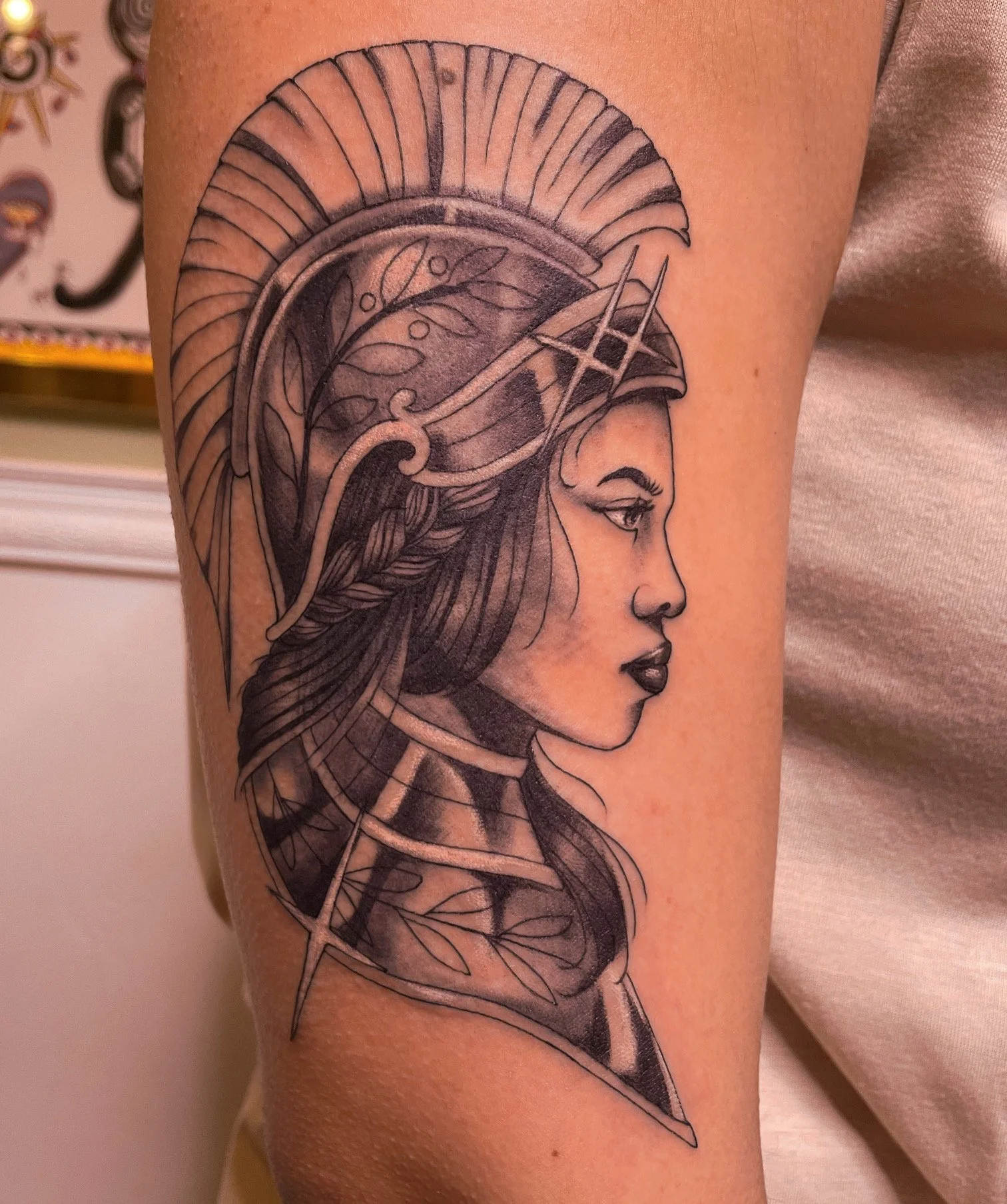
Tattoo by Angela Maria Jessie Franco. Photo courtesy of the artist.
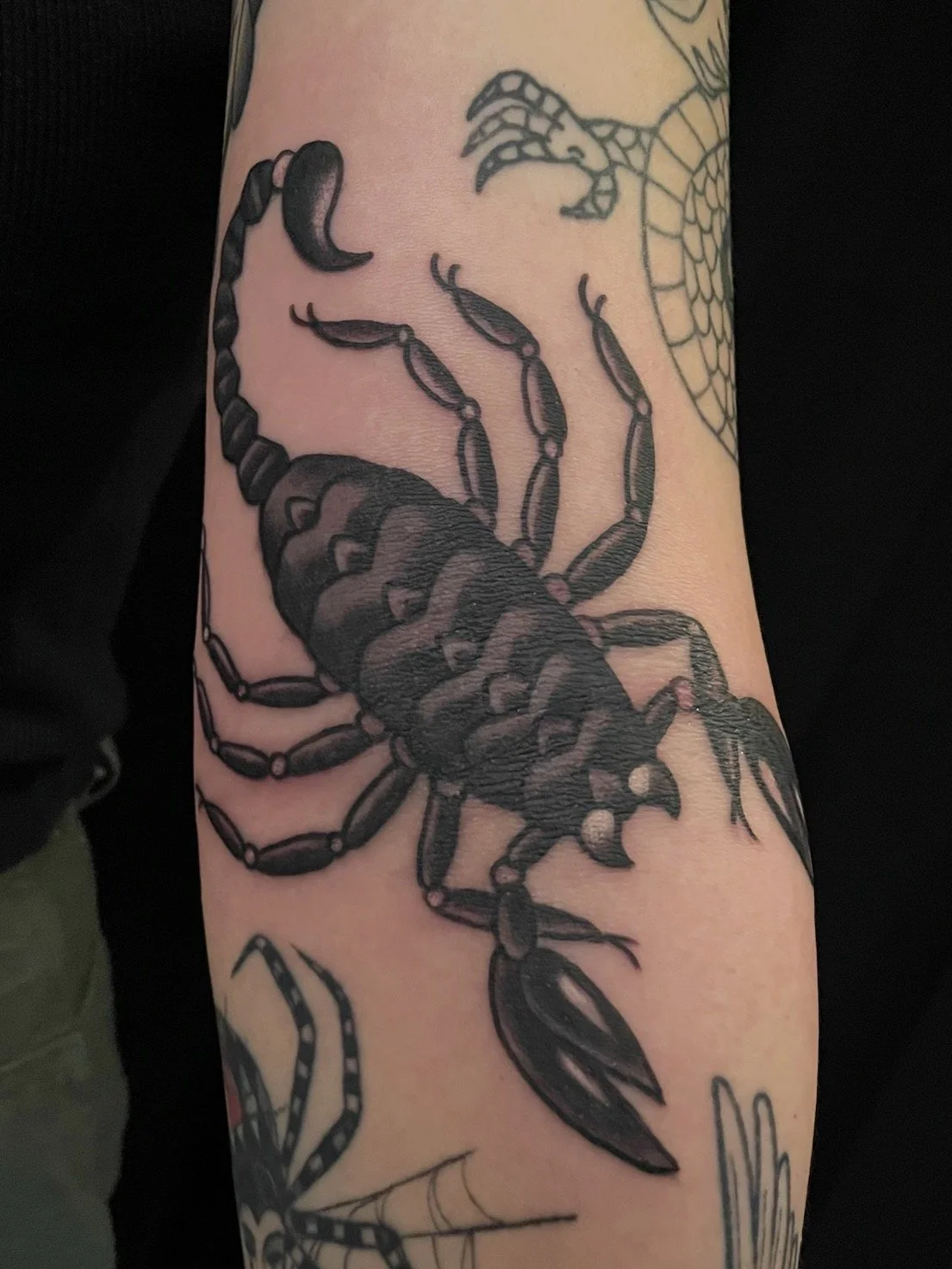
Tattoo by Angela Maria Jessie Franco. Photo courtesy of the artist.
Angela Maria Jessie Franco
Angela Maria Jessie Franco’s artistic influences range from traditional designs like hearts and daggers, to dreams they’ve had, to places they’ve been. They also weave Filipinx lore into their work, while acknowledging the dearth of illustrations of Philippine mythology, perhaps destroyed during colonization. Still, it’s “an exciting time where this generation of artists can co-create the visual canon for our mythology based on surviving text,” says Franco, who’s been tattooing for the past four years. “I think a lot of coded queerness, reverence for femininity, and communalism can be extracted from it.”
Franco is especially inspired by the affirmation, bodily autonomy, and catharsis tattoos can provide, as well as the QTBIPOC artists and clients shifting the tattooing landscape. Sorry Sorry Store — which they opened with Duazo and describe as “a very queer, very Filipino shop” — offers a glimpse of this transformation. They’re excited to continue connecting with more Filpinx tattoo artists. “We are all out here, and I would like to reinforce our visibility,” they say. “Finding each other is the first step in co-creating a future we would like to see.”
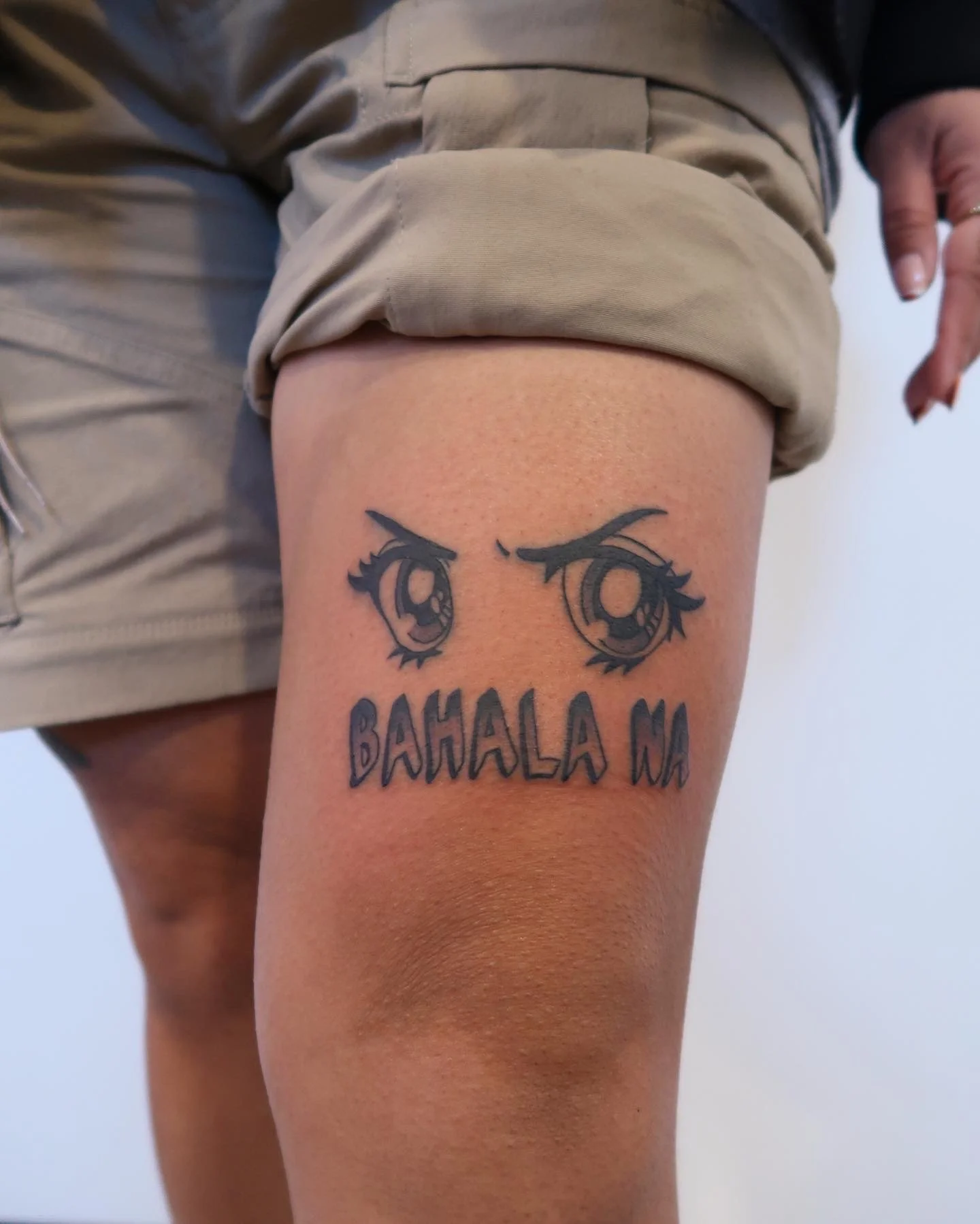
Tattoo by Jamie-Lynn Medina. Photo courtesy of the artist.
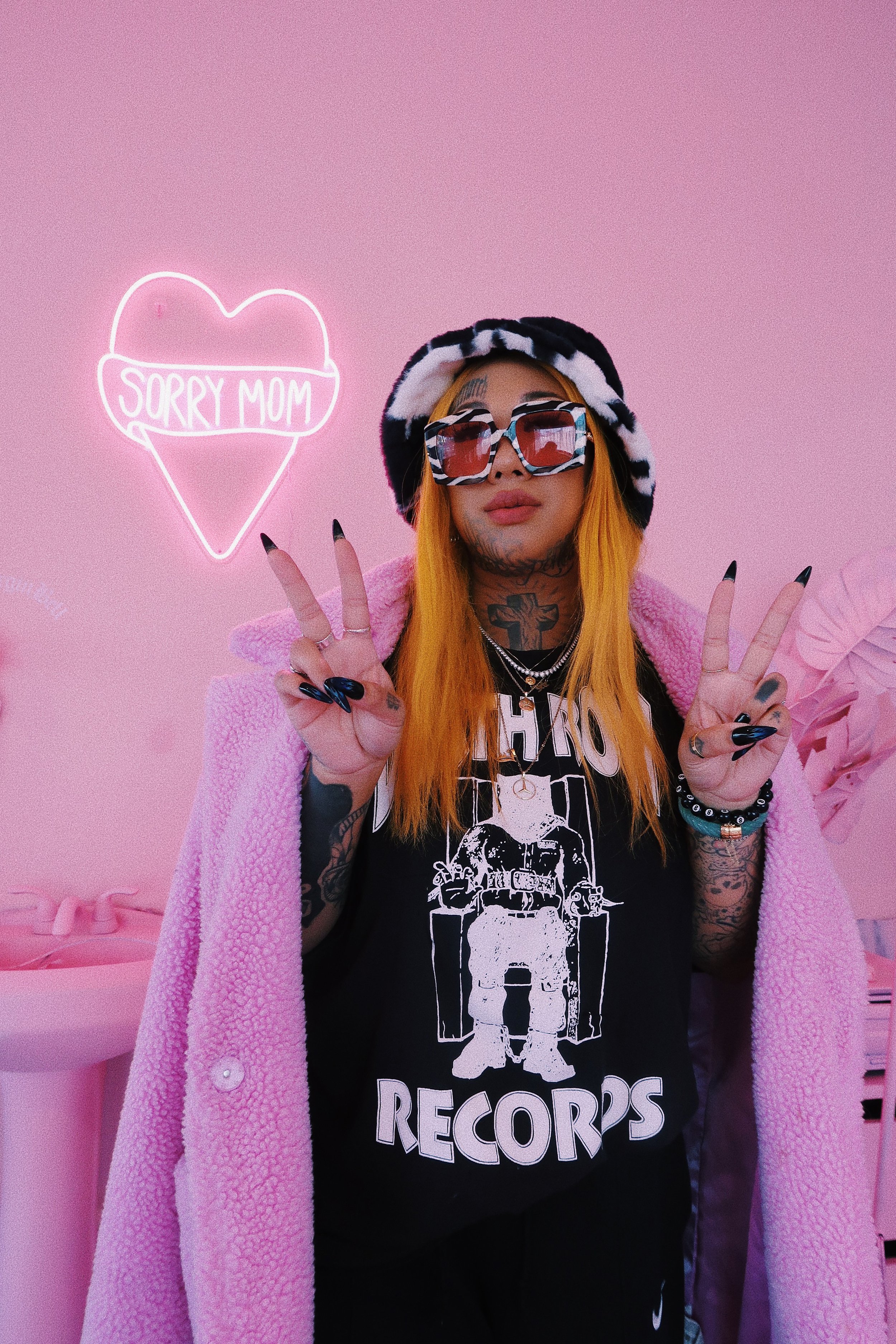
Jamie-Lynn Medina at Sorry Mom. Photo courtesy of the artist.
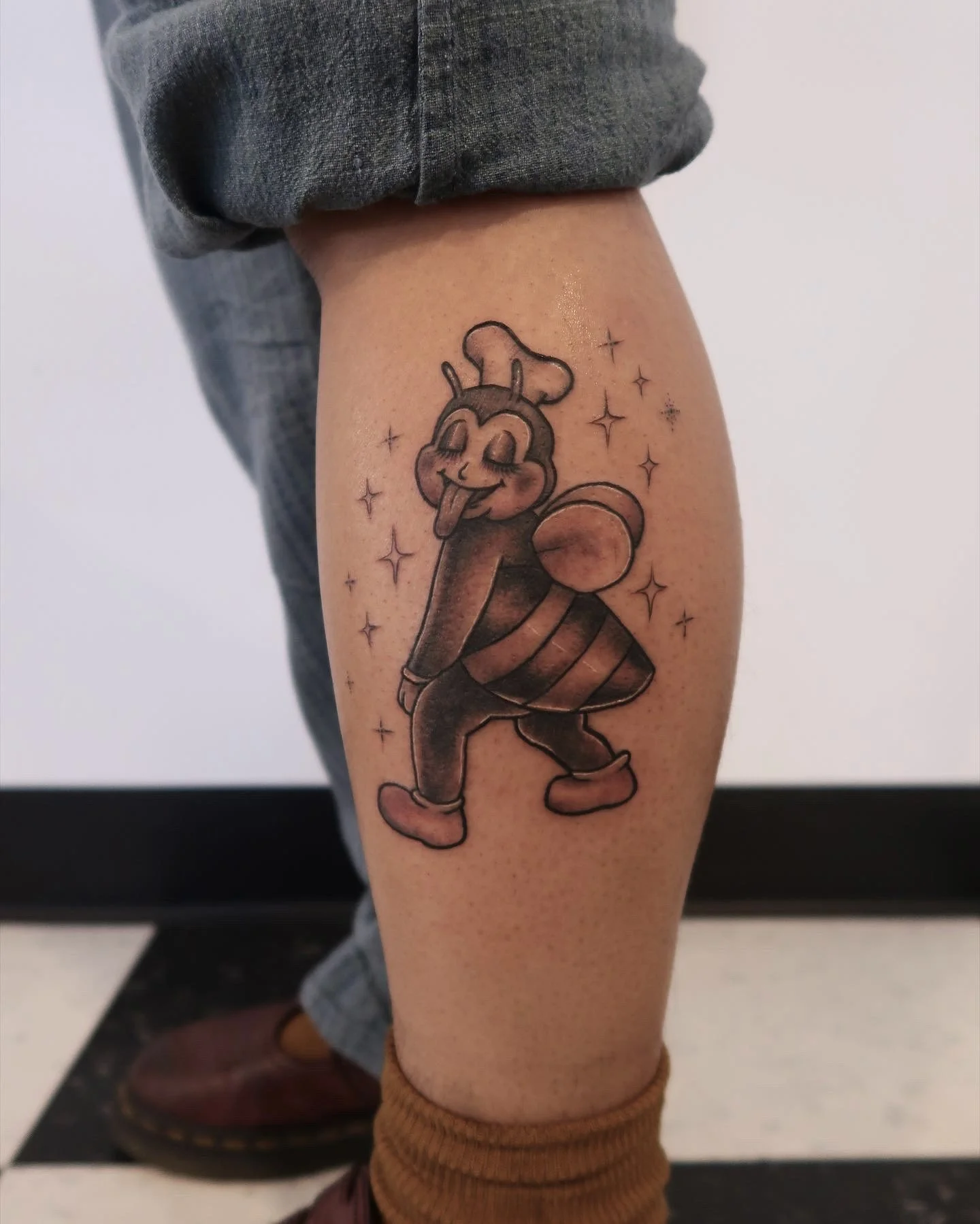
Tattoo (inspired by Hella Pinay!) by Jamie-Lynn Medina. Photo courtesy of the artist.
Jamie-Lynn Medina
Growing up, Jamie-Lynn Medina would design tattoos for her and her parents’ friends. After the thrill of seeing her work on their skin subsided, she’d vent to her parents about aspects of the designs she would’ve approached differently. In a departure from the strict Filipinx parents stereotype, they gifted the then-14-year-old with her own tattoo kit. Medina tattooed relatives, and even her school’s yard duties and other students’ parents.
Today, Medina runs Sorry Mom, an all womxn/femme-staffed tattoo shop in Oakland. “People say it feels like you’re just kickin’ it with your homegirls you’ve known forever — and I love that so much,” she says. Clients often request Filipinx-themed tattoos, ranging from serious pamilya portraits, to funny, nostalgic Tagalog phrases (“Bahala na,” “Maarte”). Medina prides herself on taking the tattoo virginities of some Filipinx moms, who learn about her shop from their kids. “It’s my favorite thing ever when I can change a Filipinx parent’s mind about the stigma of tattoos and the tattoo culture!”
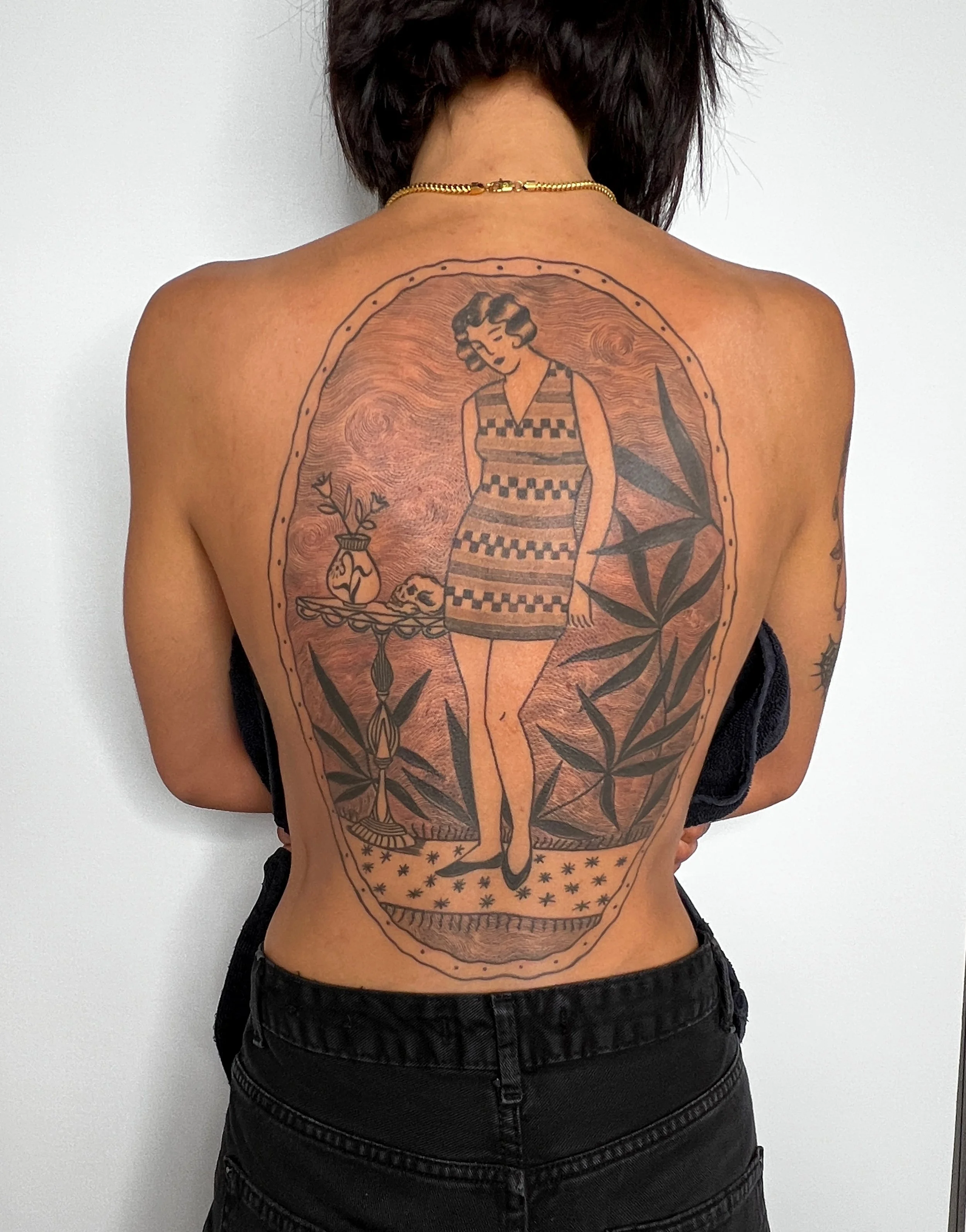
Tattoo by Jacqueline May. Photo courtesy of the artist.
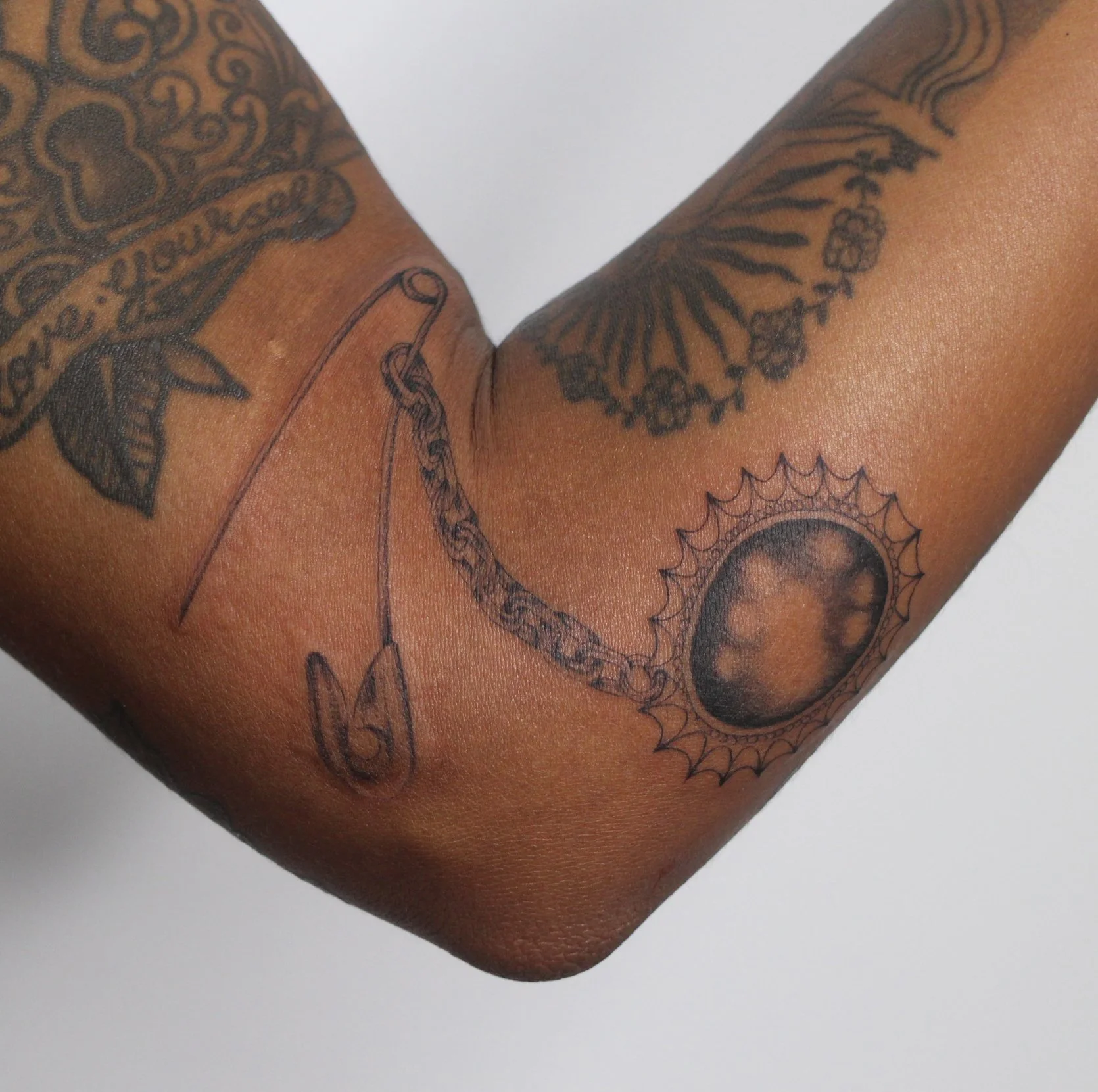
Tattoo by Jacqueline May. Photo courtesy of the artist.
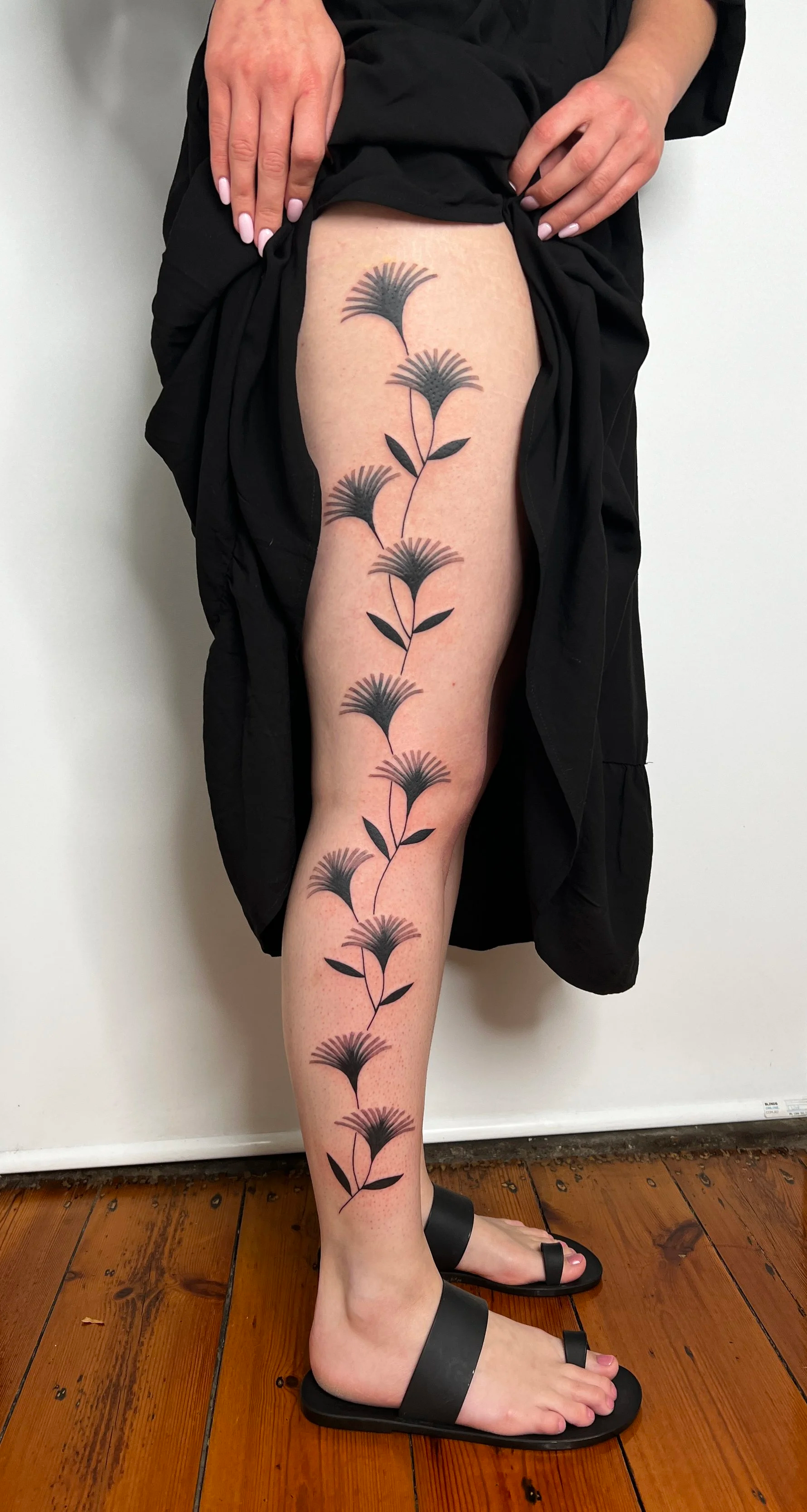
Tattoo by Jacqueline May. Photo courtesy of the artist.
Jacqueline May
Growing up Catholic in rural New Zealand, Jacqueline May didn’t see a tattoo career as within reach until she moved overseas with her partner and quit a graphic design job that had left her miserable. In Australia, she worked out of Crucible Tattoo, Melbourne’s first queer-owned, body-positive, and LGBTQI- and sex worker-friendly studio, and is about to start working with a friend out of a private space in Toronto.
Influenced by artists like Ichiro Tsuruta and Marie Laurencin, whose portraits of women convey at once melancholy and quiet strength, May similarly instills resilience and poise in the female figures she inscribes — freeing them “from the maladaptive emotional and cognitive states inherent in all forms of colonialism,” she explains. Her work reflects the conflict between privilege and oppression she embodies as a biracial artist of Filipinx and New Zealand descent.
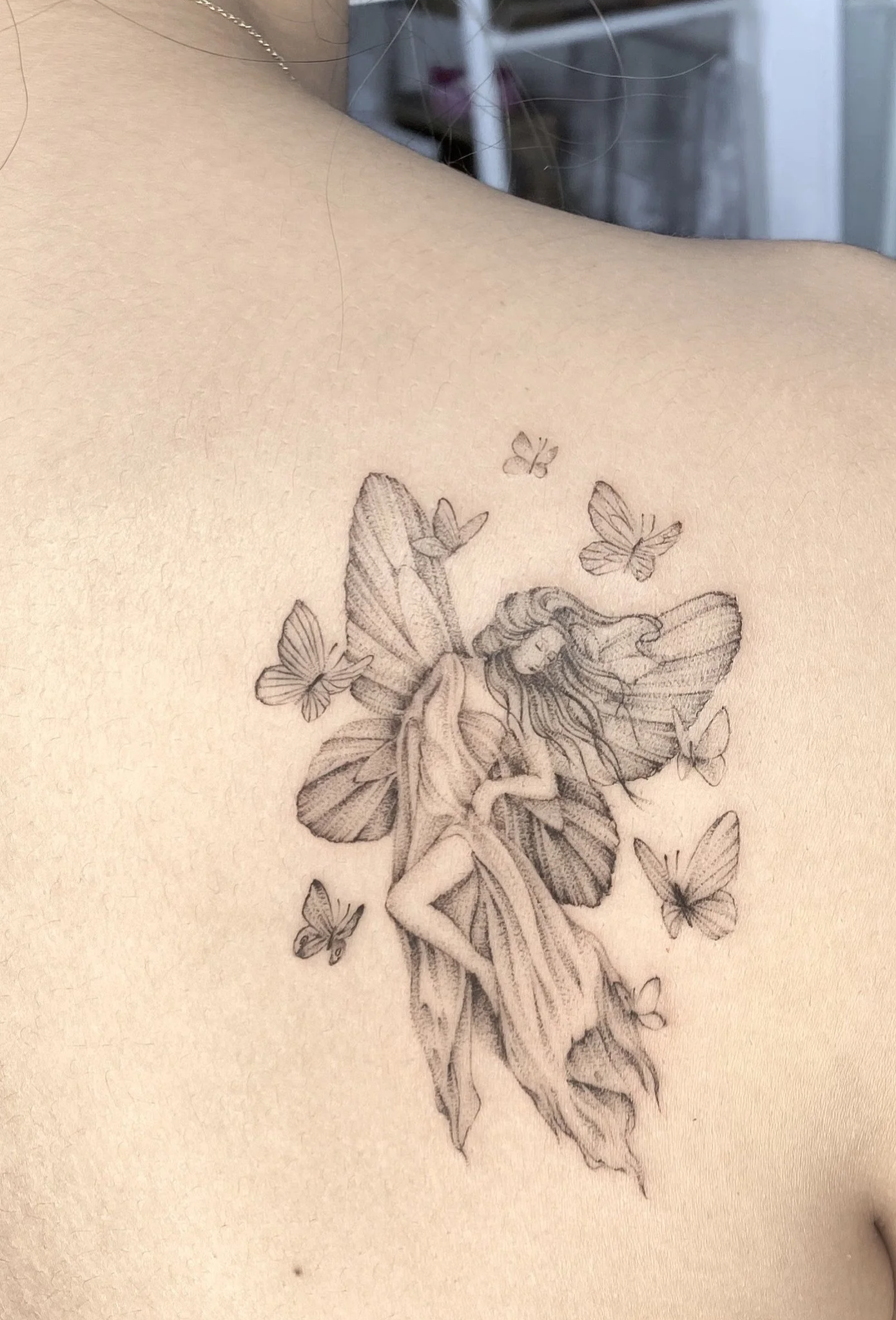
Tattoo by Eloise Cadilo. Photo courtesy of the artist.
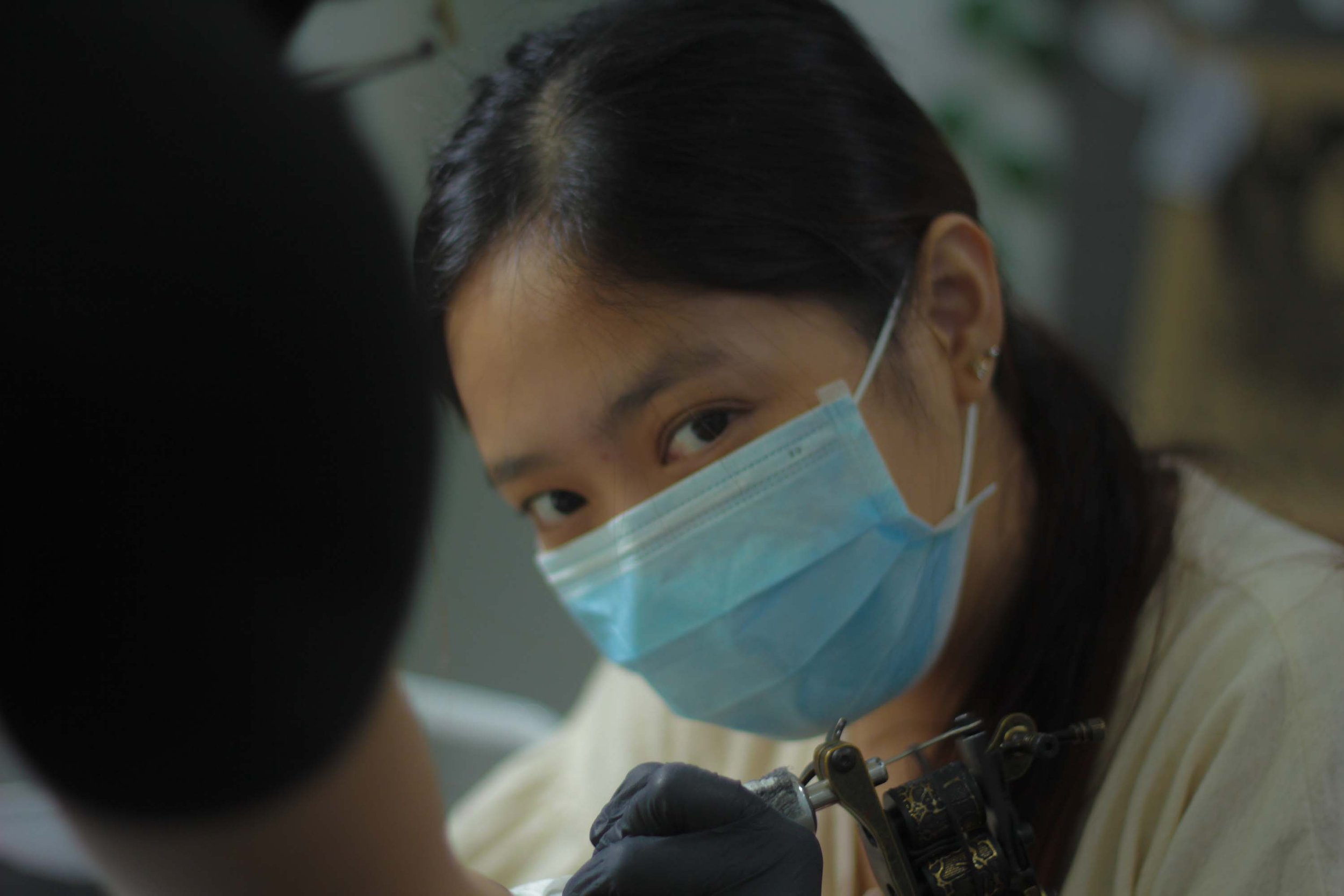
Eloise Cadillo. Photo courtesy of the artist.
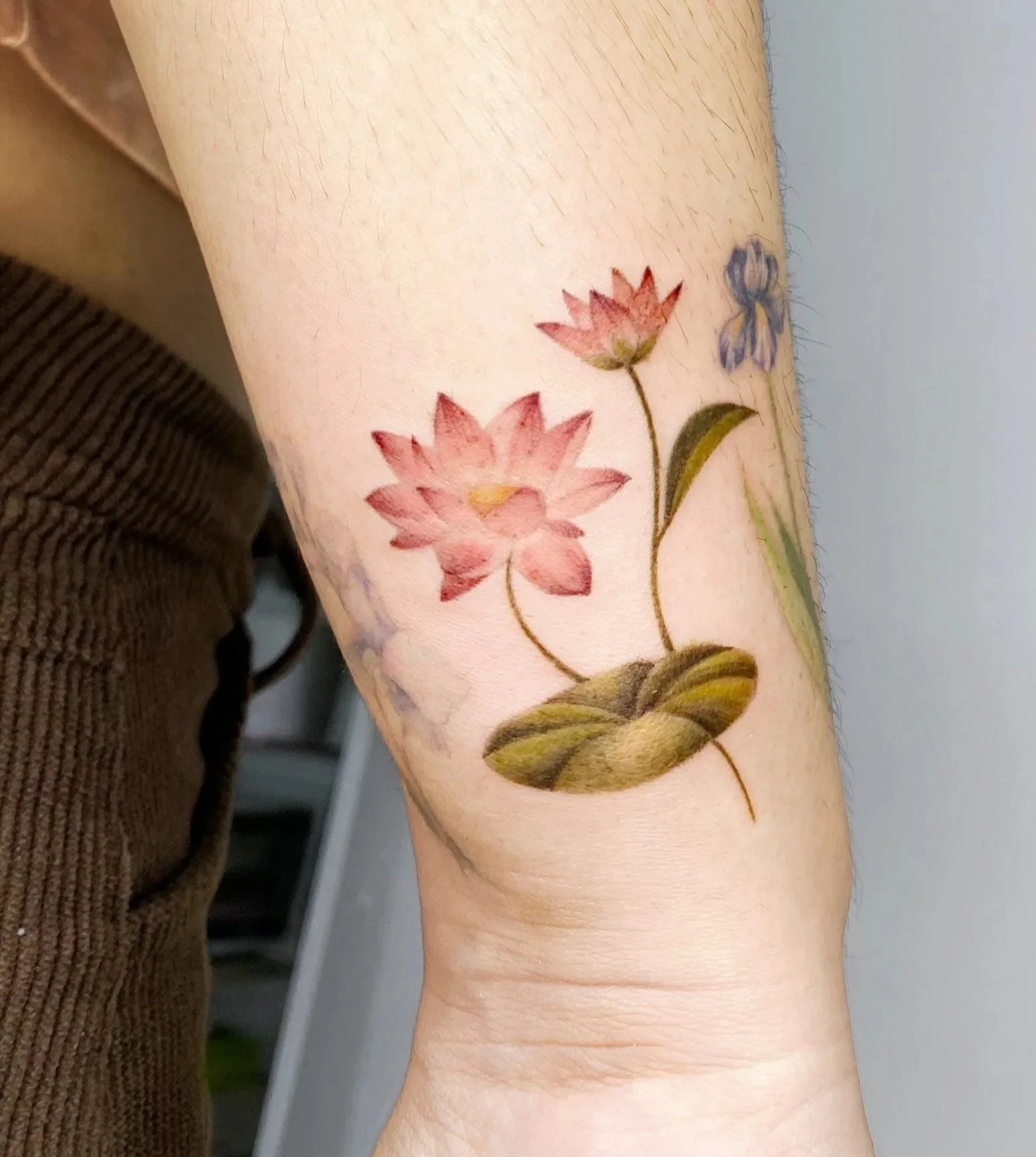
Tattoo by Eloise Cadilo. Photo courtesy of the artist.
Eloise Cadilo
Eloise Cadilo began tattooing in her apartment studio in 2019. Over the course of a year, what began as a passion project unfurled into Siningtinta, a space in Quezon City for women artists, body artists, and artisans to dismantle the misogynistic structures around art and tattooing.
Cadilo sees her practice as a collaborative process that builds on the client’s vision. But she’s also created Filipinx-inspired flash designs. Last March, she released the flash set “Nagbabangon” (“Awakening”), which portrayed babaylan — pre-colonial spiritual healers, often cis and trans women — and revolutionaries like Gabriela Silang. She’s currently at work on a flash set of creatures from Philippine mythology, with references to Edgar Samar’s encyclopedic Mga Nilalang na Kagila-gilalas (Marvelous Creatures).
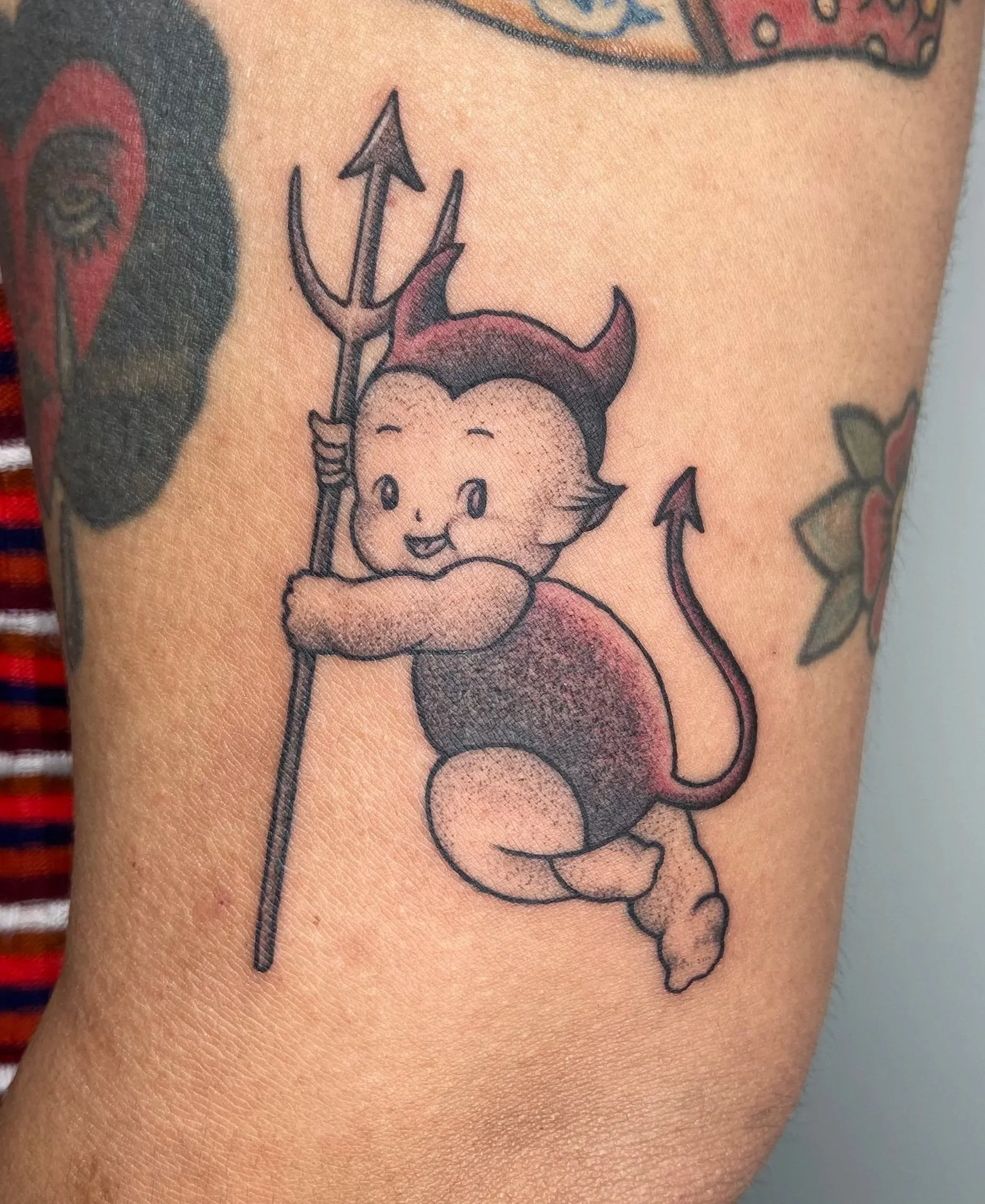
Tattoo by Gigie. Photo courtesy of the artist.
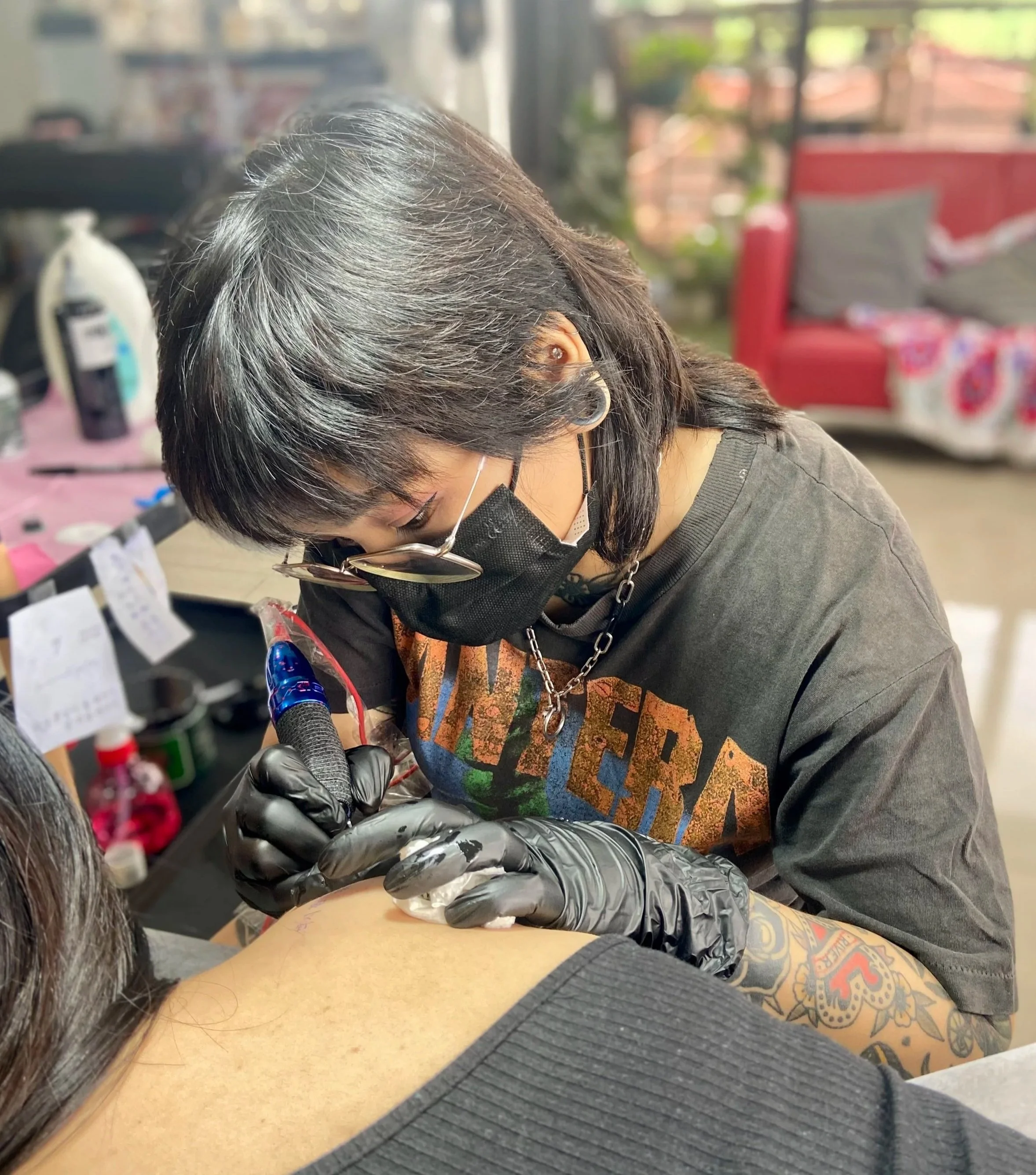
Gigie. Photo courtesy of the artist.
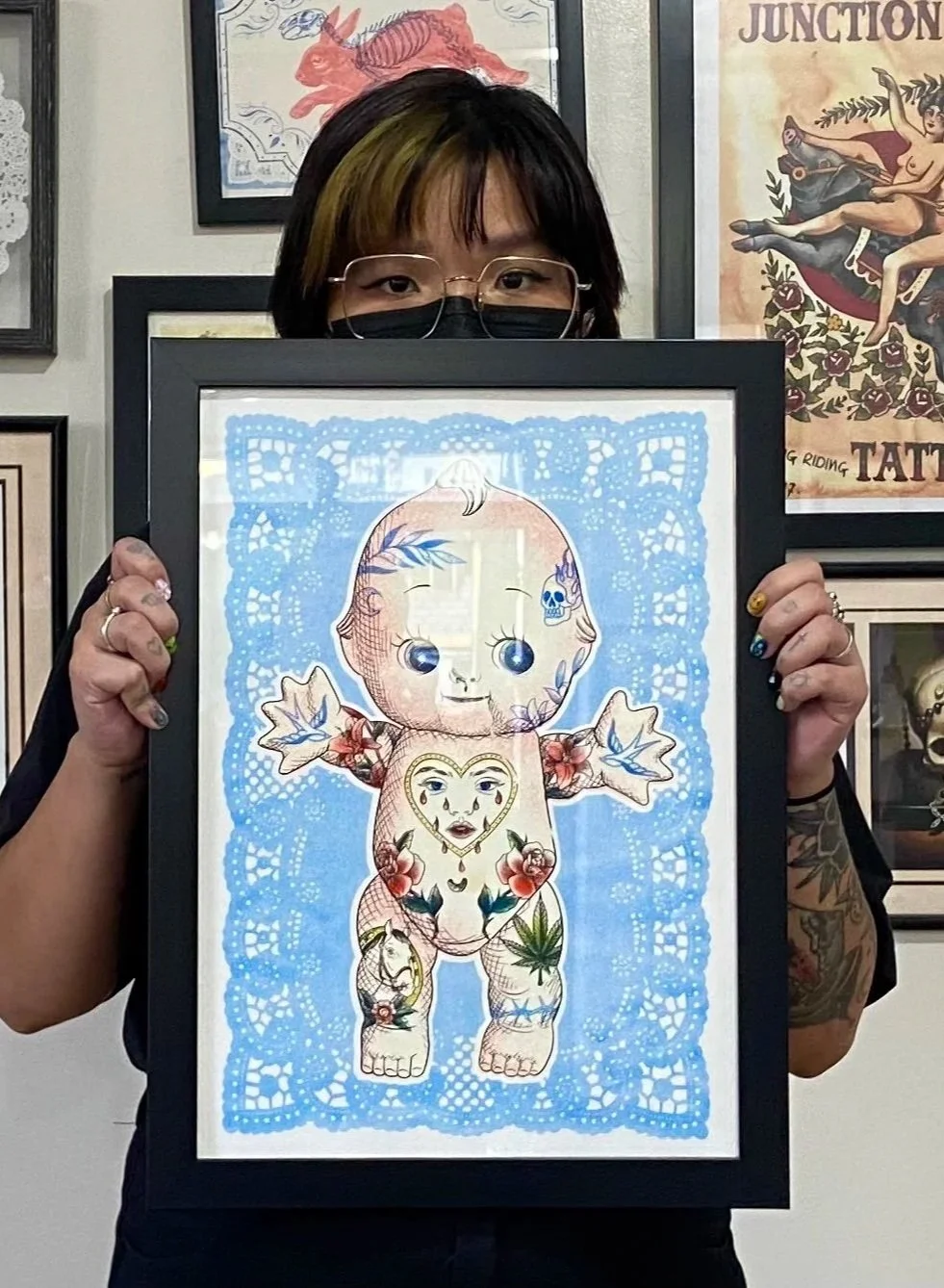
Gigie with flash. Photo courtesy of the artist.
Gigie
Gigie finds inspiration in the depth and texture of old scientific illustrations, which make their way into the tattoos of the local fauna her clients often request. She traces the beginning of her tattoo journey to 2013, when a friend gifted her with a tattoo kit. Five years later, she and her partner opened Crimson River Tattoo in Quezon City.
Initially, Crimson River functioned as personal space for them to tattoo, and make art and music. But when the pandemic forced their women artist friends to give up their home studios, the couple took them in, offering them a safe workspace. “I think what makes it distinct from other studios is we are all literally family,” Gigie says.
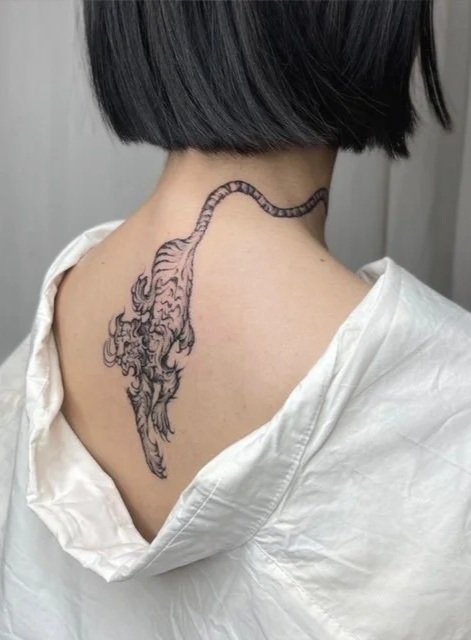
Tattoo by Sarah Gaugler. Photo courtesy of the artist.

Sarah Gaugler Tattooing at Snow Tattoo Tribeca, NYC. Photography Michael Gaugler.
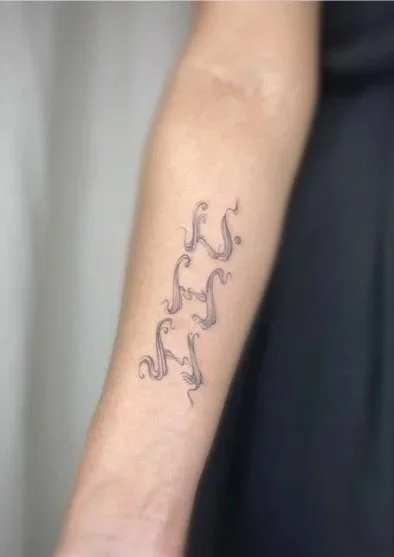
Tattoo by Sarah Gaugler. Photo courtesy of the artist.
Sarah Gaugler
Sarah Gaugler turned to art as a means to cope with being orphaned at a young age, among other hardships. While putting herself through college, someone told her the tattooists they went to didn’t know how to ink her fine-line art — so she learned to tattoo her designs herself. In 2008, she began tattooing clients at her Manila apartment and at pop-up events, at a time when women tattooists in the city were a rarity. In 2012, she opened Snow Tattoo in Manila before relocating it to New York City two years later.
Gaugler custom-designs her tattoos to each client, starting with a conversation. “I see everything as lines and vibes, and the tattoos that I create are made of the vibes that my clients share with me,” she explains. At the same time, she often includes elements of her culture into her work, offering baybayin translations and signature sampaguita designs, for example. Makahiya plants and pearls also figure prominently in her art.
“I celebrate my Filipino culture through these themes to honor my late grandmother and late mother,” she says. “These symbols connect me to the strength and courage that ran through their blood and runs in mine, too.”
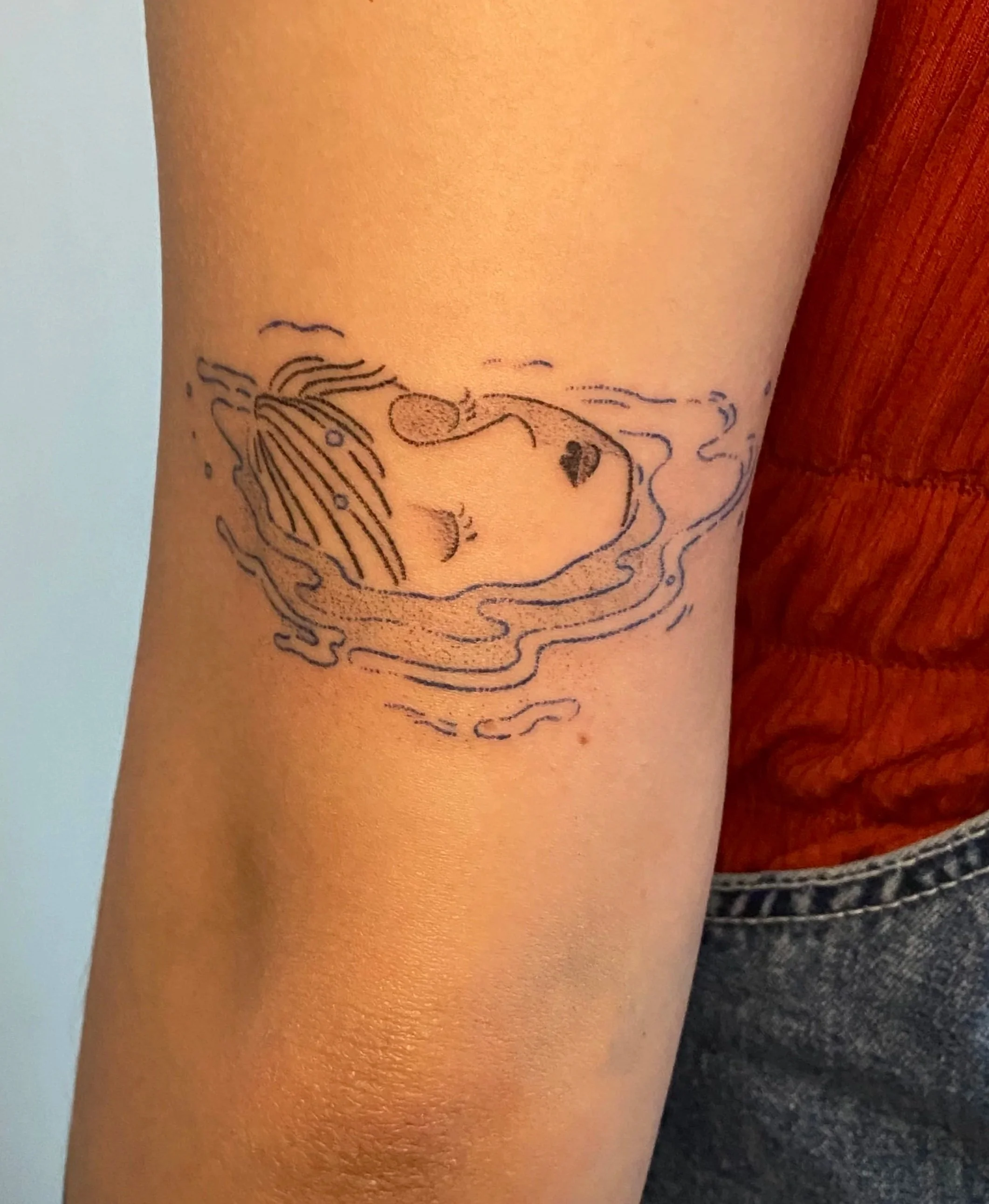
Tattoo by Julianne Marella Villegas. Photo courtesy of the artist.
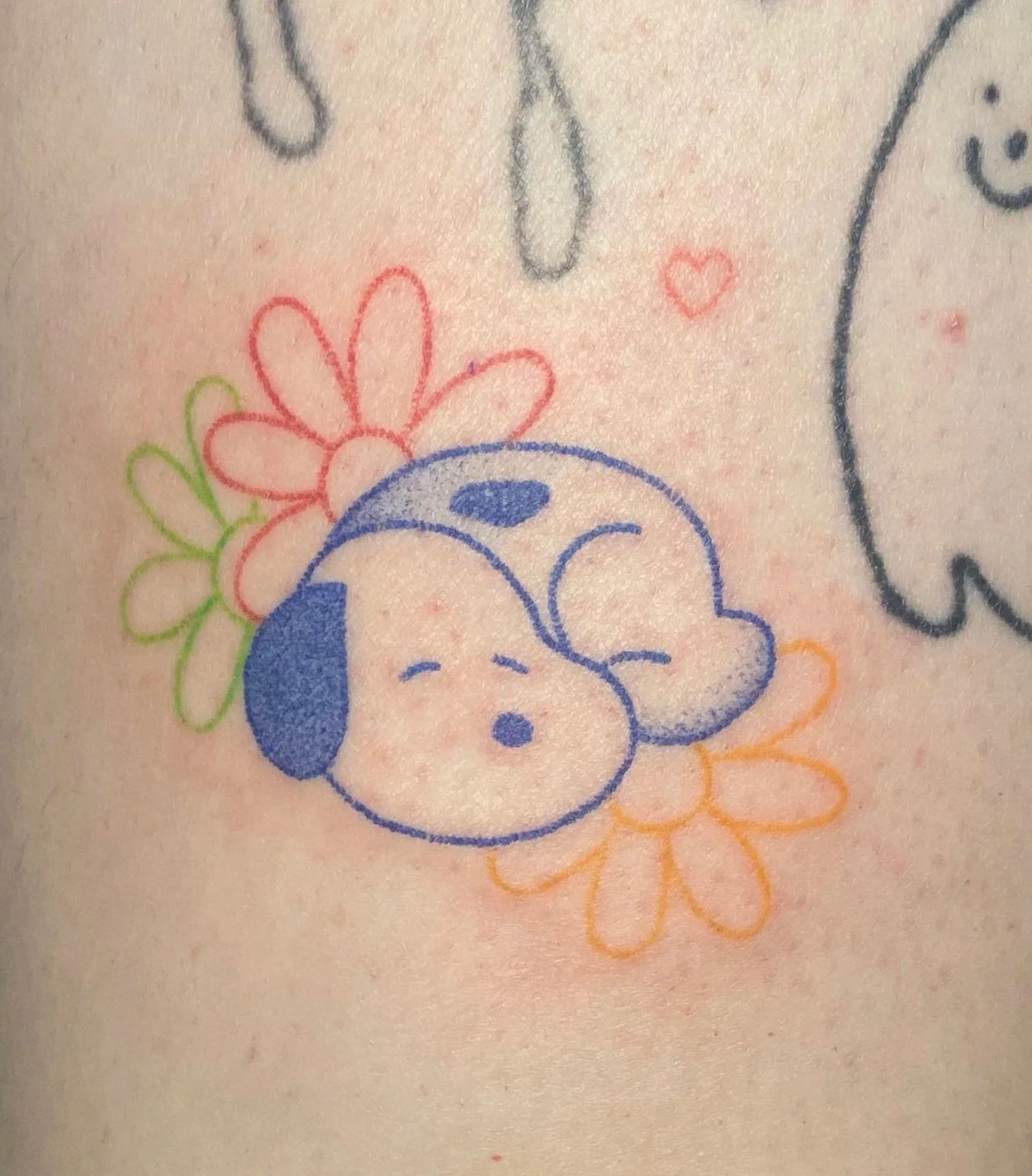
Tattoo by Julianne Marella Villegas. Photo courtesy of the artist.
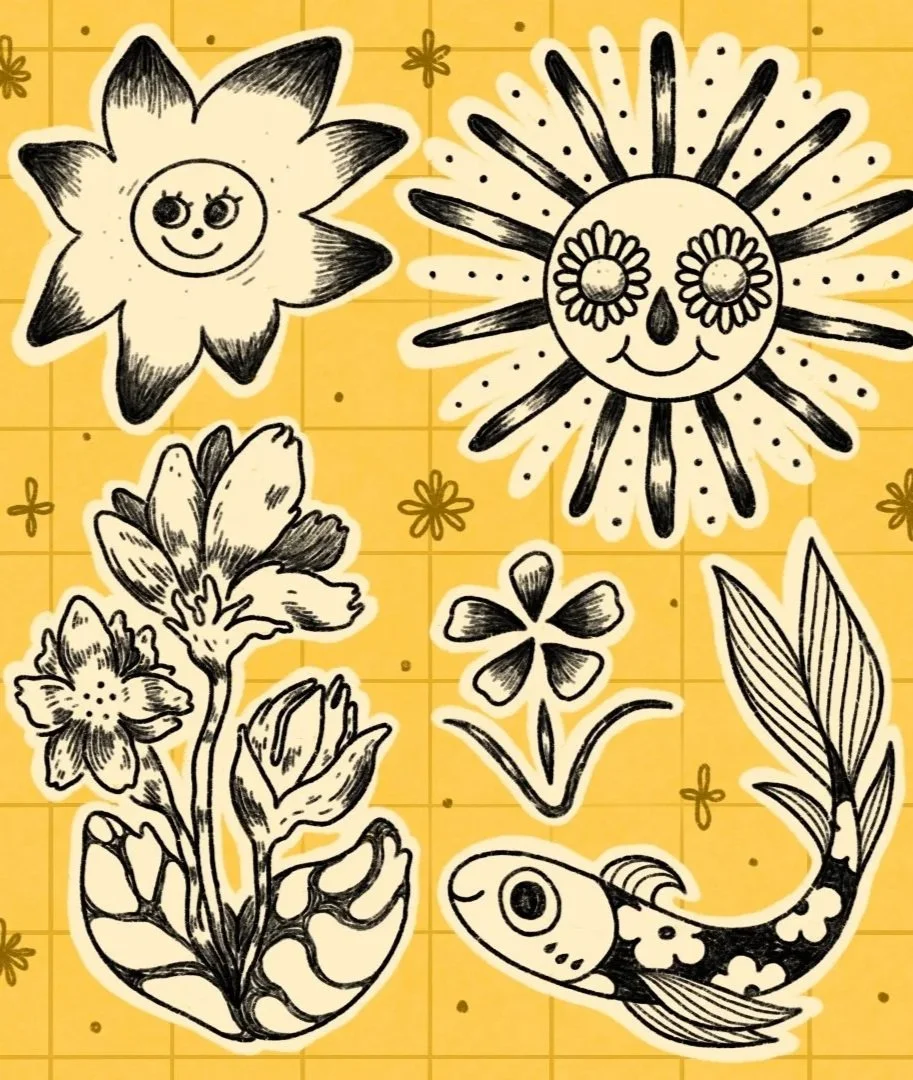
Flash by Julianne Marella Villegas. Photo courtesy of the artist.
Julianne Marella Villegas
Julianna Marella Villegas, who runs a home studio in Sacramento, learned to handpoke — that is, tattoo with a needle and ink, sans electricity — from other artists who specialized in the technique, plus a ton of practice on themself.
While they don’t seek to emulate Filipinx tattoo traditions, their practice nonetheless reclaims their fragmented history as a queer Pinxy artist, often through childhood nostalgia. Tattooing someone with reminders of spending time with their family “fulfills my own desires to find belonging and kindness between myself and my family’s expectations,” they say.
Prioritizing continuous consent and trauma-informed tattooing, Villegas and their client constantly check in on each other during the appointment. “For most of the time, though, we crack jokes and laugh like old friends,” they say. “The designs also bring us together, in a way where people can recognize the tattoo, and suddenly we aren't strangers anymore through a mutual fondness for Snoopy, Jollibee, or cheeky Valentine's hearts.”
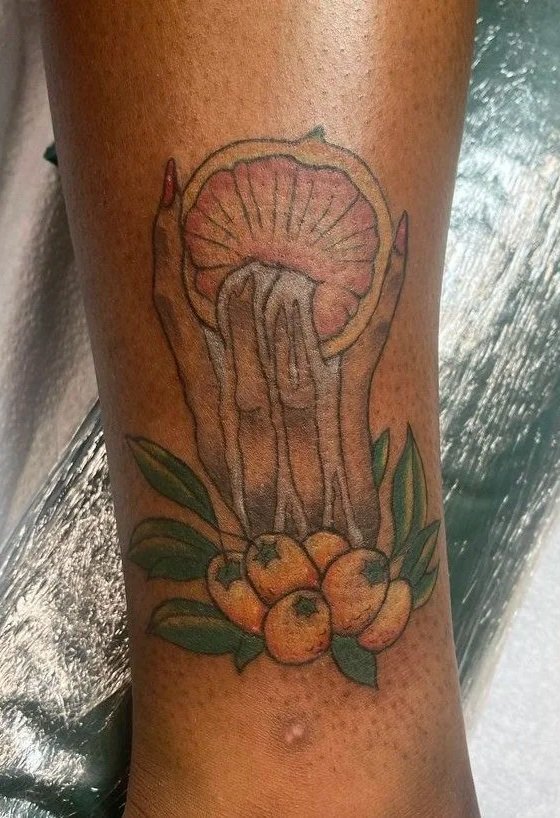
Tattoo by Renee McKinley. Photo courtesy of the artist.
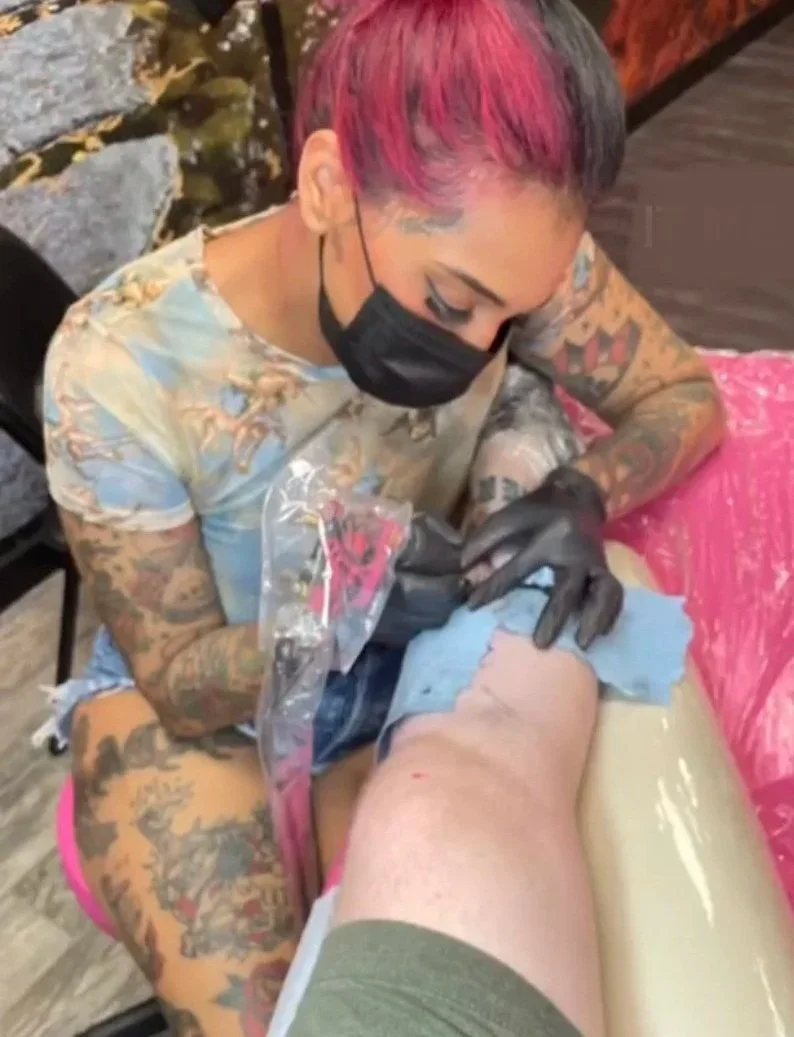
Renee McKinley. Photo courtesy of the artist.
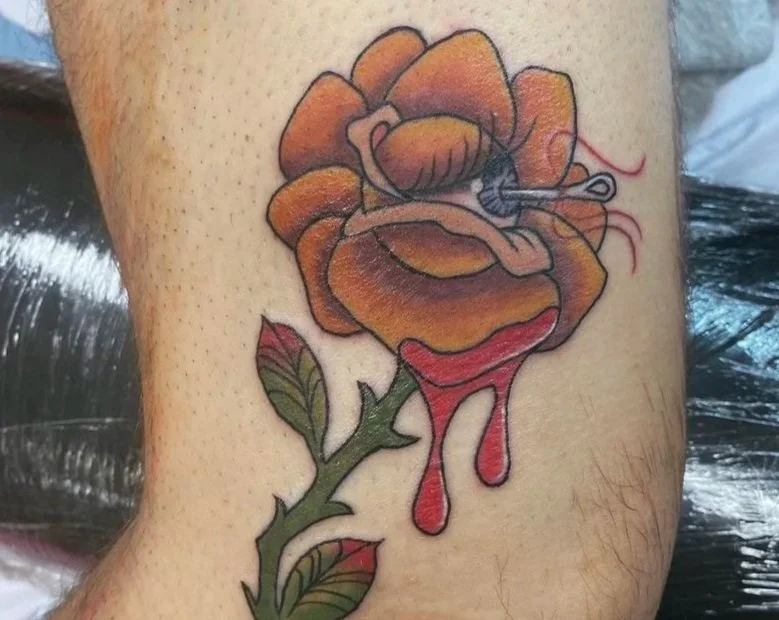
Tattoo by Renee McKinley. Photo courtesy of the artist.
Renee McKinley
Renee McKinley began her tattoo apprenticeship about two years ago, enamored with the idea of essentially immortalizing her work on skin. She describes her process as taking traditional designs and adding “something weird, sexy, or gross” to make them her own. Pinups and lady heads rank among her favorite designs to tattoo, but she resists the all-too-common practice of making them white. “I want Black and brown women to see themselves in my art,” says McKinley, who lives north of Seattle.
Indeed, McKinley pursued tattoo art partly because of the discrimination she’s encountered in tattoo studios as a Black and Filipinx woman. (Artists have told her she was “too dark to get colored tattoos,” for example.) In fact, she and her friends have plans to open their own BIPOC- and LGBTQIA+-friendly studio, Strange Magic. She’s excited about the change in the industry. “It’s not a scary place for sailors and scary biker dudes anymore,” she says. “It’s for all of us.”
From Hella Pinay 03: The Culture Issue - Spring/Summer 2022.


Growing up Pinay, self-love and acceptance are ever growing and transforming